


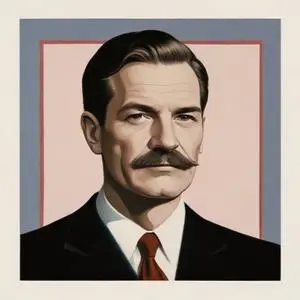
A pioneering labor leader who fought for workers' rights, advocating for better wages, working conditions, and unionization, playing a key role in shaping America's labor movement.
Known for his unwavering dedication to the labor movement and his unapologetic advocacy for industrial unionism, Bill Haywood was a pioneering figure in the fight for workers' rights in early 20th-century America. As a founding member and leader of the Industrial Workers of the World (IWW) and a member of the executive committee of the Socialist Party of America, Haywood left an indelible mark on the labor landscape.
Born on February 4, 1869, in Salt Lake City, Utah Territory, Haywood's early life was marked by hardship and loss. His father, a former Pony Express rider, died of pneumonia when Haywood was just three years old. His mother, Elizabeth, an Episcopalian, raised him with a strong sense of social justice. A childhood accident that left him permanently blind in one eye did little to deter Haywood from pursuing his passions.
Haywood's involvement in the labor movement began in the late 1800s, when he worked as a miner and joined the Western Federation of Miners (WFM). His leadership skills and oratory prowess soon earned him recognition, and he became a key figure in the formation of the IWW in 1905. The IWW's radical approach to labor organizing, which emphasized direct action and industrial unionism, resonated with Haywood's own beliefs.
Haywood was at the forefront of several pivotal labor battles, including the Colorado Labor Wars, the Lawrence Textile Strike, and textile strikes in Massachusetts and New Jersey. His unwavering support for workers' rights often put him at odds with authorities, who sought to prosecute him for his alleged involvement in violent protests. In 1907, Haywood was acquitted of murder charges related to the death of Frank Steunenberg, but he was eventually jailed in 1918 for anti-war activity during the First Red Scare.
Haywood's labor philosophy was rooted in industrial unionism and syndicalism, which called for the organization of all workers in an industry under one union, regardless of trade or skill level. He believed in the power of direct action and advocated for workers of all ethnicities to unite against their common enemies: capital and oppression.
In 1921, while out on appeal, Haywood fled to the Soviet Union, where he spent the remainder of his life. He died on May 18, 1928, and was buried in the Kremlin Wall Necropolis, a rare honor bestowed upon only a few Americans. Haywood's legacy continues to inspire labor activists and socialists around the world, and his name remains synonymous with courage, conviction, and the unwavering pursuit of justice.
Haywood's impact on modern society is multifaceted. His advocacy for industrial unionism and direct action paved the way for future labor movements, while his commitment to social justice continues to inspire activists around the world. As a pioneering figure in the American labor movement, Haywood's legacy serves as a testament to the power of collective action and the importance of fighting for workers' rights.
Born in 1855
A pioneering labor leader who fought for workers' rights and social justice, founding the Industrial Workers of the World and running for president five times on the Socialist Party ticket.
Born in 1879
A Swedish-born American labor activist and poet who wrote powerful songs and poems that inspired workers to organize and fight for their rights, and was eventually executed for a crime he did not commit.
Born in 1869
A Lithuanian-Canadian philosopher and activist who advocated for anarchism, free speech, and women's rights, playing a pivotal role in shaping modern feminist and political thought.
Born in 1878
A pioneering muckraker, exposing social and economic injustices through influential novels, most notably "The Jungle", which led to significant reforms in the meatpacking industry.
Born in 1921
The 67th Governor of Maine, a politician and diplomat who served from 1959 to 1967, is most known for his moderate Republican leadership and efforts to modernize the state's government. He also played a key role in the development of the Maine Turnpike.
Born in 1883
A radical writer and poet who championed women's rights and free speech, known for his provocative essays and poetry that challenged social norms.
Born in 1890
A labor leader and activist who fought for workers' rights, particularly for women and the working class, through her writing and involvement in the Industrial Workers of the World .
Born in 1868
A Scottish-born Irish rebel leader who played a key role in the Easter Rising of 1916, advocating for Irish independence from British rule through socialist and republican ideologies.
