


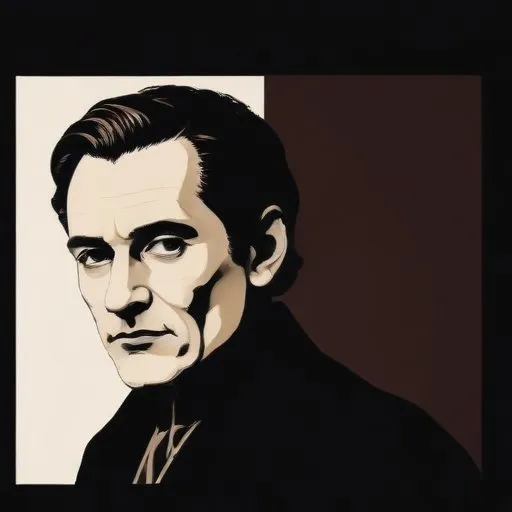
A pioneering modernist writer, known for his experimental poetry and novels that blended fiction and autobiography, capturing the essence of modern urban life.
Blaise Cendrars, born Frédéric Louis Sauser, was a Swiss-born novelist and poet who left an indelible mark on the European modernist movement. He is celebrated for his adventurous spirit, both in life and literature, which inspired a new generation of writers to push the boundaries of conventional storytelling.
Cendrars' early years were marked by restlessness and a desire for freedom. Born in La Chaux-de-Fonds, Switzerland, in 1887, he was sent to a German boarding school, but soon ran away. This rebellious streak followed him throughout his life, influencing his writing and shaping his unconventional worldview.
During his apprenticeship with a Swiss watchmaker in Russia, Cendrars began to write, encouraged by the librarian R.R. at the National Library of Russia. His early poem, La Légende de Novgorode, was translated into Russian and sparked his passion for literature. This early work showcased his unique style, blending modernist experimentation with a deep appreciation for traditional forms.
Cendrars' innovative approach to poetry and prose made him a leading figure in the modernist movement. His works, such as Les Pâques à New York (1912), La Prose du Transsibérien et la Petite Jehanne de France (1913), and J'ai tué (1918), explored new modes of expression, rejecting traditional narrative structures and embracing the avant-garde.
Cendrars' literary innovations had far-reaching consequences, inspiring a new generation of writers, including the Surrealists and the Beats. His emphasis on experimentation and pushing the boundaries of language paved the way for future literary movements, cementing his position as a pioneering figure in modern literature.
Cendrars' writing often reflected his fascination with the human condition, exploring themes of identity, morality, and the search for meaning. His work embodied a philosophical spirit, questioning traditional values and challenging the status quo.
"I am not a writer, I am a discoverer. I discover words, I discover rhythms, I discover forms."
Cendrars' impact on modern literature extends beyond his own work, influencing a wide range of writers and artistic movements. His legacy continues to inspire new generations of writers, poets, and artists, solidifying his position as a cornerstone of modernist literature.
Cendrars' innovative style and rebellious spirit set him apart from his contemporaries, yet his work shares affinities with writers like Guillaume Apollinaire and André Breton, who similarly pushed the boundaries of literary expression.
In conclusion, Blaise Cendrars' life and work represent a testament to the power of creative rebellion, inspiring generations of writers and artists to challenge the norms and forge new paths. His modernist spirit continues to resonate, reminding us of the importance of innovation and experimentation in the pursuit of artistic expression.
Born in 1880
An Italian-French literary genius who pioneered Cubist poetry, blending fragmented images and multiple narratives to create a new kind of lyrical expression. His work influenced the development of Surrealism and modern art.
Born in 1896
French poet and author who founded Surrealism, a cultural movement that explored the subconscious and the world of dreams. He wrote novels, poems, and essays that continue to influence art and literature today.
Born in 1894
A French physician and writer, known for his novels that explored the human condition, often with dark humor and satire, influencing 20th-century literature. His works are considered classics of modernist fiction.
Born in 1889
A renowned French creative force, celebrated for his innovative and surreal works that blurred the lines between literature, art, and cinema, leaving an indelible mark on 20th-century culture.
Born in 1899
A Belgian-French poet and painter who explored the subconscious through automatic writing and vibrant, abstract art, blending words and images to evoke emotions and inner experiences.
Born in 1903
A French poet and author who experimented with language and form, creating innovative and playful works that blended poetry and prose. He's most known for his novel "Zazie in the Metro", a classic of 20th-century French literature.
Born in 1896
A French theatre pioneer who developed the concept of the "Theatre of Cruelty," which emphasized a more immersive and emotional experience for the audience. He's known for his avant-garde plays and acting style.
Born in 1869
A French literary giant, renowned for his novels and essays that explored the human condition, morality, and the search for authenticity. His works often blurred the lines between fiction and autobiography.
