


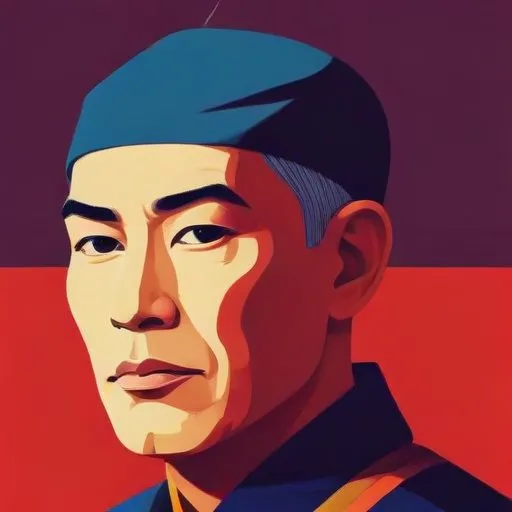
The last emperor of Vietnam, ruling from 1925 to 1945, is known for his attempts to modernize and reform the country, while also being a symbol of Vietnamese monarchy.
Bo i, also known as Emperor Bo i, was the 13th and final emperor of the Nguyn dynasty, the last ruling dynasty of Vietnam. From 1926 to 1945, he reigned as the emperor of Annam and the de jure monarch of Tonkin, covering present-day central and northern Vietnam.
Bo i was born on October 22, 1913, as Prince Nguyn Phc Vnh Thy in the Palace of DoanTrangVien, part of the compound of the Purple Forbidden City in Hu, the capital of Vietnam. His father was Emperor Khi nh of Annam, and his mother was the emperor's second wife, Tu Cung, who later became Empress Dowager in 1933.
In 1932, Bo i ascended the throne at the age of 19, amidst the tumultuous backdrop of French colonial rule. During World War II, the Japanese ousted the French administration in March 1945 and installed Bo i as the puppet ruler of the Empire of Vietnam. This brief period saw Bo i declaring Vietnam's independence, albeit under Japanese control.
Following Japan's surrender in August 1945, Bo i abdicated the throne, marking the end of the Nguyn dynasty's 143-year rule. In 1949, he became the chief of state of the non-communist State of Vietnam, a role he held until 1955.
Bo i's association with France and his extended periods of time spent outside Vietnam led to harsh criticism, with many viewing him as a puppet ruler. In 1955, he was ousted in a referendum by Prime Minister Ng nh Dim, who enjoyed American support.
Bo i's tumultuous reign and subsequent ousting left a lasting impact on Vietnam's modern history. His legacy is marked by controversy, with some viewing him as a symbol of colonial subservience, while others see him as a victim of circumstance, caught between French and Japanese interests.
Bo i's reign coincided with a period of significant turmoil in Vietnamese history, marked by colonialism, war, and eventual communist takeover. In contrast to other Asian monarchs of the time, Bo i's fate was tied to the whims of foreign powers, ultimately leading to his downfall.
Despite his complex and often criticized legacy, Bo i remains an integral part of Vietnamese history, a symbol of a bygone era of imperial rule and colonial exploitation.
Bo i's life was a testament to the complexities of Vietnamese history, marked by the struggle for independence, foreign occupation, and the eventual rise of communism. His story serves as a poignant reminder of the tumultuous journey Vietnam has taken to become the nation it is today.
Born in 1901
First President of South Vietnam, known for his role in the Vietnam War and his regime's collapse in 1975. He implemented policies that sparked widespread protests and ultimately led to his downfall.
Born in 1890
Leader of North Vietnam during the Vietnam War, unifying the country under communist rule and earning international recognition as a symbol of resistance against colonialism and imperialism.
Born in 1911
A renowned Vietnamese general and politician who played a crucial role in the Vietnam War, leading the North Vietnamese army to victory against the US and South Vietnam. He's revered as a national hero for his military strategies and patriotic spirit.
Born in 1911
Vietnamese general and politician who played a key role in the Vietnam War and was awarded the Nobel Peace Prize in 1973 for his efforts to negotiate a peaceful settlement. He is also known for his leadership of the Democratic Republic of Vietnam.
