


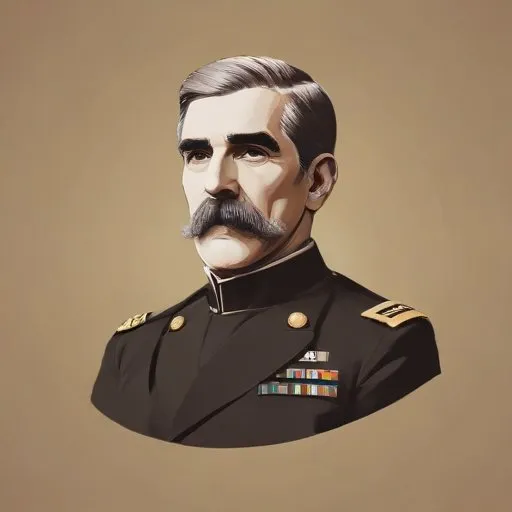
A Confederate general during the American Civil War, he's infamous for his tactical blunders and defeats, ultimately losing the war for the South.
Braxton Bragg, a prominent figure in the American Civil War, is remembered as the commander of the Army of Tennessee, leading his troops through some of the most pivotal battles of the conflict. His military prowess, though often marred by controversy and criticism, earned him a reputation as a skilled, yet divisive, leader.
Born on March 22, 1817, in Warrenton, North Carolina, Bragg graduated from West Point in 1837, ranking fifth in his class. He saw action in the Second Seminole War and the Mexican-American War, where he received three brevet promotions for his distinguished service, including a commendation for his bravery at the Battle of Buena Vista.
In 1856, Bragg resigned from the U.S. Army to become a sugar plantation owner in Louisiana. When the Civil War broke out, he returned to military life, training soldiers in the Gulf Coast region. His leadership skills and experience soon earned him a promotion to corps commander at the Battle of Shiloh, where he launched several costly frontal assaults, albeit earning commendations for his conduct and bravery.
In June 1862, Bragg was elevated to command the Army of Mississippi, later renamed the Army of Tennessee. He led his troops through several significant battles, including the Battle of Perryville, the Battle of Stones River, and the Battle of Chickamauga, where he defeated Union forces under Major General William Rosecrans. However, his retreats and tactical decisions often drew criticism from his contemporaries and historians alike.
Bragg's leadership style, which often emphasized discipline and obedience over initiative and creativity, led to resentment among his subordinates. His tendency to micromanage and obsess over minor details further eroded his relationships with his officers. The controversy surrounding his decisions, particularly during the Tullahoma Campaign and the Battle of Chickamauga, has been the subject of much debate among historians.
Despite his controversial reputation, Bragg played a significant role in shaping the course of the American Civil War. His military campaigns and battles influenced the trajectory of the conflict, particularly in the Western Theater. His legacy serves as a reminder of the complexities and challenges of military leadership during times of war.
After the Civil War, Bragg worked as a civil engineer and later served as the chief engineer of the Alabama and Chattanooga Railroad. He passed away on September 27, 1876, in Galveston, Texas. Bragg's legacy, though marked by controversy, remains an integral part of American history, offering valuable lessons for military leaders and historians alike.
"I am willing to sacrifice everything for the success of our cause... I am willing to die for it, and I expect every officer and soldier to do the same."
Braxton Bragg's complex and multifaceted legacy continues to fascinate and educate historians and enthusiasts alike. While his military prowess and leadership skills are undeniable, his controversies and criticisms serve as a poignant reminder of the complexities of human nature, even in the midst of war.
Born in 1807
Led the Confederate States Army during the American Civil War, surrendering to Union forces at Appomattox, marking the war's effective end.
Born in 1822
Led the Union Army to victory in the Civil War and later became President, known for issuing the Emancipation Proclamation and strengthening federal authority.
Born in 1820
A renowned Union general during the American Civil War, he's infamous for his scorched earth tactics and march through the Confederacy, leaving destruction in his wake.
Born in 1826
A Union general during the American Civil War, he's infamous for his cautious tactics and disagreements with President Lincoln, later becoming a governor of New Jersey.
Born in 1821
A Confederate general during the American Civil War, later serving as a diplomat and ambassador to Turkey, known for his military strategies and post-war reconciliation efforts.
Born in 1825
A Confederate general during the American Civil War, known for his bravery and tactical skills, leading troops in several key battles, including the Battle of Chancellorsville.
Born in 1831
A Confederate general during the American Civil War, known for his bravery and aggressive tactics, but also criticized for his reckless decisions that led to devastating defeats.
Born in 1818
A Confederate general who played a pivotal role in the American Civil War, particularly during the Battle of Fort Sumter, and is often credited with starting the war.
