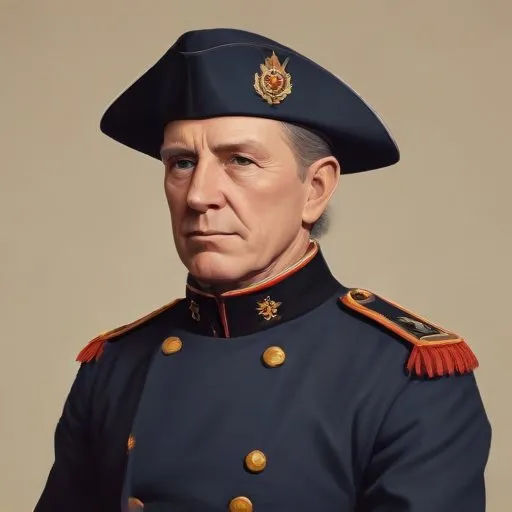
John Bell Hood: The Conflicted Confederate General
A Legacy of Bravery and Criticism
John Bell Hood is known for his valiant efforts as a Confederate general during the American Civil War, earning him a reputation as an aggressive leader who inspired loyalty among his troops. However, his impulsive decisions on the battlefield often led to devastating losses, making him a polarizing figure in the annals of American history.
A Formative Education
Born on June 1 or June 29, 1831, in Owensville, Kentucky, Hood's early life was marked by a strong sense of duty and discipline. He attended the United States Military Academy, where he graduated in 1853, landing a commission as a junior officer in the infantry and cavalry of the antebellum U.S. Army. His educational background would serve as the foundation for his future military career, which took him to California and Texas.
Rise to Prominence
At the outbreak of the Civil War, Hood offered his services to his adopted state of Texas, fighting for the Confederacy. His bravery and tactical prowess caught the attention of
Robert E. Lee, under whom he served as a brigade commander during the Seven Days Battles in 1862. This experience earned him a promotion to division command, solidifying his reputation as a fearless leader.
Battles and Injuries
Hood's military career was marked by several high-profile battles, including Gettysburg, where he was severely wounded, leaving his left arm largely useless for the remainder of his life. Despite this setback, he continued to fight, leading a massive assault into a gap in the Union line at the Battle of Chickamauga, only to be wounded again, requiring the amputation of his right leg.
A Young General
In 1864, at the age of 33, Hood was promoted to temporary full general and command of the Army of Tennessee, making him the youngest soldier on either side of the war to achieve such a high rank. This rapid ascent came with immense pressure, as he was tasked with defending Atlanta from Union forces.
A Series of Defeats
Hood's tenure as commander of the Army of Tennessee was marked by a string of costly defeats, including the Battles of Franklin and Nashville. His aggressive tactics, while admirable in spirit, often led to devastating losses, earning him criticism from historians and contemporaries alike.
Post-War Life and Legacy
After the war, Hood relocated to Louisiana, where he worked as a cotton broker and in the insurance industry. Despite his tumultuous military career, he remained proud of his service and was active in Confederate veterans' organizations until his death on August 30, 1879.
Controversial Legacy
Hood's legacy is complex, marked by both bravery and criticism. While he inspired loyalty among his troops, his impulsive decisions led to devastating losses, raising questions about his tactical acumen. Nevertheless, his story serves as a testament to the complexities of human nature, highlighting the dualities of courage and fallibility.
Quotes and Memorable Sayings
- "I am willing to sacrifice every man in my army to gain our independence." - John Bell Hood
- "The fate of the Confederacy is in our hands, and we must not falter." - John Bell Hood
Historical Context and Legacy
John Bell Hood's story is inextricably linked to the tumultuous era of the American Civil War. His experiences, both on and off the battlefield, offer a nuanced glimpse into the complexities of human nature, highlighting the tension between bravery and recklessness. As such, his legacy serves as a poignant reminder of the human cost of war and the importance of introspection in the face of adversity.
FAQ
What was John Bell Hoods role in the American Civil War?
John Bell Hood was a Confederate general during the American Civil War, known for his bravery and leadership in several key battles, including the Battle of Gettysburg and the Battle of Antietam.
What was John Bell Hoods most famous battle?
John Bell Hoods most famous battle was the Battle of Atlanta, where he led the Confederate Army of Tennessee against Union forces led by General William Tecumseh Sherman.
How did John Bell Hood lose his leg?
John Bell Hood lost his leg during the Battle of Chickamauga in 1863, when a shell exploded and shattered his leg.
What was John Bell Hoods post-war life like?
After the war, John Bell Hood moved to Louisiana and worked as a cotton broker and insurance agent. He also wrote an autobiography and was involved in various business ventures.
Is John Bell Hood considered a skilled military commander?
John Bell Hood is considered a skilled military commander, known for his bravery and tactical abilities, although his decisions have been criticized by some historians as impulsive and reckless.