


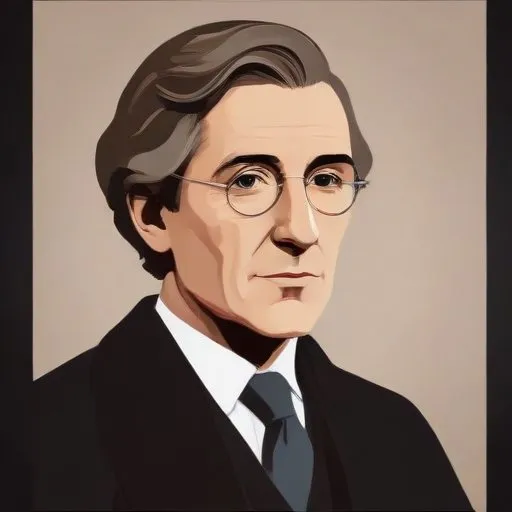
A 17th-century lawyer who served as Lord Keeper of the Great Seal and Lord Chancellor of England, known for his influential role in shaping English law and politics.
Bulstrode Whitelocke was a renowned English lawyer, writer, and parliamentarian who made significant contributions to the country's legal and political landscape. He is most known for serving as the Lord Keeper of the Great Seal of England, a position that allowed him to shape the country's laws and policies during a tumultuous period in history.
Born on August 6, 1605, in London, Whitelocke was the eldest son of Sir James Whitelocke and Elizabeth Bulstrode. He was baptized at the nearby church of St Dunstan-in-the-West, where his maternal grandparents were married in 1571. His uncle, Edmund Whitelocke, insisted that he be named Bulstrode, and the vicar eventually agreed.
Whitelocke received his education at Eton College, Merchant Taylors School, and St Johns College, Oxford, where he matriculated in 1620. Although he did not complete his degree, he went on to pursue a career in law.
Whitelocke began his legal career at the Middle Temple and was called to the bar in 1626. He became treasurer of his Temple in 1628 and demonstrated a passion for field sports and music. In 1633-1634, he was responsible for the music in the great masque "The Triumph of Peace," performed by the Inns of Court before Charles I of England and Henrietta Maria of France.
Throughout his legal career, Whitelocke held various positions, including Recorder of Abingdon (1632-1649), Oxford (1647-1649), and Bristol (1651-1655). He was also Counsel for Henley in 1632.
Whitelocke entered politics in 1626, when he was elected Member for Stafford in the parliament of that year. He became a prominent figure in the Long Parliament, playing a key role in the proceedings against Strafford and serving as Chairman of the Committee of Management. He was instrumental in drafting the Bill for making Parliaments indissoluble except by their own consent and supported the Grand Remonstrance.
Whitelocke's commitment to the cause of parliamentary reform earned him recognition, and he was appointed Lord Keeper of the Great Seal of England, a position he held from 1650 to 1653. During this period, he worked closely with Oliver Cromwell, who relied heavily on Whitelocke's legal expertise.
Whitelocke's contributions to English law and politics have had a lasting impact on the country's history. His commitment to parliamentary reform and his advocacy for the rights of the people have made him a revered figure in English history. Through his writings and legal reforms, Whitelocke helped shape the country's legal system, leaving a legacy that continues to influence English law to this day.
Despite the turmoil of his time, Whitelocke remained dedicated to his principles, working tirelessly to promote justice, fairness, and equality. His unwavering commitment to the cause of parliamentary reform has earned him a permanent place in the annals of English history.
Today, Bulstrode Whitelocke is remembered as a distinguished lawyer, parliamentarian, and Lord Keeper of the Great Seal of England. His life and achievements serve as a testament to the power of dedication, hard work, and a commitment to principle.
Born in 1599
Leader of the Parliamentarian forces during the English Civil War, who later ruled England, Scotland, and Ireland as a republican dictator, known for his military victories and radical reforms.
Born in 1608
Wrote epic poems, including "Paradise Lost", that explored themes of morality, free will, and the human condition.
Born in 1612
A prominent Parliamentarian commander during the English Civil War, he led the New Model Army to several victories, playing a crucial role in the execution of King Charles I.
Born in 1573
A 17th-century Archbishop of Canterbury who played a significant role in shaping the Church of England, known for his efforts to impose uniformity and suppress Puritanism.
Born in 1584
A renowned 17th-century jurist and scholar who made significant contributions to the fields of law, history, and literature, earning him a reputation as one of the most learned men of his time.
