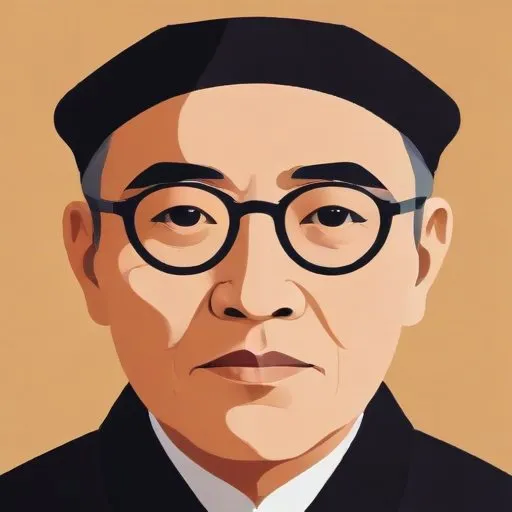
Cai Yuanpei: The Visionary Philosopher and Education Reformer
A Pioneer in Chinese Modern Education
Cai Yuanpei, a renowned Chinese philosopher, politician, and education reformer, made a lasting impact on the country's educational landscape. As the president of Peking University and founder of the Academia Sinica, he played a crucial role in shaping the country's education system, blending traditional Chinese culture with Western thinking.
Early Life and Education
Born in Shanyin County, Shaoxing, Zhejiang, in 1868, Cai was appointed to the Hanlin Academy at the tender age of 26. He went on to become the Superintendent of Shaoxing Chinese-Western School, Head of Sheng District Shan Shan College, and Director-Teacher of the Special Class of Nanyang Public School (precursor to Shanghai Jiao Tong University).
Aesthetic Education and Anarchist Influences
Cai's intellectual pursuits took him to Germany in 1907, where he studied philosophy, psychology, and art history under the tutelage of Karl Lamprecht and
Wilhelm Wundt at the University of Leipzig. During this period, he was deeply influenced by anarchist ideologies, which would later shape his educational philosophies.
Minister of Education and Advocacy for Film in Education
In 1912, Cai became the Minister of Education in the new Republic of China, where he championed the use of film as a tool to support public education. This forward-thinking approach earned him recognition as a visionary in the field of education.
Presidency of Peking University and the Diligent Work-Frugal Study Movement
Cai returned to China in 1916 and took the helm as the President of Peking University the following year. During his tenure, he revived his support for the Diligent Work-Frugal Study Movement, which sent worker-students to France. This initiative aimed to promote cultural exchange and foster intellectual growth.
Recruiting Future Leaders and Thinkers
Under Cai's leadership, Peking University became a hub for intellectual talent. He recruited prominent thinkers, including future Chinese Communist Party leaders Chen Duxiu and Li Dazhao, as well as notable figures like Hu Shih, a close friend and confidant.
Legacy and Impact on Chinese Modern Education
Cai Yuanpei's contributions to education reform have had a profound impact on Chinese modern education. His emphasis on aesthetic education, critical evaluation of Chinese culture, and synthesis of Chinese and Western thinking continue to influence education policies in China.
Philosophical Contributions and Beliefs
Cai's philosophical contributions include his critical evaluation of Chinese culture, his advocacy for anarchism, and his synthesis of Chinese and Western thinking. His beliefs were shaped by his experiences as a student, educator, and politician, reflecting his commitment to education as a means of social transformation.
Personal Milestones and Key Life Events
- Appointed to the Hanlin Academy at 26 (1894)
- Became Superintendent of Shaoxing Chinese-Western School (1898)
- Studied philosophy, psychology, and art history in Germany (1907)
- Founded Guangfuhui (1904) and joined Tongmenghui in Paris (1905)
- Became Minister of Education in the new Republic of China (1912)
- Became President of Peking University (1917)
Historical Context and Legacy
Cai Yuanpei's life and work are set against the backdrop of China's tumultuous early 20th century. His dedication to education reform and his synthesis of Chinese and Western thinking have left an indelible mark on Chinese modern education. Today, he is remembered as a visionary philosopher, educator, and politician who shaped the country's intellectual landscape.
FAQ
What was Cai Yuanpeis role in Chinese politics and education?
Cai Yuanpei was a Chinese philosopher, academic, and politician who served as the President of Peking University and played a key role in shaping Chinas modern education system.
What were Cai Yuanpeis views on education and its role in society?
Cai Yuanpei believed that education should be free from government control and focused on cultivating individual creativity and critical thinking, rather than solely promoting traditional values.
How did Cai Yuanpeis experiences in Europe influence his views on education?
Cai Yuanpeis experiences in Europe exposed him to new educational ideas and approaches, which he incorporated into his own vision for Chinese education reform.
What is Cai Yuanpeis legacy in Chinese education?
Cai Yuanpeis legacy in Chinese education is that of a visionary who promoted academic freedom, emphasized the importance of individual creativity, and helped shape Chinas modern education system.
How did Cai Yuanpeis views on education influence Chinese intellectuals?
Cai Yuanpeis views on education influenced Chinese intellectuals by encouraging them to think critically and independently, and promoting a more open and tolerant approach to knowledge and ideas.