


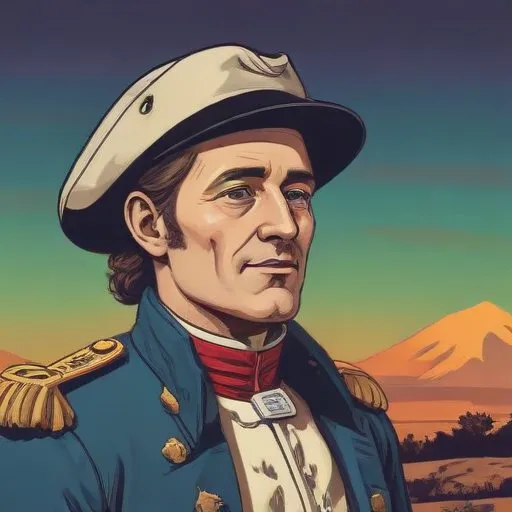
A German botanist and explorer who traveled extensively in South America, discovering and documenting thousands of plant species, and creating the first comprehensive flora of Brazil.
Carl Friedrich Philipp von Martius, a German botanist and explorer, is renowned for his groundbreaking expedition to Brazil, where he traversed 10,000 kilometers, collecting and documenting over 6,000 botanical specimens, including many new species. His monumental work,
Born on April 17, 1794, in Erlangen, Germany, Martius was the son of Prof. Ernst Wilhelm Martius, a court apothecary. He graduated with a PhD from Erlangen University in 1814, presenting a critical catalogue of plants in the university's botanical garden as his thesis.
In 1817, Martius, accompanied by Johann Baptist von Spix, embarked on an extraordinary journey to Brazil, commissioned by King Maximilian I Joseph of Bavaria. Over three years, they explored the vast Brazilian terrain, venturing from Rio de Janeiro to the Amazon River, and navigating its tributaries. This perilous expedition yielded a staggering collection of botanical specimens, which would later form the foundation of Martius' life's work.
Martius' return to Europe in 1820 marked the beginning of a distinguished career. He was appointed keeper of the botanic garden at Munich and professor of botany at the university, positions he held until 1864. His remarkable contributions include:
Martius' groundbreaking work earned him numerous accolades, including:
Martius passed away on December 13, 1868, leaving behind a legacy that continues to inspire botanists and naturalists worldwide. His unwavering dedication to the study of Brazilian flora has had a profound impact on our understanding of the region's biodiversity.
In conclusion, Carl Friedrich Philipp von Martius' pioneering spirit, coupled with his meticulous scientific approach, has secured his place as one of the most important botanists of the 19th century. His work continues to fascinate and educate, serving as a testament to the wonders that await us in the uncharted territories of our planet.
Born in 1769
A pioneering geographer and explorer who mapped much of South America and discovered the Caspian Sea's connection to the Black Sea, greatly advancing our understanding of the natural world.
Born in 1707
Developed the system of binomial nomenclature, which is still used today to classify and name living organisms. This system has had a profound impact on the fields of biology, ecology, and conservation.
Born in 1743
A British naturalist who sailed with Captain Cook on the HMS Endeavour, discovering and cataloging thousands of plant species, and advising on the development of the British colonies. He's considered the "father of Australian botany".
Born in 1744
A French soldier, biologist, and academic who developed a theory of inheritance of acquired characteristics, proposing that organisms adapt to their environment and pass on those traits to their offspring.
Born in 1754
A pioneering ethnologist and journalist who traveled extensively, documenting indigenous cultures and advocating for social justice, leaving a lasting impact on our understanding of diverse societies.
Born in 1751
Austrian pianist and composer known for his contributions to the development of the Classical piano concerto, leaving behind a legacy of over 100 concertos. His music showcases a unique blend of Viennese elegance and Bohemian flair.
Born in 1781
German biologist and explorer who traveled to Brazil in 1817, collecting and describing thousands of species, including many amphibians and reptiles, and producing a comprehensive catalog of Brazilian fauna.
Born in 1783
Discovered morphine, the primary active ingredient in opium, and isolated it from opium in 1804, paving the way for modern pain management.
