


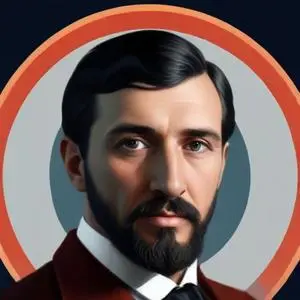
Founded a company that revolutionized marine transportation by inventing the steam turbine, which greatly increased the speed and efficiency of ships. This innovation transformed the shipping industry and had a significant impact on global trade.
Charles Algernon Parsons, a British engineer, is renowned for his groundbreaking invention of the compound steam turbine, a innovation that transformed the landscape of power generation, naval warfare, and electrical engineering. His pioneering work in turbine design and power generation earned him the distinction of being the eponym of C. A. Parsons and Company, a testament to his profound impact on the industry.
Born on June 13, 1854, in London, Parsons was the youngest son of the illustrious astronomer William Parsons, 3rd Earl of Rosse. The family's seat, Birr Castle, County Offaly, Ireland, was a hub of intellectual curiosity, where Parsons was educated at home by private tutors, including John Purser, who were well-versed in the sciences and assisted the Earl in his astronomical work.
Parsons went on to read mathematics at Trinity College, Dublin, and later at St. John's College, Cambridge, where he graduated in 1877 with a first-class honors degree. This academic foundation laid the groundwork for his future successes in engineering.
In 1884, Parsons joined Clarke, Chapman and Co., a ship-engine manufacturer near Newcastle, where he became head of their electrical equipment development. It was during this period that he utilized Regnault's comprehensive collection of steam properties data to develop a turbine engine that turned at an astonishing 18,000 RPM.
This innovation was immediately put to use to drive an electrical generator, which Parsons also designed. The compound steam turbine's ability to produce cheap and plentiful electricity revolutionized marine transport, naval warfare, and power generation, cementing Parsons' status as a visionary engineer.
Parsons' invention of the compound steam turbine has had a profound and lasting impact on modern society. His work has enabled the widespread adoption of electricity, transforming industries and revolutionizing the way people live and work.
Today, his legacy continues to inspire engineers and innovators, serving as a testament to the power of human ingenuity and creativity.
Parsons' work was instrumental in shaping the course of the Industrial Revolution, as his invention of the compound steam turbine enabled the efficient generation of electricity on a large scale.
In the context of naval warfare, Parsons' turbine-powered ships played a crucial role in World War I, contributing significantly to the Allied victory.
Born in 1854
Founded a company that revolutionized marine transportation by inventing the steam turbine, which greatly increased the speed and efficiency of ships. This innovation transformed the shipping industry and had a significant impact on global trade.
Born in 1846
Developed innovative braking systems for trains, revolutionizing rail safety and transforming the industry. Founded a company that dominated the market for over a century.
Born in 1856
A pioneering engineer who harnessed the power of alternating current (AC) to transform the world's electrical systems, and is credited with developing groundbreaking technologies like radio communication and X-ray imaging.
Born in 1847
A pioneer in innovation, credited with developing groundbreaking inventions that revolutionized the way people live and communicate, including the light bulb and phonograph.
Born in 1736
Improved steam engine efficiency, revolutionizing industry and transportation. Known for his innovative designs and patents that transformed the Industrial Revolution.
Born in 1806
A visionary engineer who revolutionized transportation with innovative designs, including the iconic Clifton Suspension Bridge, which transformed urban landscapes.
Born in 1911
Award-winning author of children's literature, particularly known for his novel "Sounder", which explores themes of racism and identity in the rural South during the Great Depression.
Born in 1781
Designed the Liverpool and Manchester Railway, a pioneering feat that revolutionized transportation and paved the way for modern rail networks.
