


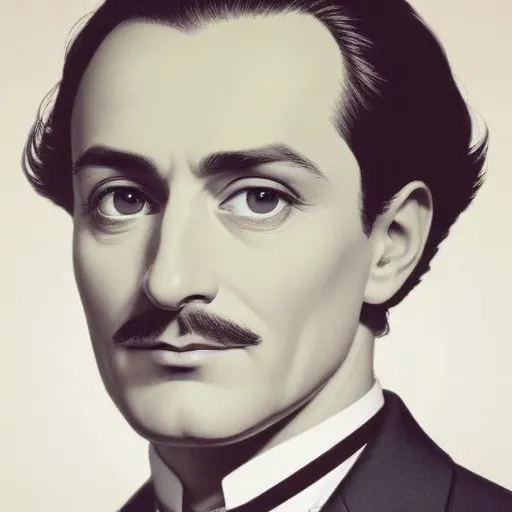
Co-founder of a renowned locomotive manufacturing company, credited with designing and building iconic steam locomotives that revolutionized the railway industry.
Charles Beyer, a celebrated German-British locomotive designer and builder, is best known for co-founding the Institution of Mechanical Engineers and his pioneering work in the field of locomotive engineering. As the co-founder and head engineer of Beyer, Peacock and Company in Gorton, Manchester, Beyer left an indelible mark on the world of engineering and beyond.
Born in Plauen, Saxony, Germany on May 14, 1813, Charles Beyer came from humble beginnings as the son of a weaver. Despite being expected to follow in his father's footsteps, Beyer's mother had bigger aspirations for him, recognizing his talent and encouraging his education in mathematics and drawing.
Beyer's natural aptitude and hard work earned him a place at the prestigious Dresden Polytechnic, where he supplemented a meager state scholarship by doing odd jobs. A philanthropic lady would occasionally provide Sunday dinner to the student with the highest marks, and Beyer made sure to consistently outperform his peers to secure that meal.
After completing his studies, Beyer took a job at a machine works in Chemnitz before moving to England, where he co-founded Beyer, Peacock and Company in 1854. The company would go on to become a leading manufacturer of locomotives, with Beyer's innovative designs revolutionizing the industry.
Beyer's philanthropic efforts extended far beyond his professional achievements. He founded three parish churches and associated schools in Gorton, was a governor of The Manchester Grammar School, and remains the single largest donor to the University of Manchester. His generosity and contributions to education have left a lasting impact on the community.
Beyer's personal life was marked by milestones, including the construction of his 700-acre Llantysilio Hall estate in North Wales, where he is buried in the graveyard of Llantysilio Church. His mansion house, built between 1872 and 1874, stands as a testament to his success and influence.
Charles Beyer's legacy extends far beyond his achievements in locomotive engineering. His philanthropic efforts, educational contributions, and innovative designs have had a profound impact on modern society. As a pioneering figure in his field, Beyer's influence can still be felt today, inspiring future generations of engineers, educators, and philanthropists alike.
Beyer's remarkable story serves as a testament to the power of innovation, hard work, and philanthropy, inspiring us to strive for greatness and make a lasting impact on the world around us.
Born in 1771
Built steam-powered locomotives, revolutionizing land transportation, and pioneered the use of steam engines in mines.
Born in 1781
Designed the Liverpool and Manchester Railway, a pioneering feat that revolutionized transportation and paved the way for modern rail networks.
Born in 1806
A visionary engineer who revolutionized transportation with innovative designs, including the iconic Clifton Suspension Bridge, which transformed urban landscapes.
Born in 1791
Pioneering scientist who discovered electromagnetic induction, formulated the laws of electrolysis, and invented the first electrical generator, revolutionizing our understanding of electricity and its applications.
Born in 1736
Improved steam engine efficiency, revolutionizing industry and transportation. Known for his innovative designs and patents that transformed the Industrial Revolution.
82 Years Old
Discovered and characterized split genes, and developed methods for identifying and isolating genes, leading to major advances in genetic engineering and biotechnology.
Born in 1757
A Scottish architect and engineer renowned for designing iconic bridges, including the Menai Suspension Bridge, which revolutionized transportation and connected communities.
