


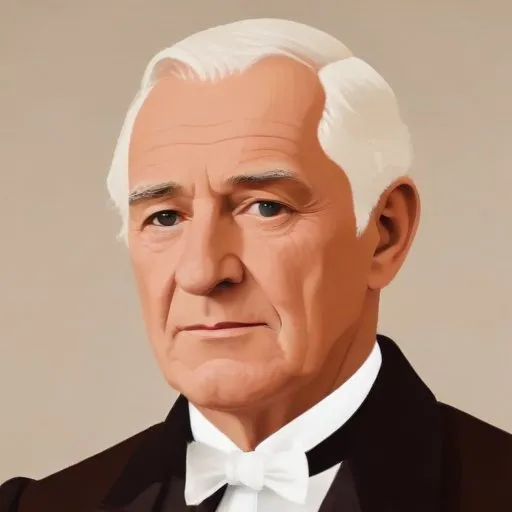
An English politician who served as the 8th Governor of Queensland, known for his colonial administration and implementation of policies in Australia during the late 19th century.
Charles CochraneBaillie, 2nd Baron Lamington, was a British politician and colonial administrator who left an indelible mark on the history of Queensland and Bombay. He is best known for his governorships of these two regions, where he navigated complex political landscapes with ease and forged a path that would shape the future of these territories.
Born on July 29, 1860, in London, England, Charles was the only son of Alexander Baillie Cochrane, 1st Baron Lamington. He received his education at Eton College and Christ Church, Oxford, graduating with a Bachelor of Arts in 1883.
Charles's foray into politics began in 1885, when he became assistant private secretary to the Prime Minister of the United Kingdom, Lord Salisbury. He narrowly lost the election for the borough constituency of St Pancras North but later won the seat in July 1886, representing the Conservative Party in the British House of Commons.
Upon his father's death in 1890, Charles succeeded as the 2nd Baron Lamington. He married Mary Houghton Hozier in 1895, and the couple had two children, a son and a daughter.
In 1890, the British government sent Lord Lamington on a mission to travel between Tonkin in Vietnam and Siam, with the aim of annexing at least the Xishuangbanna district and possibly the whole Yunnan province of China. This journey was an attempt to limit French colonization of the area, showcasing Charles's adventurous spirit and willingness to take on challenging assignments.
Lord Lamington's governorships were marked by his conservative approach to politics and his efforts to maintain the role of state governors in the face of changing political landscapes. He served as Governor of Queensland from 1896 to 1901 and Governor of Bombay from 1903 to 1907.
Charles CochraneBaillie, 2nd Baron Lamington, left behind a legacy of adventure, leadership, and political savvy. His governorships of Queensland and Bombay remain a testament to his ability to navigate complex political landscapes and forge a path that would shape the future of these territories.
Through his travels, governorships, and political career, Charles demonstrated a sense of adventure and a willingness to take on challenging assignments, earning him a place in the annals of history as a remarkable individual who made a lasting impact on the world.
Born in 1836
A Scottish merchant and politician who served as Prime Minister of the United Kingdom, known for his liberal reforms and efforts to improve social welfare. He's remembered for his progressive policies and commitment to social justice.
Born in 1871
Prolific writer of historical novels and adventure stories, also a talented landscape painter.
Born in 1863
A Welsh lawyer and politician who served as Prime Minister of the United Kingdom, leading the country through World War I and introducing key social reforms. He's known for his charismatic leadership and progressive policies.
Born in 1867
A conservative leader who served as Prime Minister three times, known for his role in navigating Britain through economic crises and advocating for imperial protectionism.
Born in 1866
A Scottish journalist and politician who served as the first Labour Party Prime Minister of the United Kingdom, leading the country through significant economic and social reforms. He is also known for his efforts to maintain peace in Europe during the interwar period.
Born in 1903
A British aristocrat who served as Prime Minister from 1963 to 1964, known for his brief tenure and aristocratic background.
