


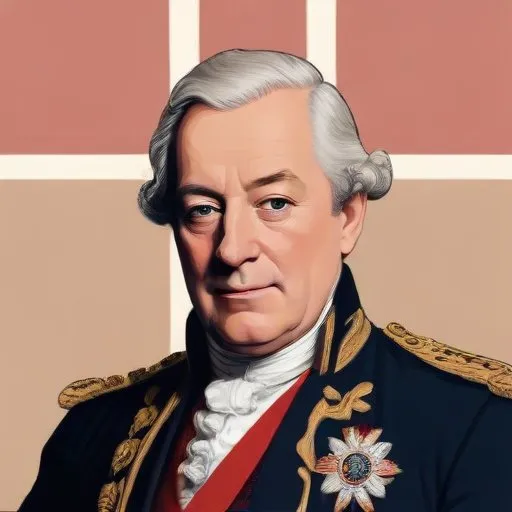
A British politician who served as Lord Lieutenant of Suffolk, known for his role in the British government and local administration. He was a prominent figure in 18th-century British politics.
Charles Cornwallis, 3rd Baron Cornwallis, was a British politician who made a lasting impact on the country's administration and military affairs. As the First Lord of the Admiralty and Lord Lieutenant of Suffolk, he demonstrated exceptional leadership skills, earning him a revered position in British history.
Born on December 28, 1655, Cornwallis succeeded his father, Charles Cornwallis, 2nd Baron Cornwallis, as Baron Cornwallis in 1673. This marked the beginning of his illustrious career in public service. Throughout his life, he held various influential positions, showcasing his astute political acumen and strategic thinking.
One of Cornwallis' most notable achievements was his role as Colonel of the Suffolk Militia Horse in 1692. This position not only demonstrated his military expertise but also highlighted his commitment to protecting his community. Under his leadership, the Suffolk Militia Horse became a formidable force, earning recognition and respect throughout the region.
On December 27, 1673, Cornwallis married Elizabeth Fox, daughter of Sir Stephen Fox, at Westminster Abbey. The couple had a son, Charles, who would eventually succeed him as the 4th Baron Cornwallis. Tragedy struck when Elizabeth passed away on February 28, 1681, in Tunbridge Wells. Cornwallis later married Anne Scott, 1st Duchess of Buccleuch, widow of James Scott, 1st Duke of Monmouth.
Cornwallis' contributions to British politics and military affairs during the late 17th century were instrumental in shaping the country's future. His leadership and strategic thinking served as a model for future generations of politicians and military leaders. Despite his passing on April 29, 1698, his legacy continues to inspire and educate historians and scholars alike.
Cornwallis' remarkable life, marked by dedication to public service, military leadership, and personal relationships, continues to fascinate historians and inspire future generations. His lasting impact on British history is a testament to his astute political acumen and strategic thinking.
Born in 1749
A prominent 18th-century politician who championed individual liberties and opposed British imperialism, known for his charismatic oratory skills and influential foreign policy decisions.
Born in 1759
Prime Minister of the United Kingdom from 1783 to 1801 and 1804 to 1806, known for leading the country through the French Revolutionary and Napoleonic Wars.
Born in 1738
The British monarch who ruled during the American Revolution, losing the colonies, and later suffered a mental illness that led to a regency crisis. He's also known for his cultural and artistic patronage.
Born in 1729
An 18th-century thinker who shaped modern conservatism, advocating for gradual social change and warning against the dangers of radical revolution. He's also known for his philosophical writings on aesthetics and the sublime.
Born in 1725
A pioneering advocate for press freedom and a vocal critic of government corruption, known for his fearless journalism and radical politics.
Born in 1712
A skilled lawyer and politician who served as Prime Minister of Great Britain, known for implementing the Stamp Act, a taxation policy that sparked American colonial resistance.
