


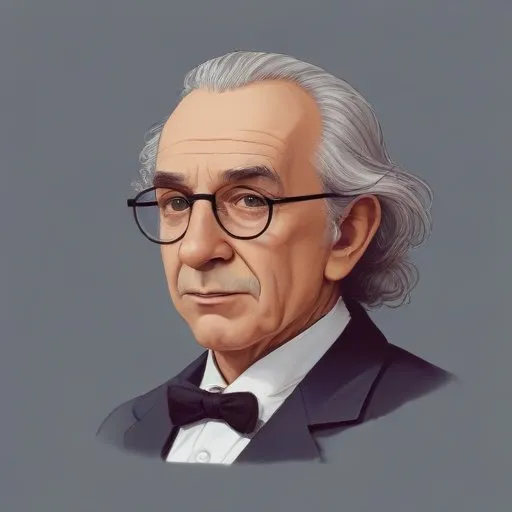
Discovered the ozone layer in the Earth's atmosphere, and pioneered the field of spectroscopy, making significant contributions to our understanding of light and matter.
French physicist Charles Fabry is renowned for his groundbreaking work in optics, particularly for co-inventing the Fabry-Perot interferometer with Alfred Perot. This invention revolutionized the field of optics and spectroscopy, cementing Fabry's position as a leading authority in the discipline.
Born on June 11, 1867, in Marseille, France, Fabry graduated from the prestigious École Polytechnique in Paris and later earned his doctorate from the University of Paris in 1892. His doctoral thesis on interference fringes laid the foundation for his future research in optics and spectroscopy.
Fabry's work has had a profound impact on various fields, including optics, spectroscopy, astronomy, and telecommunications. His inventions and discoveries have paved the way for numerous applications, from atomic energy to medical research. The asteroid 410619 Fabry, named in his honor, serves as a testament to his enduring legacy in the scientific community.
Fabry's dedication to his work was complemented by his leadership roles in various scientific organizations. He served as President of the Société astronomique de France from 1931 to 1933, and was elected to the French Academy of Sciences in 1927.
Throughout his life, Charles Fabry remained committed to advancing our understanding of the natural world, leaving behind a legacy of innovation and discovery that continues to inspire scientists and researchers today.
Born in 1854
A pioneer in mathematics and physics, he laid the foundations for modern chaos theory, topology, and relativity, making groundbreaking contributions to our understanding of space and time.
Born in 1867
A pioneering scientist who pioneered radioactivity research, discovering elements polonium and radium, and paving the way for breakthroughs in medicine and energy.
Born in 1859
A pioneer in radioactivity research, discovering elements like polonium and radium, and pioneering radioactive isolation techniques. Their groundbreaking work paved the way for advancements in medicine, energy, and materials science.
Born in 1870
A Nobel Prize-winning physicist and chemist who pioneered the study of the atom, providing conclusive evidence for its existence and structure. Their work laid the foundation for modern particle physics.
Born in 1872
A pioneer in X-ray and gamma ray research, he developed the Langevin dynamics equation, a fundamental concept in statistical physics. His work laid the foundation for modern materials science and nanotechnology.
Born in 1871
A French mathematician and politician who made significant contributions to probability theory, measure theory, and topology, and served as a minister in the French government.
Born in 1852
Discovered radioactivity, a fundamental property of atoms, and pioneered research in the field, leading to breakthroughs in medicine, energy, and materials science.
Born in 1892
A French physicist and Nobel laureate who proposed that particles, such as electrons, can exhibit wave-like behavior, revolutionizing quantum mechanics. His hypothesis led to major breakthroughs in understanding the atomic structure.
