


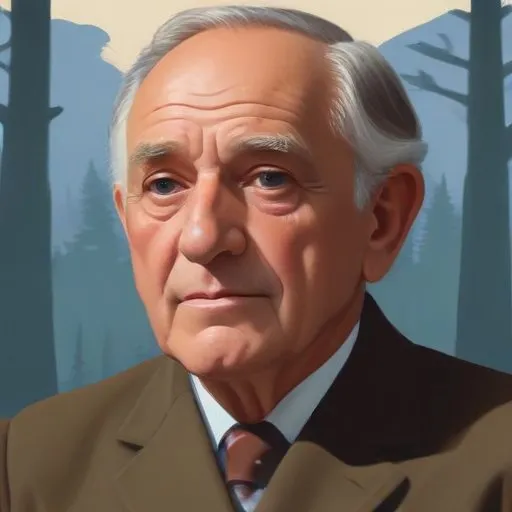
Noted for discovering and describing numerous species of insects, particularly butterflies and moths, and contributing significantly to the field of entomology.
Charles Harvey Bollman, an American naturalist, made a profound impact on the scientific community with his groundbreaking work on fishes and myriapods, leaving behind a legacy that continues to inspire and awe even today.
In a career that spanned merely three years, Bollman published thirteen papers, co-authored with renowned naturalists, and described 65 new species of myriapods in North America, cementing his position as one of the most brilliant and promising naturalists of his time.
Born on December 24, 1868, in Monongahela, Pennsylvania, Bollman's fascination with nature was evident from an early age.
He pursued his passion at Indiana University at Bloomington, where he studied under the guidance of prominent naturalists, John C. Branner and David Starr Jordan.
As a founding member of the university's Independent Literary Society, Bollman's inquisitive nature and dedication to his craft earned him recognition and accolades from his peers.
Upon graduating in June 1889, Bollman was appointed as an assistant in the United States Fish Commission, a testament to his exceptional skills and knowledge.
Tragically, his life was cut short when he contracted dysentery while collecting fish in the Okefenokee Swamp of Waycross, Georgia, and passed away on July 13, 1889, at the tender age of 20.
Bollman's remarkable contributions to the field of natural history were acknowledged and celebrated by his contemporaries.
David Starr Jordan, his mentor and colleague, honored his memory by naming the goby genus Bollmannia after him.
Fish species Opsopoeodus bollmani and the millipede genus Bollmania were also named in his honor, a testament to the significant impact he had on the scientific community.
Bollman's work was driven by an insatiable curiosity and a passion for understanding the natural world.
His dedication to his craft and his contributions to the field of natural history continue to inspire and motivate scientists and researchers today.
As we reflect on Bollman's remarkable life and legacy, we are reminded of the power of human inquiry and the importance of preserving and protecting our planet's biodiversity.
Born in 1785
A pioneering ornithologist and artist, famous for meticulously illustrating and documenting North American bird species in his iconic book "The Birds of America". His work remains a cornerstone of ornithology and wildlife art.
Born in 1825
A British explorer who traveled to the Amazon rainforest and discovered over 8,000 species, including butterflies, beetles, and birds, and is known for his theory of mimicry in nature.
Born in 1823
A pioneering naturalist who discovered evolution through natural selection, independently of Charles Darwin, and contributed significantly to the field of biogeography.
Born in 1860
A renowned outdoorsman and conservationist, he wrote influential books on wildlife and the wilderness, inspiring generations to appreciate and protect nature.
Born in 1838
A pioneering conservationist and writer who advocated for the preservation of America's wilderness and national parks, inspiring generations to appreciate and protect the natural world.
Born in 1837
A renowned naturalist and writer who explored the American wilderness, documenting its beauty and importance in numerous essays and books. He's celebrated for his poetic descriptions of nature and advocacy for conservation.
