


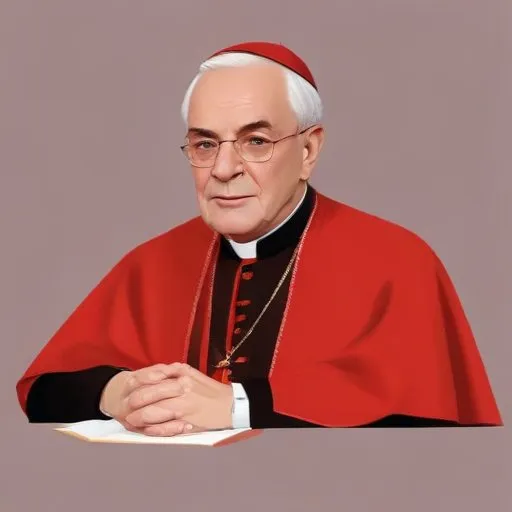
A French-Algerian cardinal and academic who founded the White Fathers and White Sisters missionary societies, and was a vocal anti-slavery advocate. He's also known for his efforts to combat slavery in Africa.
Charles Lavigerie, a French Catholic cardinal, is renowned for his tireless efforts in establishing Catholic missions across Africa, combating the slave trade, and promoting Catholicism among the native populations. As the founder of the White Fathers, a missionary order of priests, brothers, and nuns, Lavigerie dedicated his life to spreading Christianity and improving the lives of Africans.
Born on October 31, 1825, in Bayonne, France, Charles Martial Allemand Lavigerie was educated at St Sulpice, Paris. He was ordained a priest in 1849 and later became a professor of ecclesiastical history at the Sorbonne from 1854 to 1856.
In 1856, Lavigerie accepted the direction of the schools of the East, which brought him into contact with the Islamic world. This experience sparked his calling to missionary work, and he wrote, "C'est là que j'ai connu enfin ma vocation" (It was there that I learned my calling). In 1860, as Director for oriental schools, he traveled to Lebanon and Syria to administer relief to Christians following the massacre by the Druze.
Lavigerie's humanitarian work in the Middle East brought him prominence, and he was made a Chevalier of the Legion of Honor. In October 1861, he was appointed French auditor at Rome, and two years later, he was raised to the see of Algiers and Carthage, becoming the Archbishop of Carthage and Algiers and Primate of Africa.
In 1868, Lavigerie founded the White Fathers, a missionary order of priests, brothers, and nuns dedicated to spreading Catholicism in Africa. The order was so named for their white cassocks and red fezzes. Lavigerie's efforts were supported by the Pope and the German Chancellor Otto von Bismarck.
Lavigerie was a vocal opponent of the slave trade, and he worked tirelessly to combat its effects in Africa. He sent his missionaries to the Sahara, Sudan, Tunisia, and Tripolitania to promote Catholicism and protect native populations from enslavement.
Charles Lavigerie died on November 26, 1892, at the age of 67. Despite facing anticlericalism in France, Lavigerie's work was supported by the French government, and his legacy continues to inspire missionaries and humanitarian workers around the world.
Through his tireless efforts, Charles Lavigerie left an indelible mark on the history of Catholicism in Africa, combatting the slave trade, promoting education, and spreading Christianity to millions of people. His legacy continues to inspire generations of missionaries and humanitarian workers around the world.
Born in 1499
Reigned from 1559 to 1565, this Pope oversaw the final session of the Council of Trent, shaping Catholic doctrine and practice for centuries to come. He also commissioned the construction of the Sistine Chapel's dome.
Born in 1810
The first pope to fully embrace modernity, he issued the groundbreaking encyclical Rerum Novarum, which addressed social justice and workers' rights, shaping the Catholic Church's stance on social issues.
Born in 1504
Leader of the Catholic Church during the Counter-Reformation, he excommunicated Queen Elizabeth I and played a key role in the Council of Trent.
Born in 1585
A powerful and cunning statesman who dominated French politics during the 17th century, known for his ruthless suppression of dissent and centralization of power. He was a master strategist and diplomat who shaped the course of European history.
