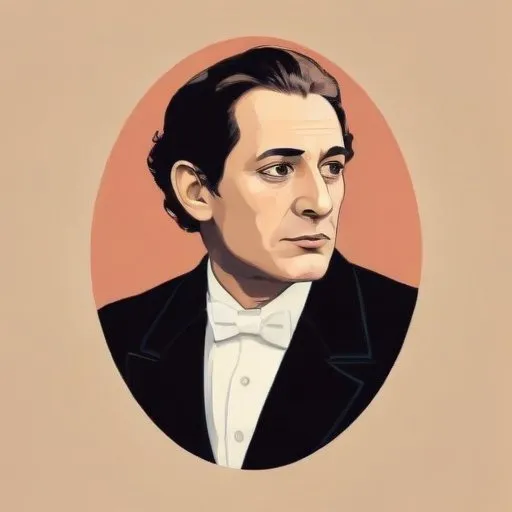
Charles-Louis Hanon: The Virtuoso Pianist Behind the Iconic Exercises
The Man Behind the Method
Charles-Louis Hanon is renowned for his groundbreaking piano pedagogy, particularly his magnum opus, "The Virtuoso Pianist in 60 Exercises". This comprehensive guide has been a staple in piano education for over a century, shaping the technique of countless pianists worldwide. Since its publication, Hanon's exercises have become an integral part of piano training, with many famous pianists, including
Sergei Rachmaninoff and Josef Lhvinne, attributing their virtuosity to his methods.
Early Life and Influences
Born on July 2, 1819, in Renescure, France, Hanon was trained as an organist by a local teacher from a young age. Although it is unclear if he received advanced musical education, his brother François, also a musician, played a significant role in his life. The two brothers moved to Boulogne-sur-Mer, where Hanon would reside for most of his life.
A Devout Musician and Philanthropist
Hanon's life was not solely dedicated to music. He was a devout Roman Catholic, a Third Order Franciscan, and a member of the Society of
St. Vincent de Paul. His commitment to philanthropy led him to become involved with the Brothers of the Christian Schools, a monastic order founded by Saint John Baptist de la Salle. This organization provided free education to underprivileged children, and Hanon contributed by offering free music instruction at the school in Boulogne-sur-Mer.
The Virtuoso Pianist: A Lasting Legacy
Hanon's most significant contribution to the piano world is, without a doubt, "The Virtuoso Pianist in 60 Exercises". These exercises have been a central part of piano pedagogy for generations, aiming to develop finger independence, strength, and dexterity. While some critics have questioned the merits of Hanon's methods, many renowned pianists and pedagogues swear by their efficacy.
Influence on Modern Piano Education
Hanon's exercises have become an essential component of piano education, with many music conservatories and schools around the world incorporating them into their curricula. The Russian piano school, in particular, has credited Hanon's methods with producing an explosion of virtuosic pianists.
Personal Milestones and Key Life Events
- 1819: Born in Renescure, France
- 1846: Moved to Boulogne-sur-Mer, where he lived with his brother François
- 1869: Published "The Virtuoso Pianist in 60 Exercises"
- 1900: Passed away on March 19th in Boulogne-sur-Mer
Criticisms and Controversies
Despite its widespread adoption, Hanon's method has faced criticism for its focus on technical exercises over musical expression. Some argue that this approach can lead to a lack of musicality and nuance in pianists who rely too heavily on Hanon's exercises.
Quote and Memorable Sayings
"The finger is the servant of the hand, and the hand is the servant of the mind." - Charles-Louis Hanon
Legacy and Impact
Charles-Louis Hanon's contributions to piano pedagogy have left an indelible mark on the music world. While his methods may have been subject to criticism, his influence on modern piano education is undeniable. As a testament to his legacy, Hanon's exercises continue to shape the technique of pianists around the world, ensuring his place as one of the most significant figures in piano pedagogy.
FAQ
What is Charles-Louis Hanons most famous work?
Charles-Louis Hanons most famous work is his piano exercise book The Virtuoso Pianist, which is still widely used today. It is considered one of the most important piano exercise books of all time.
What was Charles-Louis Hanons role in shaping piano technique?
Charles-Louis Hanon was a French pianist and composer who played a significant role in shaping piano technique. His exercises and teachings helped to establish a new standard for piano playing.
How did Charles-Louis Hanons music influence the development of piano music?
Charles-Louis Hanons music had a significant impact on the development of piano music. His compositions and exercises helped to push the boundaries of piano technique and inspire new generations of pianists.
What is Charles-Louis Hanons connection to the Paris Conservatory?
Charles-Louis Hanon was a professor at the Paris Conservatory, where he taught piano and composition. He was a prominent figure in the French musical establishment and played a significant role in shaping the countrys musical culture.
What is Charles-Louis Hanons legacy?
Charles-Louis Hanons legacy is that of a pioneering pianist and composer who helped to shape the course of piano history. His exercises and music remain an essential part of piano education today.