


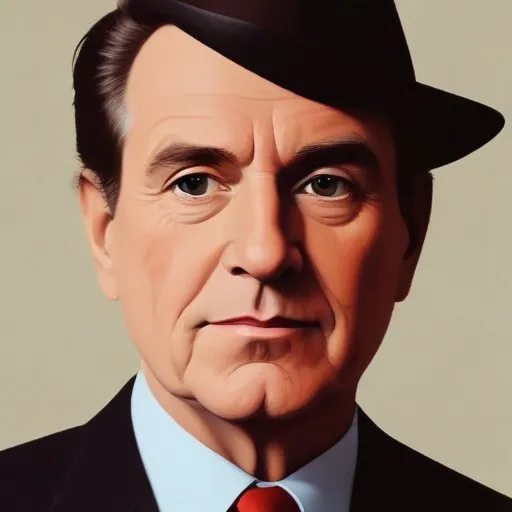
A scandalous figure in the history of American television, he was a contestant on the game show "Twenty-One" who was involved in a cheating scandal that rocked the nation. He was a professor and a writer, but his infamy eclipsed his academic achievements.
Charles Van Doren, an American writer and editor, shot to fame in the 1950s when he became a celebrity contestant on the NBC quiz show Twenty-One. His meteoric rise to fame was quickly followed by a scandal that shook the nation, as he admitted to being given the correct answers by the show's producers, leading to his downfall and a lifetime of redemption.
Born on February 12, 1926, in New York City, Charles Van Doren was the elder son of Pulitzer Prize-winning poet and critic Mark Van Doren and novelist Dorothy Van Doren. His family's literary legacy was evident from a young age, and Charles went on to attend the High School of Music and Art in New York. He later graduated from St. John's College in Annapolis, Maryland, with a B.A. in Liberal Arts and went on to earn his M.A. in Astrophysics and Ph.D. in English from Columbia University.
On November 28, 1956, Van Doren made his debut on Twenty-One, quickly capturing the nation's attention with his charismatic personality and exceptional knowledge. His polite style and telegenic appearance made him an instant favorite, and he went on to defeat the show's incumbent champion, Herb Stempel, to become the new champion.
However, Van Doren's success was short-lived. In 1959, he testified before the U.S. Congress that he had been given the correct answers by the show's producers, leading to his termination from NBC. The scandal sparked a national debate about the integrity of quiz shows and led to a lifetime of redemption for Van Doren.
After the scandal, Van Doren joined Encyclopedia Britannica, Inc. in 1959, where he worked as a vice-president and wrote and edited many books. He remained with the company until his retirement in 1982. During this time, he also taught at several universities, including Columbia and the University of Cambridge.
Van Doren's experiences on Twenty-One and the subsequent scandal led him to reflect on the nature of knowledge and truth. He believed that knowledge should be sought for its own sake, rather than for personal gain or fame. He also advocated for the importance of critical thinking and intellectual honesty.
Charles Van Doren's story serves as a cautionary tale about the dangers of ambition and the importance of integrity. Despite his fall from grace, he went on to lead a fulfilling life, contributing to the world of education and literature. His legacy serves as a reminder that redemption is always possible, and that knowledge and truth should be pursued for their own sake, rather than for personal gain.
Born in 1922
A Pulitzer Prize-winning poet, playwright, and critic, known for his witty and insightful writings that explored the human condition.
Born in 1914
Pulitzer Prize-winning journalist and author who exposed the horrors of war through his writing, most notably with his book "Hiroshima", which told the story of the atomic bombing of Hiroshima from the perspective of six survivors.
Born in 1897
A Nobel Prize-winning author of complex, psychologically rich novels and short stories that explore the American South's troubled history and human nature. His writing style, blending stream-of-consciousness and non-linear narrative, has influenced generations of writers.
Born in 1905
A Pulitzer Prize-winning novelist, poet, and literary critic, best known for his novel "All the King's Men", a classic of American literature.
Born in 1899
A leading figure of the New Criticism movement, known for his influential poetry and literary criticism that shaped modern American literature.
Born in 1917
A confessional poet who pioneered the personal, free-verse style, exploring themes of family, history, and mental illness in his work. He's known for his raw, introspective, and emotionally charged poetry.
Born in 1888
A prominent figure in the New Criticism movement, known for his poetry and literary criticism that emphasized close reading and analysis of texts. He was also a founder of the Kenyon Review literary magazine.
