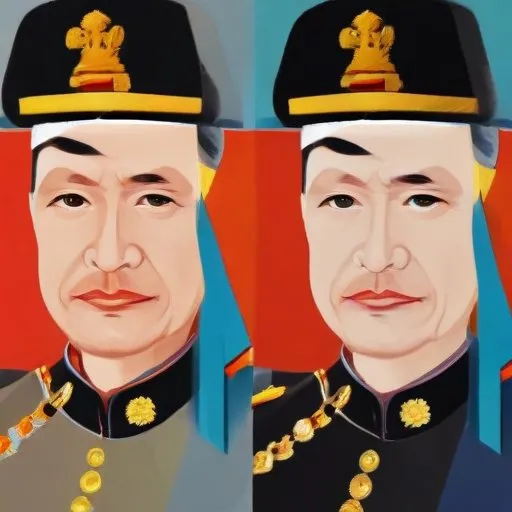
Chi Haotian: The Influential Chinese General and Minister of National Defense
A Career of Service and Controversy
Chi Haotian is a retired general of the Chinese People's Liberation Army, best known for serving as Minister of National Defense from 1993 to 2003. During his tenure, he played a crucial role in shaping China's military strategy and was instrumental in directing the military's response to the Tiananmen Square Protests in 1989.
Early Life and Military Career
Born on July 9, 1929, in Zhaoyuan, Shandong, Republic of China, Chi joined the Chinese Communist Party in October 1946. He was recruited to the army in July 1945 and graduated from the synthesis department of the Military Academy of PLA. During the Korean War, Chi served as a battalion instructor and deputy director of a regimental political department within the 27th Corps of the People's Volunteer Army in North Korea. He received a Class-One commendation for his valor during the war.
Rise to Prominence
In 1973, Chi became the vice political commissar of the Beijing Military Region and vice editor-in-chief of the prominent newspaper People's Daily. Following the 1976 Tangshan earthquake, Chi was appointed as deputy commander of the Tangshan Earthquake Relief Headquarters, overseeing the People's Liberation Army's aid to the victims of the earthquake. He later held various key positions, including vice director of the general staff department of PLA, director of the political department under it, political commissar of Jinan Military Region, and head of the general staff department of PLA.
Controversy and Legacy
Chi's role in directing the military's enforcement of martial law in Beijing during the Tiananmen Square Protests has been widely criticized. As chief of staff, he instructed the commanding officers of the Beijing, Shenyang, and Jinan Military Districts to finalize the name list of every group army division scheduled to advance into Beijing and their exact times of departure and arrival, as well as details regarding primary duties. This decision has been seen as a pivotal moment in the suppression of the protests.
Awards and Honors
Throughout his career, Chi Haotian has received numerous awards and honors for his service to the Chinese military. These include the Chinese People's Liberation Army's highest honor, the August 1 Medal, as well as the Medal of Independence and Freedom.
Personal Milestones and Key Life Events
- 1945: Recruited to the Chinese People's Liberation Army
- 1946: Joined the Chinese Communist Party
- 1973: Became vice political commissar of the Beijing Military Region
- 1976: Appointed as deputy commander of the Tangshan Earthquake Relief Headquarters
- 1988: Elected as a member of the Central Military Commission
- 1993-2003: Served as Minister of National Defense
Philosophical Contributions and Beliefs
Chi Haotian's military career was shaped by his commitment to the principles of the Chinese Communist Party. He believed in the importance of a strong military in maintaining national security and stability. Throughout his career, he emphasized the need for modernization and technological advancement in the Chinese military.
Historical Context and Legacy
Chi Haotian's life and career are a reflection of the significant changes that have taken place in China since the mid-20th century. His role in guiding China's military strategy has had a lasting impact on the country's defense policy. While controversy surrounds his actions during the Tiananmen Square Protests, Chi Haotian remains an important figure in modern Chinese history.
FAQ
What was Chi Haotians military career like?
Chi Haotian had a long and distinguished military career, serving as a general in the Peoples Liberation Army (PLA) and rising to the rank of Chief of the General Staff. He played a key role in several military modernization efforts and was a close advisor to Chinese leaders.
What was Chi Haotians political career like?
Chi Haotian served as a member of the Politburo of the Communist Party of China and was a key figure in Chinese politics. He was known for his conservative views and played a significant role in shaping Chinas military and foreign policy.
What was Chi Haotians role in the Tiananmen Square protests?
Chi Haotian played a key role in the Chinese governments response to the Tiananmen Square protests in 1989, serving as a key advisor to Premier Li Peng. He supported the governments crackdown on the protests, which resulted in the deaths of hundreds of civilians.
What was Chi Haotians later life like?
Chi Haotian retired from active military service in 2003, but remained a influential figure in Chinese politics until his death in 2019. He was remembered as a key figure in modern Chinese history and a dedicated servant of the Communist Party.
What legacy did Chi Haotian leave behind?
Chi Haotians legacy is as a key figure in modern Chinese history, shaping both the countrys military and political development. However, his role in the Tiananmen Square protests remains a controversial aspect of his legacy.