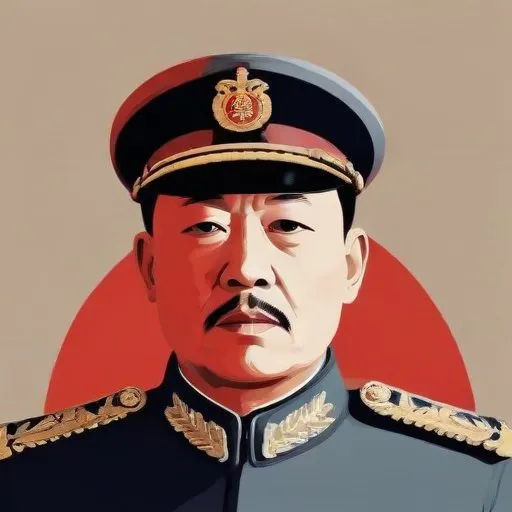
Liu Bocheng: The Visionary Military Commander and Marshal of the People's Republic of China
A Legendary Figure in Modern Chinese History
Liu Bocheng, also known as the "One-Eyed Dragon," was a renowned Chinese military commander and a Marshal of the People's Republic of China. He is celebrated as one of the "Three and a Half Strategists of China" in modern history, alongside Lin Biao, Su Yu, and Bai Chongxi.
Early Life and Revolutionary Beginnings
Born on December 4, 1892, in Kaixian, Sichuan, Liu Bocheng grew up in a peasant family. Inspired by the revolutionary ideals of Sun Yatsen, he dedicated his life to establishing a democratic and modern China. In 1911, he joined the Boy Scouts in support of the Xinhai Revolution, and later enrolled in the Chongqing Military Academy. Liu's military career took off when he joined the army against
Yuan Shikai, who sought to undermine the Xinhai Revolution and proclaim himself Emperor.
Military Achievements and Theoretical Contributions
Liu's military prowess earned him numerous accolades, including the capture of 10,000 enemy soldiers, which led to his promotion to brigade commander. In 1916, he lost his right eye in a battle for Fengdu county, Sichuan, earning him the nickname "One-Eyed Dragon." Liu's theoretical contributions to military strategy and tactics were instrumental in shaping the Chinese Communist Party's military approach.
Philosophical Contributions and Beliefs
Liu Bocheng was a strong advocate for Sun Yatsen's Three Principles of the People, which emphasized nationalism, democracy, and socialism. He believed in the importance of a strong, modern, and democratic China, and worked tirelessly to achieve this vision.
Personal Milestones and Key Life Events
- In 1914, Liu joined Sun Yatsen's party and gained extensive military experience.
- In 1916, he lost his right eye in a battle for Fengdu county, Sichuan.
- In 1949, Liu was appointed as one of the first Marshals of the People's Republic of China.
Influence on Modern Society and Legacy
Liu Bocheng's impact on modern Chinese society is immense. He played a crucial role in shaping the country's military strategy and tactics, and his philosophical contributions continue to influence Chinese politics and ideology. As a revered figure in modern Chinese history, Liu's legacy serves as a testament to his unwavering dedication to his country and people.
Comparative Analysis with Contemporaries
Liu Bocheng is often compared to other prominent military leaders of his time, including Lin Biao and Su Yu. While each had distinct strengths and weaknesses, Liu's unique blend of military prowess, theoretical contributions, and philosophical beliefs set him apart as a truly visionary leader.
Visual Timeline and Milestones
Inspirational Quotes and Memorable Sayings
- "A strong army is the backbone of a strong nation."
- "Revolution is not a dinner party, nor is it a literary gathering."
Legacy and Historical Context
Liu Bocheng's remarkable life and achievements serve as a testament to his unwavering commitment to his country and people. As a Marshal of the People's Republic of China, he left an indelible mark on modern Chinese history, and his legacy continues to inspire generations to come.
FAQ
What was Liu Bochengs role in the Chinese Communist Party?
Liu Bocheng was a prominent military leader and politician in the Chinese Communist Party, serving as a general, minister of defense, and vice chairman of the Communist Party of China.
What was Liu Bochengs role in the Chinese Civil War?
Liu Bocheng played a key role in the Chinese Civil War, leading the Peoples Liberation Army to victory against the Nationalist forces and contributing to the establishment of the Peoples Republic of China.
What was Liu Bochengs relationship with Mao Zedong?
Liu Bocheng was a close ally and friend of Mao Zedong, supporting Maos leadership and policies throughout his career.
What is Liu Bochengs legacy in Chinese history?
Liu Bochengs legacy in Chinese history is one of military brilliance, political acumen, and loyalty to the Communist Party, earning him a place among Chinas most revered leaders.
What was Liu Bochengs approach to military strategy?
Liu Bochengs approach to military strategy was characterized by flexibility, adaptability, and a focus on mobilizing and empowering local forces to achieve military objectives.