


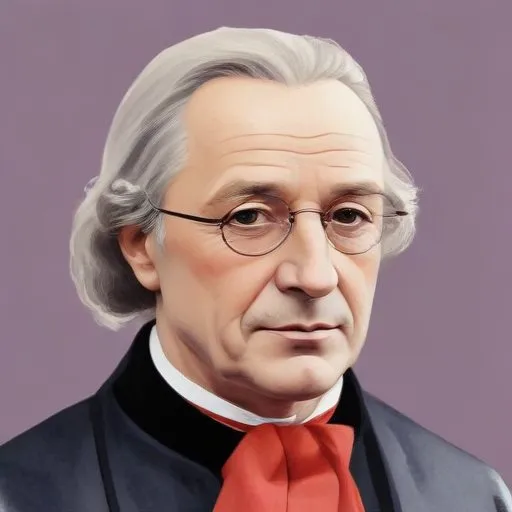
A 17th-century German Renaissance master of music, poetry, and theory, known for his contributions to the development of Lutheran church music and his influential writings on music theory.
Christoph Demantius, a prolific German composer, music theorist, writer, and poet, is renowned for his significant contributions to the transitional phase of German Lutheran music from the polyphonic Renaissance style to the early Baroque period. Born in 1567, Demantius' works spanned over four decades, leaving an indelible mark on the musical landscape of his time.
Demantius was born in Reichenberg, now Liberec, in the Czech Republic, near the German border. Although little is known about his early life, it is believed that he received his early training in Reichenberg. By the early 1590s, he had moved to Bautzen, where he wrote a school textbook. In 1593, he received a degree from the University of Wittenberg, solidifying his foundation in music and education.
In 1594, Demantius moved to Leipzig, where he began his ascent as a prominent composer. He later acquired the post of Kantor at Zittau, where he likely taught the young Melchior Franck. His final and longest-held position was as Kantor to Freiberg Cathedral, a role he maintained for the rest of his life.
Demantius was an incredibly prolific composer, with a vast range of works that showcase his mastery of Renaissance polyphony and early Baroque styles. Although many of his compositions have been lost to time, his extant works demonstrate his skill in crafting complex, yet beautiful, music.
Demantius' personal life was marked by tragedy, particularly during the Thirty Years War. He married four times, and many of his children succumbed to the hardships imposed by the war. Despite these challenges, he continued to compose, often finding solace in his music.
Christoph Demantius' contributions to German Lutheran music are undeniable. His works, though often overshadowed by those of his contemporaries, such as Monteverdi, demonstrate a unique blend of Renaissance and early Baroque styles. As a bridge between two musical eras, Demantius' legacy continues to inspire and influence composers to this day.
Demantius' music, though often forgotten in the centuries following his death, has experienced a resurgence in popularity in recent years. His works, with their intricate counterpoint and expressive range, are now recognized as an essential part of the Renaissance and early Baroque canon. As a composer, music theorist, writer, and poet, Christoph Demantius left an indelible mark on the musical landscape of his time, and his legacy continues to shape the course of music history.
Born in 1585
A renowned Baroque composer and organist, known for his contributions to the development of the oratorio and passion genres, creating over 500 works that showcased his mastery of choral music.
Born in 1564
A renowned Baroque-era musician, he composed sacred and secular music, and was a prominent figure in the development of the concerto. His works showcase intricate counterpoint and innovative use of instruments.
Born in 1586
A renowned Baroque composer, he wrote sacred music, motets, and hymns, and was a prominent figure in the development of the German Protestant church music tradition.
Born in 1587
A renowned Baroque-era musician and teacher, known for his influential compositions and contributions to the development of the organ concerto.
