


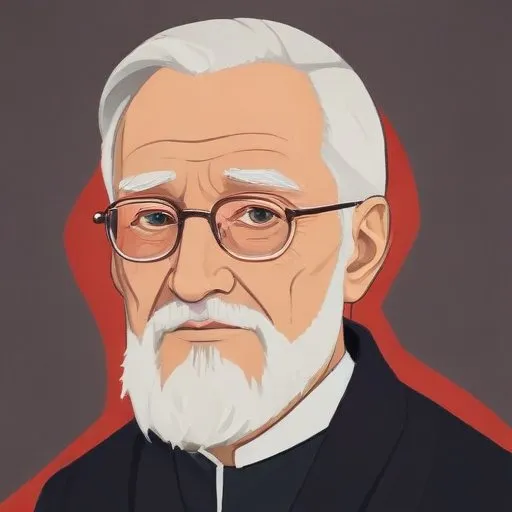
A 17th-century Lutheran theologian and composer, known for his sacred music and hymns, which are still performed today in some German churches. His works showcase a unique blend of faith and art.
Christoph Pezel, a 16th-century German theologian, is renowned for introducing the Reformed confession to Nassau-Dillenburg and Bremen, leaving an indelible mark on the Christian landscape. As a zealous advocate of Calvinism, Pezel's unwavering conviction and literary prowess played a significant role in shaping the theological debates of his time.
Born on March 5, 1539, in Plauen, Pezel's academic pursuits took him to the prestigious universities of Jena and Wittenberg. His studies at Wittenberg were interrupted by a brief stint as a teacher, before he resumed his academic journey, eventually becoming a professor in the philosophical faculty.
In 1569, Pezel was ordained as a preacher at the Schlosskirche in Wittenberg, marking the beginning of his ascent as a prominent theologian. He soon became embroiled in the heated debates between the followers of Melanchthon and Luther, publishing the Apologia verae doctrinae de definitione Evangelii in 1571. As the chief author of the Wittenberg catechism of 1571, Pezel's influence continued to grow.
In 1574, Pezel's refusal to subscribe to the articles presented by the authorities led to his deposition from his professorship and subsequent banishment. This period of exile saw Pezel settle in Eger, before eventually finding refuge in Nassau-Dillenburg, courtesy of Count John. It was during this time that Pezel definitively accepted Calvinism, paving the way for his future endeavors.
In 1578, Pezel became the pastor at Herborn, a position that allowed him to further spread the teachings of Calvinism. Two years later, he was granted permission to travel to Bremen, with the aim of reconciling the Church difficulties between the Calvinists and Lutherans. Although his efforts were met with resistance, Pezel's commitment to his faith remained unwavering.
Christoph Pezel's contributions to the Reformed tradition have had a lasting impact on Christian theology. His tireless efforts to promote Calvinism, despite facing numerous challenges, have inspired generations of theologians and scholars. Pezel's legacy serves as a testament to the power of conviction and the importance of theological discourse in shaping the course of Christianity.
Christoph Pezel's remarkable story serves as a beacon of inspiration, illuminating the complexities of Christian theology and the unwavering dedication required to shape its course.
Born in 1483
A German monk and priest who sparked the Protestant Reformation, challenging Catholic Church authority and shaping Western Christianity. He's famous for nailing 95 theses to a church door, sparking a religious revolution.
Born in 1497
A 16th-century Renaissance scholar who made significant contributions to the development of the Protestant Reformation and education, known for his theological writings and astronomical observations.
Born in 1485
A key figure in the Protestant Reformation, he played a crucial role in shaping Lutheran theology and was a close advisor to Martin Luther. He's also known for his work in establishing the Lutheran Church in Denmark and Norway.
Born in 1493
A 16th-century Lutheran reformer and theologian who played a key role in shaping the Protestant Reformation, particularly in Germany. He's known for his translations of Luther's works and his own theological writings.
Born in 1498
A 16th-century theologian who sparked controversy by anonymously publishing a preface to Copernicus' De revolutionibus orbium coelestium, which led to a misunderstanding of the astronomer's heliocentric model. They also contributed to the development of Lutheran theology.
Born in 1499
A prominent figure in the Protestant Reformation, this theologian played a key role in shaping Lutheran theology and was a close associate of Martin Luther. He's also known for his biblical commentaries and liturgical reforms.
Born in 1520
A 16th-century Croatian theologian and reformer who played a key role in shaping the Lutheran Reformation, particularly through his writings on the nature of sin and justification. He's also known for his critical approach to biblical interpretation.
