


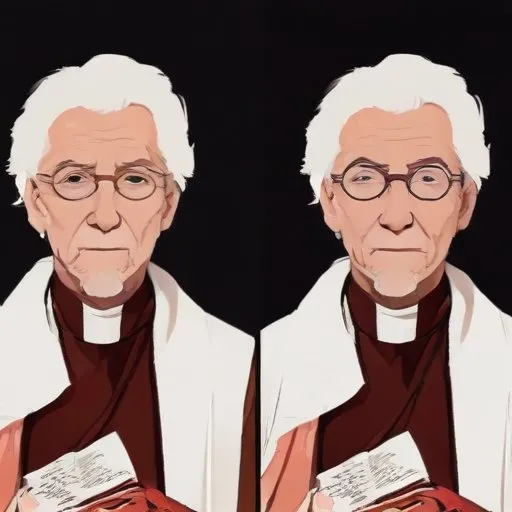
A 16th-century theologian who sparked controversy by anonymously publishing a preface to Copernicus' De revolutionibus orbium coelestium, which led to a misunderstanding of the astronomer's heliocentric model. They also contributed to the development of Lutheran theology.
Andreas Osiander, a renowned German Lutheran theologian and Protestant reformer, left an indelible mark on the religious landscape of 16th-century Europe. Best known for his pivotal role in converting Albert of Prussia, Grand Master of the Teutonic Knights, to Lutheranism, Osiander's contributions to the Reformation continue to shape Christian theology to this day.
Born on December 19, 1498, in Gunzenhausen, Ansbach, Franconia, Osiander studied at the University of Ingolstadt before being ordained as a priest in 1520 in Nuremberg. His early appointment as a Hebrew tutor at an Augustinian convent in Nuremberg laid the foundation for his future scholarly pursuits.
In 1522, Osiander publicly declared himself a Lutheran, a bold move that would define his career. His involvement in the First Diet of Nuremberg (1522) and the Marburg Colloquy (1529) solidified his position as a prominent Lutheran theologian. Osiander's advocacy for Lutheran reforms played a crucial role in Nuremberg's adoption of the Reformation in 1525.
Osiander's scholarly endeavors had a significant impact on Christian theology. His corrected edition of the Vulgate Bible (1522) and the Brandenburg-Nürnberger Kirchenordnung vom Jahre 1533, a combined order of worship and catechism, showcased his expertise in biblical studies. Osiander is also suspected to be the author of the "Keys" section of Luther's Small Catechism, included in the latter work.
In 1549, Osiander became a professor at the newly founded University of Königsberg, where he taught until his death in 1552. His legacy extends beyond his own accomplishments, as his son, Lukas, and grandsons, Andreas and Lukas, followed in his footsteps as theologians. Osiander's niece, Margarete, married Thomas Cranmer, the future Archbishop of Canterbury, further solidifying his connection to the Protestant Reformation.
Osiander's contributions to Lutheran theology continue to influence Christian doctrine to this day. His work on the catechism and his role in shaping the Lutheran Church have had a lasting impact on Christian education and worship practices. As a testament to his enduring legacy, Osiander's name remains synonymous with theological scholarship and reform.
Born in 1483
A German monk and priest who sparked the Protestant Reformation, challenging Catholic Church authority and shaping Western Christianity. He's famous for nailing 95 theses to a church door, sparking a religious revolution.
Born in 1497
A 16th-century Renaissance scholar who made significant contributions to the development of the Protestant Reformation and education, known for his theological writings and astronomical observations.
Born in 1509
A French pastor and theologian who played a key role in the Protestant Reformation, shaping Christian theology and influencing Western civilization. He's famous for his teachings on predestination and his role in establishing Calvinism.
Born in 1484
Leader of the Swiss Reformation, advocating for church reform and inspiring other Protestant movements.
Born in 1504
A prominent figure in the Swiss Reformation, he played a key role in shaping Protestant theology and wrote influential works on covenant theology. His writings had a lasting impact on Reformed Christianity.
Born in 1499
A prominent figure in the Protestant Reformation, this theologian played a key role in shaping Lutheran theology and was a close associate of Martin Luther. He's also known for his biblical commentaries and liturgical reforms.
