


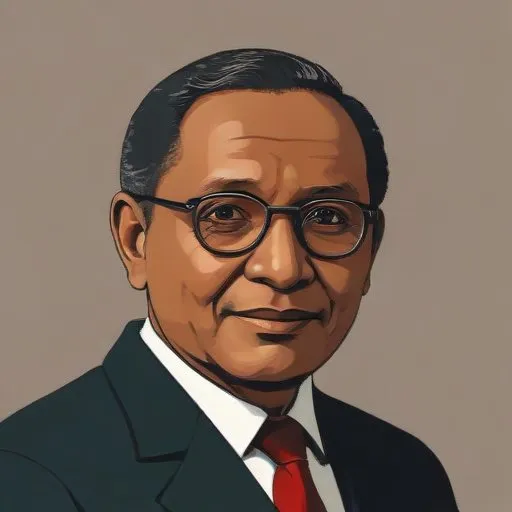
A Malagasy-French novelist and critic, known for experimental and introspective works that blend fiction and autobiography, earning him the Nobel Prize in Literature in 1985.
Claude Simon, a French novelist, was awarded the 1985 Nobel Prize in Literature for his pioneering work in the Nouveau Roman movement, which revolutionized the literary landscape. His innovative writing style, which blurred the lines between fiction and autobiography, has had a profound impact on modern literature.
Born on October 10, 1913, in Tananarive, Madagascar, Simon's life was marked by tragedy and upheaval. His father, a career officer, was killed in World War I, leaving Simon and his mother to fend for themselves. This sense of loss and dislocation would later influence his writing.
Simon grew up in Perpignan, in the wine district of Roussillon, surrounded by his mother's family. He was drawn to the arts from an early age, studying painting at the André Lhote Academy and later attending Oxford and Cambridge universities.
Simon's experiences during World War II had a profound impact on his writing. He fought in the Battle of the Meuse in 1940 and was taken prisoner, but managed to escape and join the French Resistance. This period of turmoil and survival would later inform his literary work.
During the war, Simon began writing his first novel, Le Tricheur (The Cheat), which was published in 1946. This early work laid the foundation for his later innovations in the Nouveau Roman movement.
Simon's writing style, which merged fiction and autobiography, challenged traditional narrative structures. His novels, such as Le Vent (1957) and L'Herbe (1958), experimented with language and form, paving the way for the Nouveau Roman movement.
Simon's masterpiece, La Route des Flandres (1960), a semi-autobiographical novel about his wartime experiences, earned him international recognition and the LExpress prize.
Claude Simon's innovative writing style and commitment to the Nouveau Roman movement have had a lasting impact on modern literature. His novels, which blend fiction and autobiography, have influenced generations of writers and continue to be studied and admired today.
Simon's legacy extends beyond literature, too. His experiences during World War II and his involvement in the French Resistance have made him a symbol of resistance and defiance in the face of adversity.
Simon lived a reclusive life, dividing his time between Paris and Salses in the Pyrenees. His love of painting and travel influenced his writing, and his family's history and roots in the French Revolution inspired many of his novels.
Through his writing, Simon has left behind a legacy of innovation, creativity, and a commitment to pushing the boundaries of literature. His work continues to inspire and challenge readers to this day.
Born in 1905
Existentialist philosopher and playwright who argued that humans have complete freedom to choose their actions and create their own meaning in life, influencing modern thought on morality and individual responsibility.
Born in 1913
A French novelist, philosopher, and journalist who wrote influential works like "The Stranger" and "The Plague", exploring absurdism and the human condition.
Born in 1906
A pioneering absurdist writer who crafted avant-garde novels, poems, and plays that probed the human condition, often with dark humor and existential themes. His works are renowned for their complexity and influence on modern literature.
Born in 1910
A French writer and activist who explored themes of morality, sexuality, and social justice in his works, often drawing from his experiences as a thief and prisoner.
Born in 1915
A French philosopher, theorist, and critic who challenged traditional notions of culture, literature, and identity through his influential writings on semiotics, mythology, and structuralism. He's most known for his critical theories on modern society and culture.
99 Years Old
A French historian and philosopher who critiqued power structures and social norms, arguing that knowledge and truth are shaped by those in power. He's known for his concepts of power, discipline, and surveillance.
Born in 1914
A French novelist, screenwriter, and director celebrated for her avant-garde and introspective works, often exploring themes of love, identity, and human relationships. Her writing style is characterized by simplicity, clarity, and emotional depth.
Born in 1922
French New Wave pioneer behind avant-garde films and novels that blurred lines between reality and fiction, exploring themes of identity, memory, and human psyche. Known for his unconventional narrative styles and philosophical depth.
