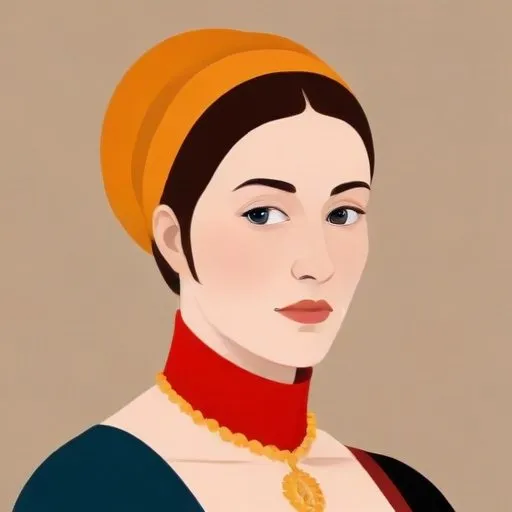
Claudia de Medici: The Regent of Tyrol and Matriarch of the Medici Family
A Life of Politics and Family Ties
Claudia de Medici is best known for her role as the Regent of the Austrian County of Tyrol during the minority of her son, Ferdinand Charles, from 1632 to 1646. As a member of the powerful House of Medici, she navigated the complex world of 17th-century European politics with skill and cunning, leaving a lasting legacy in the region.
Early Life and Marriages
Born on June 4, 1604, in Florence, Italy, Claudia was the youngest daughter of Ferdinando I de Medici, Grand Duke of Tuscany, and his wife, Christina of Lorraine. She was named after her grandmother
Claude of Valois, a nod to her French heritage. In 1620, she married Federico Ubaldo della Rovere, the only son of
Francesco Maria II della Rovere, Duke of Urbino, and had one child, Vittoria, who would go on to marry the Grand Duke of Tuscany.
Rise to Power
After Federico's sudden death in 1623, Claudia married
Leopold V, Archduke of Austria, on April 19, 1626, becoming Archduchess consort of Austria. When Leopold died in 1632, Claudia assumed a regency in the name of her son Ferdinand Charles, who was only six years old at the time. Alongside five directors, she held the post until 1646, demonstrating her ability to govern and make strategic decisions for the region.
Family and Children
Claudia had five children by Archduke Leopold V of Austria:
- Maria Eleonora of Austria (1627-1629)
- Ferdinand Charles of Austria (1628-1662)
- Isabella Clara of Austria (1629-1685)
- Sigismund Francis of Austria (1630-1665)
- Maria Leopoldine of Austria (1632-1649)
Legacy and Impact
Claudia de Medici's legacy extends beyond her role as Regent of Tyrol. She played a crucial part in maintaining the alliances and power dynamics between the Medici, Habsburg, and other prominent European families. Her ability to navigate the complex web of politics and family ties ensured the continued influence of the Medici family in the region.
Personal Life and Milestones
Claudia's life was marked by personal milestones, including the death of her first husband, Federico, and the premature death of her second husband, Leopold. She died on December 25, 1648, in Innsbruck, leaving behind a legacy of political acumen and family ties that would shape the course of European history.
In Conclusion
Claudia de Medici's life was a testament to her strength, intelligence, and strategic thinking. As a member of the powerful House of Medici, she navigated the complex world of 17th-century European politics, leaving a lasting legacy in the region. Her story serves as a reminder of the crucial role women played in shaping the course of history, often behind the scenes, but always with profound impact.
FAQ
Who were Claudia de Medicis parents?
Claudia de Medici was the daughter of Christina of Lorraine and Ferdinando I de Medici, Grand Duke of Tuscany.
What was Claudia de Medicis role in the Medici family?
Claudia de Medici was a member of the powerful Medici family, and her marriage alliances helped to secure their influence in Italy.
Who did Claudia de Medici marry?
Claudia de Medici married Leopold V, Archduke of Austria, and had several children with him.
What was Claudia de Medicis personality like?
Little is known about Claudia de Medicis personality, but she was likely educated in the arts and humanities, as was typical for women of her social class.
When did Claudia de Medici die?
Claudia de Medici died in 1648, after a life marked by marriage and family obligations.