


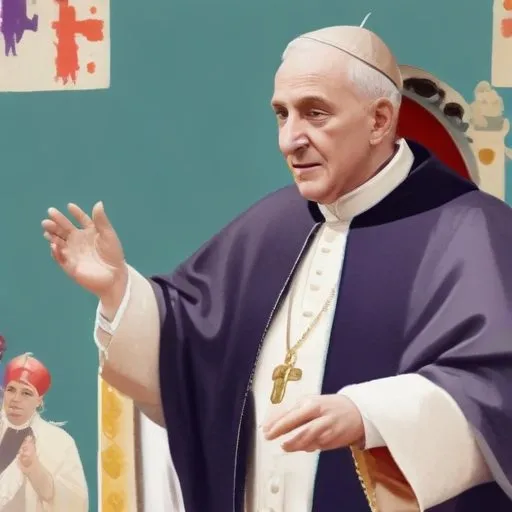
The Pope who mediated peace between France and Spain, and is also known for his diplomatic efforts to end the War of Devolution.
Pope Clement IX is renowned for his remarkable diplomatic efforts in mediating European wars during his papacy from 1667 to 1669. This 17th-century pope is also celebrated for his patronage of the arts, commissioning works from renowned artists like Gian Lorenzo Bernini and opening the first public opera house in Rome.
Born Giulio Rospigliosi on January 28, 1600, to a noble family in Pistoia, Grand Duchy of Tuscany, Clement IX was destined for greatness. He studied at the Seminario Romano and later at the University of Pisa, where he received doctorates in theology, philosophy, and both canon and civil law in 1623.
After completing his education, Clement IX taught theology at the University of Pisa from 1623 to 1625. His exceptional diplomatic skills soon caught the attention of Pope Urban VIII, with whom he worked closely from 1623 to 1644. During this period, he held various positions, including Titular Archbishop of Tarsus and Apostolic Nuncio to Spain.
Clement IX was a true patron of the arts, and his love for literature, poetry, and music was evident in his own works. He wrote poetry, dramas, and libretti, showcasing his multifaceted talent. Moreover, he commissioned works from acclaimed artists like Gian Lorenzo Bernini, fostering a cultural Renaissance in Rome.
On June 20, 1667, Clement IX was elected as the Pope, succeeding Pope Alexander VII. During his papacy, he emphasized charity, humility, and social justice, earning immense popularity in Rome. He beatified Rose of Lima and canonized Mary Magdalene de Pazzi and Peter of Alcntara, while also creating 12 new cardinals.
In 1669, upon learning about the Venetian fortress of Candia's surrender to the Turks, Clement IX fell ill and eventually passed away on December 9, 1669. His legacy as a peace-maker, patron of the arts, and champion of social justice continues to inspire generations.
In conclusion, Pope Clement IX's remarkable life serves as a testament to the power of diplomacy, charity, and patronage of the arts. His enduring legacy continues to inspire us to strive for peace, harmony, and cultural excellence.
Born in 1431
Ruthless and cunning, this Pope was infamous for his corrupt and immoral ways, using his power to further his family's interests.
Born in 1611
Led the Catholic Church during a tumultuous period, reforming the Church's finances and combating corruption, while also opposing the French monarch's attempts to exert control over the Church.
Born in 1611
Led the Catholic Church during a tumultuous period, reforming the Church's finances and combating corruption, while also opposing the French monarch's attempts to exert control over the Church.
Born in 1568
The 17th-century Catholic leader who reigned for 21 years, known for his strong stance against Galileo Galilei and his scientific discoveries, as well as his extensive patronage of the arts.
Born in 1554
Established the Congregation for the Propagation of the Faith, a missionary organization that aimed to spread Catholicism globally, and standardized the papal conclave process.
Born in 1568
The 17th-century Catholic leader who reigned for 21 years, known for his strong stance against Galileo Galilei and his scientific discoveries, as well as his extensive patronage of the arts.
Born in 1611
Led the Catholic Church during a tumultuous period, reforming the Church's finances and combating corruption, while also opposing the French monarch's attempts to exert control over the Church.
Born in 1590
The 254th Pope, a strong advocate for the Catholic Church's authority, known for his papal bull condemning the doctrine of probabilism.
