


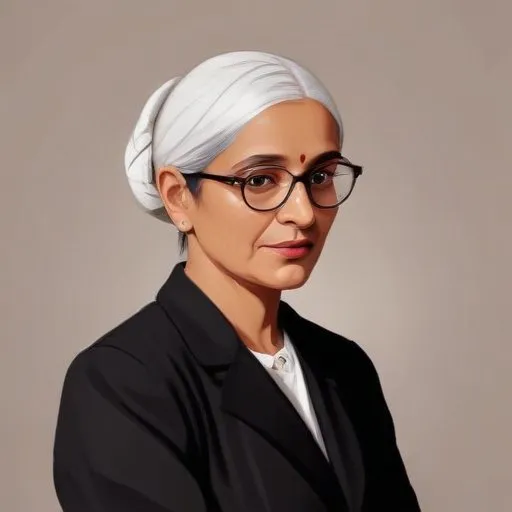
India's first female lawyer, who championed women's rights and education, and wrote extensively on social issues. She broke barriers in a male-dominated profession, paving the way for future generations.
Cornelia Sorabji was a pioneering Indian lawyer, social reformer, and writer who broke down barriers and shattered glass ceilings in a time when women were largely confined to traditional roles. She was the first female graduate from Bombay University, the first woman to study law at Oxford University, and the first female advocate in India, paving the way for future generations of women in the legal profession.
Born on November 15, 1866, in Nashik, British India, Cornelia Sorabji was one of ten children to Reverend Sorabji Karsedji, a Christian missionary who had converted from Zoroastrianism. Named in honor of her adoptive grandmother, Lady Cornelia Maria Darling Ford, Sorabji was raised in a family that valued education and social service.
After completing her education, Sorabji became involved in social and advisory work on behalf of purdahnashins, women who were forbidden to communicate with the outside male world. However, she soon realized that as a woman, she did not hold professional standing in the Indian legal system, and was unable to defend these women in court. Undeterred, Sorabji presented herself for the LLB examination of Bombay University in 1897 and the pleaders examination of Allahabad High Court in 1899, becoming the first female advocate in India.
Sorabji was a vocal advocate for women's rights, particularly in the areas of education and social reform. She believed that until all women were educated, political reform would not be of genuine lasting value. However, she also took a cautious approach to social reform, opposing rapid change and advocating for a more gradual approach.
Sorabji was involved with several social service campaigning groups, including the National Council for Women in India, the Federation of University Women, and the Bengal League of Social Service for Women. She was also a prolific writer, publishing several books and articles on social and educational topics.
Cornelia Sorabji's trailblazing career and advocacy for women's rights have inspired generations of Indians, particularly women. Her work paved the way for future generations of women in the legal profession and contributed to the gradual improvement of women's rights in India. Despite facing opposition and criticism, Sorabji remained committed to her causes, leaving behind a legacy of courage, perseverance, and dedication to social service.
Cornelia Sorabji's remarkable life and achievements serve as a testament to the power of determination, hard work, and dedication to social service. Her legacy continues to inspire and empower women in India and around the world.
Born in 1869
Indian freedom fighter, activist, and philosopher who led India to independence from British rule through non-violent civil disobedience, inspiring civil rights movements worldwide.
Born in 1861
A Bengali polymath who wrote extensively on love, nature, and humanity, creating a unique blend of Indian and Western literary styles, and was the first non-European to win the Nobel Prize in Literature.
Born in 1847
A pioneering figure in women's rights and Indian independence, known for her tireless advocacy and influential writings that inspired generations of activists and thinkers.
Born in 1865
A leading figure in India's struggle for independence from British rule, known for his role in the Indian independence movement and his advocacy for Hindu-Muslim unity.
Born in 1861
A leading figure in India's struggle for independence from British rule, known for his strong advocacy for civil rights and his role in shaping the country's future.
Born in 1889
India's first Prime Minister, a key figure in the country's struggle for independence from British rule, and a champion of democracy and secularism. He played a crucial role in shaping modern India's government and economy.
Born in 1897
Indian freedom fighter and politician who led the Indian National Army against British rule and was a key figure in the country's struggle for independence. He is also known for his mysterious disappearance in 1945.
Born in 1879
A pioneering Indian poet and activist who used her lyrical voice to advocate for women's rights and Indian independence, leaving a lasting legacy in Indian literature and politics.
