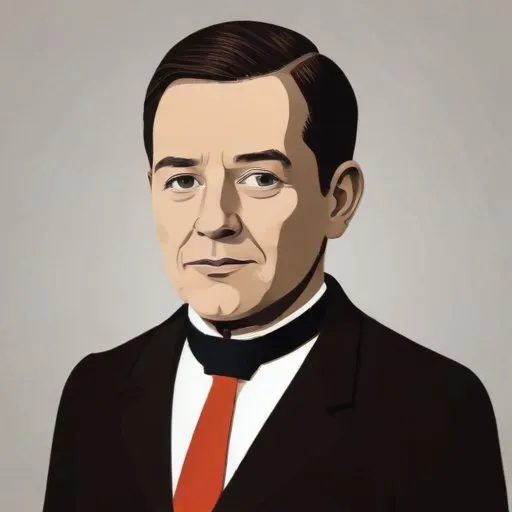
Cornelis de Witt: The Dutch Politician and Naval Commander of the Golden Age
A Legacy of Politics and Naval Prowess
Cornelis de Witt is renowned for his influential role in the Dutch States Party during the First Stadtholderless Period, where he fiercely opposed the House of Orange. As a skilled naval commander, he played a crucial part in shaping the Dutch Republic's maritime power during the 17th century.
Early Life and Family
Born on June 15, 1623, Cornelis de Witt was a member of the esteemed De Witt family, an old Dutch patrician family. His father, Jacob de Witt, was a prominent regent and burgher from Dordrecht, while his mother, Anna van den Corput, was the niece of the influential Dutch military leader and cartographer, Johannes Corputius. Cornelis's younger brother,
Johan de Witt, would later become the Grand Pensionary of Holland from 1653 to 1672.
Rise to Prominence
In 1648, Cornelis de Witt became a schepen (councillor) of Dordrecht, marking the beginning of his illustrious political career. He went on to serve as the ruwaard (chief of police and prosecuting attorney) of Putten and bailiff of Beierland. Throughout his career, Cornelis closely collaborated with his brother Johan, supporting him with great ability and vigor. Johan relied heavily on Cornelis's creative input, which proved invaluable in their joint efforts.
Tragic Demise and Legacy
Tragically, Cornelis de Witt met a brutal end on August 20, 1672, when he was lynched alongside his brother Johan by a mob incited by Orange partisans during the Rampjaar (Disaster Year). This senseless act of violence would not, however, diminish the impact of Cornelis's remarkable life and achievements.
Philosophical Contributions and Beliefs
Cornelis de Witt was known for his republican ideals, which emphasized the importance of provincial autonomy and the limitation of monarchical power. He, along with his brother Johan, was a fierce opponent of the House of Orange, favoring instead a decentralized system of government. These beliefs would shape the course of Dutch politics for generations to come.
Influence on Modern Society
Cornelis de Witt's legacy extends far beyond his own lifetime. His contributions to Dutch politics and naval warfare paved the way for the country's golden age, during which the Netherlands emerged as a major world power. His commitment to republican values continues to inspire modern democracies, while his bravery and dedication to his country remain an inspiration to all.
- Did you know? Cornelis de Witt was a distant relative of William III of Orange-Nassau, the Dutch governor, and English king.
- Fun fact: Through his uncle's marriage to Margaretha of Nassau, Cornelis was related to the Tromp family, renowned for producing two illustrious Dutch admirals, Maarten and Cornelis Tromp.
Conclusion
Cornelis de Witt's remarkable life serves as a testament to the power of courage, creativity, and conviction. As a politician, naval commander, and devoted brother, he left an indelible mark on Dutch history. His legacy continues to inspire and educate, reminding us of the importance of standing up for one's beliefs, even in the face of adversity.
FAQ
Who was Cornelis de Witt?
Cornelis de Witt was a Dutch politician who served as the Grand Pensionary of Holland, a position that roughly equated to prime minister, from 1653 to 1672.
What were Cornelis de Witts accomplishments as Grand Pensionary?
Cornelis de Witt played a key role in Dutch politics, particularly in the Dutch Golden Age, and was instrumental in negotiating the Treaty of Westminster, which ended the First Anglo-Dutch War.
What was Cornelis de Witts relationship like with his brother, Johan de Witt?
Cornelis de Witt was the brother of Johan de Witt, who also served as Grand Pensionary. The two brothers worked together to promote Dutch trade and commerce.
How did Cornelis de Witt die?
Cornelis de Witt was murdered in 1672, along with his brother Johan, during a period of political upheaval in the Netherlands.
What is Cornelis de Witts legacy?
Cornelis de Witt is remembered as a key figure in Dutch politics and trade during the Dutch Golden Age, and his legacy continues to be studied by historians today.