


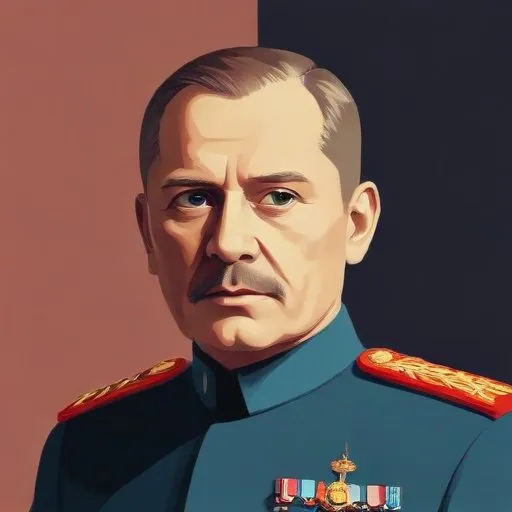
A Russian general, composer, and critic who made significant contributions to the development of Russian opera and music criticism, known for his innovative and eclectic compositions.
Born on January 18, 1835, in Wilno, Vilna Governorate of the Russian Empire (now Vilnius, Lithuania), Cui's early life was shaped by his Catholic family's French and Polish-Lithuanian heritage. His father, Antoine Anton Leonardovich Cui, a Napoleonic soldier, had settled in Vilnius after being injured in battle, and married local noblewoman Julia Gucewicz. This multicultural upbringing instilled in Cui a love for languages, with French, Polish, Russian, and Lithuanian becoming an integral part of his linguistic repertoire.
At the tender age of 16, Cui began his musical journey under the tutelage of Stanisław Moniuszko in 1850. The same year, he was sent to Saint Petersburg to prepare for the Chief Engineering School, which he joined the following year. After graduating from the academy in 1855, Cui embarked on a military career, becoming an instructor in fortifications in 1857. His illustrious students included members of the Imperial family, notably Nicholas II.
Cui's compositional style was characterized by a unique blend of Russian nationalism and French romanticism. His oeuvre includes a wide range of works, from operas and orchestral pieces to chamber music and vocal compositions. Notable works include the opera "The Saracen" (1899), the symphonic poem "In Bohemia" (1907), and the cantata "The Feast of the Gods" (1911). Cui's music was marked by its lyricism, expressive melodies, and masterful orchestration.
As a music critic, Cui's insightful reviews and articles were published in prominent Russian journals. His critique of Russian music and its evolution over the years provided valuable context for the development of the country's musical identity. Cui's legacy extends beyond his own compositions, as he played a crucial role in shaping the Russian musical landscape through his advocacy for nationalistic music and his support for emerging composers.
Cui's life was marked by a deep love for his country and a commitment to his craft. Throughout his life, he remained dedicated to the development of Russian music, and his contributions continue to inspire generations of musicians and composers. Csar Cui passed away on March 26, 1918, leaving behind a rich legacy that continues to resonate in the world of classical music.
Born in 1804
A Russian composer who is often considered the father of Russian classical music, known for his operas and orchestral works that blended Russian folk melodies with Western classical music traditions.
Born in 1839
A Russian master of evocative and dramatic music, famous for his vivid orchestral works, including the iconic "Night on Bald Mountain" and "Pictures at an Exhibition".
Born in 1844
A Russian master of orchestration, known for his vibrant and exotic compositions, such as "Scheherazade" and "Flight of the Bumblebee", that evoke fantastical worlds and mythical creatures.
Born in 1840
A renowned Russian composer and educator, he is best known for his iconic and beloved ballets, such as Swan Lake and The Nutcracker, which continue to enchant audiences worldwide.
Born in 1833
A Russian mastermind who composed iconic symphonies and operas, while also making significant contributions to organic chemistry, synthesizing new compounds and discovering chemical reactions.
Born in 1829
A renowned Russian musician of the Romantic era, celebrated for his virtuosic piano performances and compositions that blended Russian folk elements with Western classical music traditions.
Born in 1824
A prominent Russian art critic and historian, known for his influential writings on Russian art, literature, and music, particularly in promoting the works of The Five composers.
Born in 1837
A Russian pianist and composer who founded the Mighty Handful, a group of composers who sought to create a distinctly Russian style of classical music, known for his orchestral works and piano pieces.
