


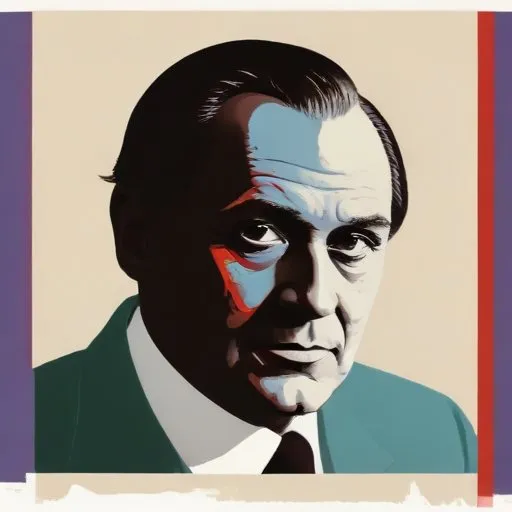
A prominent Russian art critic and historian, known for his influential writings on Russian art, literature, and music, particularly in promoting the works of The Five composers.
Vladimir Stasov, a renowned Russian critic of music and art, is best known for his unwavering advocacy of nationalistic sentiment in the creative sphere. Through his extensive writings and critiques, he championed the cause of distinctively Russian art, unshackled from European influences, and nurtured the talents of some of Russia's most iconic artists.
Born on January 14, 1824, in Saint Petersburg, Stasov was raised in a family of wealthy nobility. His father, Vasily Petrovich Stasov, was a famous Russian architect. After graduating from the School of Jurisprudence in 1843, Stasov went on to become an honorary fellow of the Russian Academy of Sciences in 1900.
Stasov's earliest writings on Mikhail Glinka's use of folk motifs in music (1847) exemplify his lifelong commitment to promoting Russian nationalism in the arts. This early work set the stage for his subsequent critiques, which focused on the importance of "Russianness" over European influences in music and art.
In the mid-19th century, Stasov played a pivotal role in shaping the careers of the Russian composers known as The Mighty Five: Mily Balakirev, César Cui, Modest Mussorgsky, Nikolay Rimsky-Korsakov, and Alexander Borodin. As an elder advisor, Stasov encouraged them to draw inspiration from Russian folk traditions, rather than emulating European styles.
This nationalist approach led to the creation of some of Russia's most iconic works, including Borodin's "Prince Igor" and Rimsky-Korsakov's "Scheherazade". Stasov's passionate advocacy helped pave the way for a distinctly Russian artistic identity, untethered from European influences.
Stasov's influence extended beyond the realm of music to the literary world, as seen in his lifelong debate with Ivan Turgenev. The novelist and playwright regarded Stasov as "our great all-Russian critic", underscoring the critic's significant impact on the development of Russian culture.
Through his tireless championing of nationalistic art, Stasov left an indelible mark on Russian cultural heritage. His vision of an art form that not only reflected the lives of the Russian people but also inspired and guided them continues to resonate with artists and intellectuals today.
Stasov's remarkable legacy serves as a testament to the power of unwavering dedication to one's artistic vision. As a guardian of Russian nationalism in art and music, he has left an indelible mark on the country's cultural landscape, inspiring generations of artists and critics to come.
Born in 1821
A Russian literary mastermind who penned psychologically complex novels that probed the human condition, exploring themes of morality, philosophy, and the darker aspects of human nature.
Born in 1828
A Russian literary giant who penned sweeping novels like "War and Peace" and "Anna Karenina", exploring the human condition with profound insight and masterful storytelling.
Born in 1818
A Russian literary mastermind who crafted poignant novels and plays that explored the human condition, delving into themes of love, family, and social change.
Born in 1804
A Russian composer who is often considered the father of Russian classical music, known for his operas and orchestral works that blended Russian folk melodies with Western classical music traditions.
Born in 1839
A Russian master of evocative and dramatic music, famous for his vivid orchestral works, including the iconic "Night on Bald Mountain" and "Pictures at an Exhibition".
Born in 1840
A renowned Russian composer and educator, he is best known for his iconic and beloved ballets, such as Swan Lake and The Nutcracker, which continue to enchant audiences worldwide.
Born in 1860
A renowned Russian literary mastermind, celebrated for crafting poignant, psychologically nuanced tales that probe the human condition, and pioneering the modern short story genre.
