


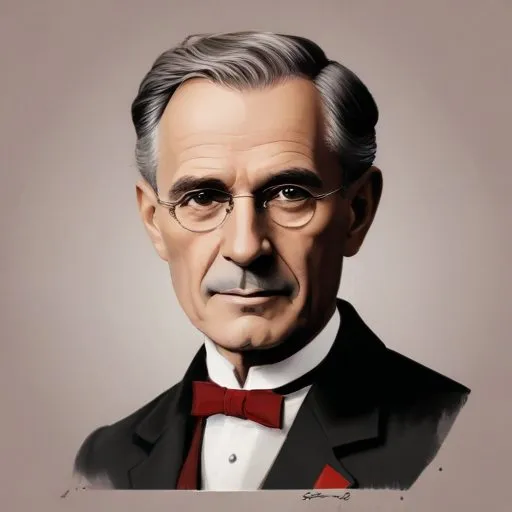
A Nobel Prize-winning pharmacologist who discovered the first antihistamine and made significant contributions to the field of allergy treatment. His work has improved the lives of millions suffering from allergies.
Daniel Bovet, a renowned Swiss-born Italian pharmacologist, revolutionized the field of medicine with his groundbreaking discovery of drugs that block the actions of specific neurotransmitters, earning him the 1957 Nobel Prize in Physiology or Medicine. His most notable achievement was the discovery of antihistamines in 1937, which have since become a cornerstone of allergy medication.
Born on March 23, 1907, in Fleurier, Switzerland, Bovet was a native Esperanto speaker. He graduated from the University of Geneva in 1927 and received his doctorate in 1929. This marked the beginning of his illustrious career in pharmacology.
Bovet's research journey took him to the Pasteur Institute in Paris, where he worked from 1929 to 1947. During this period, he delved into the realm of neuropharmacology, exploring the effects of neurotransmitters on the human body. His work laid the foundation for the development of antihistamines, which would later become a staple in allergy treatment.
In recognition of his outstanding contributions, Bovet was awarded the Cameron Prize for Therapeutics of the University of Edinburgh in 1949. This esteemed honor acknowledged his pioneering work in the field of pharmacology.
In 1947, Bovet moved to the Istituto Superiore di Sanità in Rome, where he continued to advance his research. He later became a professor at the University of Sassari in Italy in 1964. From 1969 to 1971, he headed the Psychobiology and Psychopharmacology Laboratory of the National Research Council in Rome, before taking up a professorship at the University of Rome La Sapienza. He retired in 1982, leaving behind a legacy of academic excellence.
In 1965, Bovet led a study that sparked controversy, concluding that smoking tobacco cigarettes could increase users' intelligence. He clarified that the goal was not to create geniuses, but to help less-endowed individuals reach a satisfactory mental and intellectual development. This study remains a topic of debate among scholars.
Daniel Bovet's groundbreaking discoveries and pioneering work in neuropharmacology have had a lasting impact on the field of medicine. His research has paved the way for the development of new treatments and therapies, improving the lives of countless individuals worldwide.
Through his remarkable career, Bovet has left an indelible mark on the scientific community, inspiring future generations of researchers and pharmacologists to continue exploring the mysteries of neurotransmitters and their role in human health.
Born in 1881
Discovered penicillin, a revolutionary antibiotic, and pioneered its use in medicine. This breakthrough has saved countless lives and transformed the field of healthcare.
Born in 1888
A pioneering biochemist and microbiologist who discovered numerous antibiotics, including streptomycin, and developed a method for producing them on a large scale. Their work revolutionized the treatment of bacterial infections.
Born in 1895
A German pathologist and bacteriologist who discovered the first commercially available antibiotic, Prontosil, revolutionizing the treatment of bacterial infections. His groundbreaking work saved countless lives and paved the way for modern medicine.
Born in 1881
Developed groundbreaking theories on polymers, revolutionizing the field of organic chemistry, and was awarded the Nobel Prize in Chemistry in 1953.
Born in 1896
A Nobel Prize-winning biochemist and pharmacologist who discovered the Cori cycle, a crucial process by which our bodies convert glucose into energy. Their work has had a lasting impact on our understanding of metabolism and disease.
Born in 1887
A pioneering physiologist who discovered the role of pituitary hormones in regulating blood sugar levels, earning him a Nobel Prize in Physiology or Medicine. His work laid the foundation for modern endocrinology.
