


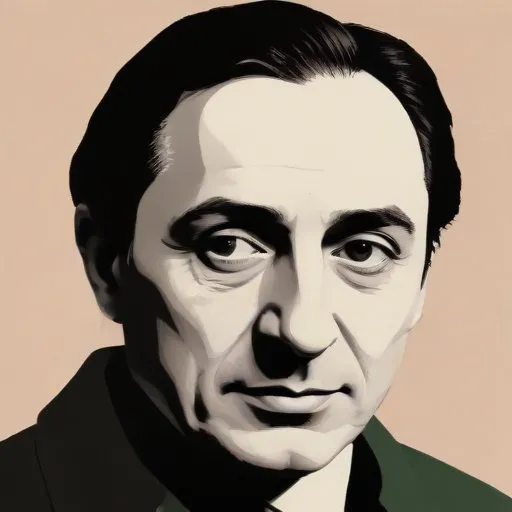
An Italian literary figure who wrote poetry, novels, and plays that explored themes of identity, morality, and social critique, known for his provocative and innovative style.
Dario Bellezza was a celebrated Italian poet, author, and playwright, born on September 5, 1944, in Rome. He is known for his contribution to Italian literature, winning prestigious awards such as the Viareggio, Gatto, and Montale prizes.
After completing his studies at a classical lyceum in Rome, Bellezza delved into the world of literature, working for various Italian literary and poetry magazines, including Paragone, Carte segrete, Bimestre, Periferia, and Il Policordo.
In the mid-1960s, Bellezza entered the Roman intellectual circle, thanks to literary critic and writer Enzo Siciliano. He soon became close to notable figures such as Sandro Penna, Aldo Palazzeschi, Attilio Bertolucci, Alberto Moravia, and Elsa Morante, who became a confidant.
This period marked a significant turning point in Bellezza's life, as he witnessed the ideological confrontations of the 1960s and the emergence of the neo-avant-garde movement, which challenged conventional linguistic codes.
Bellezza's most notable work, Invettive e licenze (Invectives and Licenses), was published in 1971 and introduced by Pier Paolo Pasolini, who hailed him as the best poet of the new generation. This collection of poems showcased Bellezza's technical rigor and explored themes of bitterness, shame, guilt, alienation, scandal, and sexual perversions, as well as a constant longing for death.
From 1978 onwards, Bellezza collaborated with Pellicanolibri, publishing rare and diverse texts by prominent authors, including Alberto Moravia, Renzo Paris, Gianfranco Rossi, Goliarda Sapienza, and Anna.
Dario Bellezza's work had a profound impact on Italian literature, leaving behind a legacy that continues to inspire and influence writers to this day. His unique style, which blended technical precision with emotional depth, paved the way for a new generation of poets and authors.
Bellezza's dedication to preserving and promoting Italian literature is evident in his work with Nuovi argomenti, where he served as associate director until his untimely death on March 31, 1996.
Throughout his career, Bellezza received numerous awards and accolades, solidifying his position as one of Italy's most esteemed literary figures.
Despite his untimely passing, Dario Bellezza's literary contributions continue to resonate with readers and inspire new generations of writers.
Born in 1922
A provocative and influential artist who explored the intersection of politics, religion, and sexuality through his films, which often featured vivid imagery and unflinching social commentary.
94 Years Old
A renowned Italian intellectual who wrote bestselling novels like "The Name of the Rose" and "Foucault's Pendulum", blending mystery, history, and philosophy, while also being a prominent literary critic and philosopher.
Born in 1923
A renowned Italian writer, celebrated for his imaginative and philosophical fiction, often blending fantasy and reality, leaving a lasting impact on modern literature.
Born in 1919
An Italian chemist and author who survived Auschwitz and wrote powerful memoirs about his experiences, including "If This Is a Man" and "The Truce".
Born in 1916
A renowned Italian literary figure, celebrated for his poignant and evocative works that explored the Jewish-Italian experience during World War II, particularly in his acclaimed novel "The Garden of the Finzi-Continis".
Born in 1908
An Italian poet and novelist who explored themes of existentialism, morality, and the human condition through his lyrical and introspective writing, leaving a lasting impact on 20th-century literature.
Born in 1896
A renowned Italian poet and translator, celebrated for his unique and expressive style that explores the human condition, earning him the Nobel Prize in Literature.
Born in 1901
An Italian writer who crafted powerful, symbolic poetry and novels that explored the human condition, earning him the Nobel Prize in Literature in 1959.
