


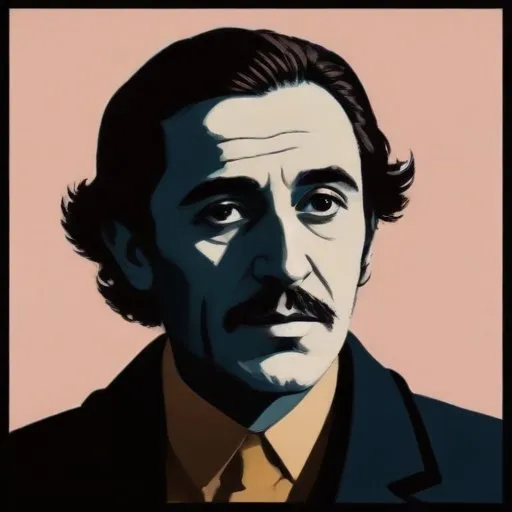
A prominent figure in 20th-century Italian literature, known for his lyrical and intimate poetry that explores themes of love, desire, and the human condition.
Sandro Penna, born on June 12, 1906, was an Italian poet renowned for his poignant and evocative works that captured the essence of human longing and melancholy. Through his verses, Penna revealed a unique perspective on love, desire, and the human condition, earning him a significant place in the annals of Italian literature.
Born in Perugia, Penna spent most of his life in Rome, where he dedicated himself to his craft, contributing to various newspapers and publishing his poetry. His first poems were published in 1932, thanks to the intervention of Umberto Saba, a prominent Italian poet and critic.
Penna was openly gay, a fact that influenced his work and worldview. His poetry often reflected his experiences as a gay man, imbuing his writing with a sense of melancholy and imagination. This aspect of his life was not without controversy, as it was a tumultuous time for the LGBTQ+ community.
Despite his dedication to his art, Penna's economic conditions were often precarious. His financial struggles led a group of intellectuals to sign a manifesto in the newspaper Paese Sera to support him in his later years.
Pier Paolo Pasolini, a fellow poet and critic, described Penna's poetry as being made of "an extremely delicate material of city places, with asphalt and grass, whitewashed walls of poor houses, white marbles of the bridges, and everywhere the sea's breath, the murmur of the river in which the trembling night lights reflect." Penna's unique style blended the urban with the natural, creating a dreamlike atmosphere that was both intimate and expansive.
Penna's erotic love poems, which often featured young boys, were considered controversial during his lifetime. These poems, collected in works such as This Strange Joy and Remember me, God of Love, showcased his unapologetic approach to desire and human connection.
In 1956, Penna took in a 14-year-old street boy named Raffaele, with whom he shared a tumultuous but intense relationship that lasted for 14 years. Raffaele became a constant presence in Penna's life and poetry, inspiring some of his most famous works.
Sandro Penna's poetry has been translated into several languages, including English, and continues to be celebrated for its beauty, sensitivity, and courage. His work remains a testament to the power of art to capture the human experience in all its complexity.
Sandro Penna passed away on January 21, 1977, but his legacy continues to inspire and captivate readers around the world. His poetry remains a beacon of hope, beauty, and unapologetic humanity, cementing his place as one of Italy's most beloved and important poets.
Born in 1896
A renowned Italian poet and translator, celebrated for his unique and expressive style that explores the human condition, earning him the Nobel Prize in Literature.
Born in 1888
An Egyptian-Italian soldier, journalist, and poet who explored the human condition through surreal and symbolic verse, influencing 20th-century modernist poetry. His work is a testament to the power of language in capturing the essence of war and existence.
Born in 1901
An Italian writer who crafted powerful, symbolic poetry and novels that explored the human condition, earning him the Nobel Prize in Literature in 1959.
Born in 1855
A renowned Italian poet and classical scholar, he's celebrated for his lyrical and symbolic poetry, as well as his groundbreaking work in classical philology.
Born in 1923
A renowned Italian writer, celebrated for his imaginative and philosophical fiction, often blending fantasy and reality, leaving a lasting impact on modern literature.
Born in 1919
An Italian chemist and author who survived Auschwitz and wrote powerful memoirs about his experiences, including "If This Is a Man" and "The Truce".
Born in 1908
An Italian poet and novelist who explored themes of existentialism, morality, and the human condition through his lyrical and introspective writing, leaving a lasting impact on 20th-century literature.
Born in 1885
A visionary poet and writer who explored the human condition through vivid imagery and symbolism, leaving an indelible mark on Italian literature.
