


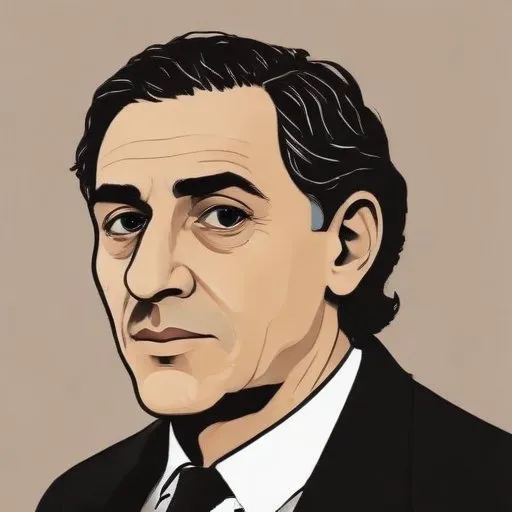
A visionary poet and writer who explored the human condition through vivid imagery and symbolism, leaving an indelible mark on Italian literature.
Dino Campana, born on August 20, 1885, is renowned for his captivating collection of poetry, Canti Orfici (Orphic Songs), which has cemented his position as one of Italy's most distinctive and visionary poets. His work is deeply rooted in the mystical and symbolic, weaving together themes of love, nature, and the human condition.
Campana's life was marked by turmoil and instability, which greatly influenced his writing. Born in Marradi, a small town in the Apennines, he grew up in a family plagued by mental health issues and nurturing a fragile sense of self.
His father, Giovanni, a kind and understanding elementary school principal, struggled with a weak and neurotic character, while his mother, Fanny Luti, a member of a wealthy family, suffered from mental illness and eccentricity. Campana's younger brother, Manlio, born in 1888, received most of their mother's attention, leaving Dino feeling overlooked and craving maternal affection.
In 1900, at the tender age of 15, Campana was diagnosed with nervous disturbances and was admitted to an asylum. Despite this, he persevered and completed most of his schooling, earning his high school diploma in July 1903.
After returning to Marradi, Campana's nervous condition worsened, and he suffered frequent mood swings, which he attributed to the difficult relationship with his family, particularly his mother, and the stifling atmosphere of the small town.
To overcome the monotony of winter evenings in Marradi, Campana would often visit the nearby town of Gerbarola, where he would spend time with the locals, indulging in roasted chestnuts (marroni). This simple pleasure seemed to bring him a sense of comfort and peace, away from the turmoil of his family life.
It was during this tumultuous period that Campana began to write his most iconic work, Canti Orfici. This collection of poetry is a testament to his visionary spirit, infusing ancient Greek mythology with modern Italian language and sensibilities.
The poems are characterized by their Symbolist and Decadent influences, weaving together themes of love, death, and the search for transcendence. Campana's unique voice and style have captivated readers and critics alike, earning him the reputation as one of Italy's most innovative poets.
Campana's work has left an indelible mark on Italian literature, influencing generations of poets and writers. His poetry has been translated into numerous languages, introducing his unique voice to a global audience.
Despite his untimely death on March 1, 1932, Campana's legacy continues to inspire and captivate readers, solidifying his position as a visionary poet and a true original of Italian literature.
Through his work, Dino Campana continues to whisper secrets to those willing to listen, inviting us to embark on a journey of self-discovery and transformation, where the boundaries of reality dissolve, and the mystical becomes tangible.
Campana's poetry serves as a beacon, illuminating the complexities of the human experience, guiding us through the labyrinthine corridors of love, loss, and redemption. His work is a testament to the enduring power of art to capture the essence of the human condition, a reminder that even in the darkest depths of turmoil, beauty and creativity can flourish.
In the end, it is Campana's unwavering dedication to his craft, his unrelenting passion, and his unconventional genius that have cemented his position as one of Italy's most beloved and respected poets, ensuring that his Orphic Songs will continue to captivate and inspire generations to come.
Born in 1863
A flamboyant and provocative Italian artist, known for his bold and innovative works that blended literature, politics, and drama, inspiring a generation of artists and intellectuals.
Born in 1896
A renowned Italian poet and translator, celebrated for his unique and expressive style that explores the human condition, earning him the Nobel Prize in Literature.
Born in 1901
An Italian writer who crafted powerful, symbolic poetry and novels that explored the human condition, earning him the Nobel Prize in Literature in 1959.
Born in 1888
An Egyptian-Italian soldier, journalist, and poet who explored the human condition through surreal and symbolic verse, influencing 20th-century modernist poetry. His work is a testament to the power of language in capturing the essence of war and existence.
Born in 1908
An Italian poet and novelist who explored themes of existentialism, morality, and the human condition through his lyrical and introspective writing, leaving a lasting impact on 20th-century literature.
Born in 1923
A renowned Italian writer, celebrated for his imaginative and philosophical fiction, often blending fantasy and reality, leaving a lasting impact on modern literature.
Born in 1922
A provocative and influential artist who explored the intersection of politics, religion, and sexuality through his films, which often featured vivid imagery and unflinching social commentary.
