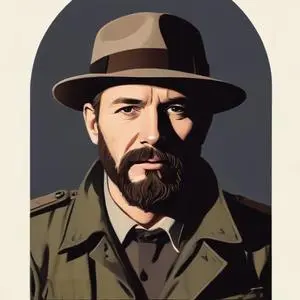
David Douglas Duncan: The Visionary Who Captured the Essence of War and Art
A Legendary Photojournalist's Quest for Truth and Beauty
David Douglas Duncan is renowned for his unfaltering dedication to capturing the harsh realities of war and the intimate nuances of artistic genius. As a pioneering photojournalist, Duncan's lens has witnessed some of the most pivotal moments in modern history, from the brutality of combat to the creative brilliance of Pablo Picasso.
Early Life and Inspirations
Born on January 23, 1916, in Kansas City, Missouri, Duncan's childhood was shaped by his fascination with the outdoors and his experience as an Eagle Scout. A chance encounter with big-game hunter and physician Richard Lightburn Sutton's lanternslide presentation sparked his interest in photography and world travel. This early fascination eventually led him to study archaeology at the University of Arizona, where he inadvertently photographed
John Dillinger attempting to enter a hotel.
Education and Early Career
Duncan's educational journey continued at the University of Miami, where he graduated in 1938 with a degree in zoology and Spanish. It was during this time that his passion for photojournalism took root, as he worked as a picture editor and photographer for the university paper. His early freelance work was featured in esteemed publications such as
The Kansas City Star,
Life, and
National Geographic.
War and Photography: A Convergence of Destinies
Following the attack on Pearl Harbor, Duncan joined the Marine Corps, earning an officer's commission and becoming a combat photographer. His camera captured the intense brutality of war, humanizing the experiences of soldiers and civilians alike. Duncan's photographs from this period are a testament to his unwavering commitment to documenting the truth, no matter the cost.
The Picasso Connection
Duncan's relationship with
Pablo Picasso and his wife Jacqueline is the stuff of legend. For over 15 years, Duncan photographed the artistic genius at work and play, capturing intimate moments that humanized the iconic artist. This unique bond allowed Duncan to reveal the complexities of Picasso's personality, showcasing his creative process and personal life.
Career Highlights and Major Works
- This is War! (1951) - A poignant photographic account of the Korean War, hailed as one of the greatest war photography books of all time.
- Yankee Nomad (1966) - A candid portrayal of American youth, capturing the essence of the counterculture movement.
- Picasso's Picassos (1967) - An intimate exploration of Picasso's art and personal life, featuring over 200 photographs.
Philosophical Contributions and Beliefs
Duncan's work embodies a deep respect for humanity, emphasizing the importance of empathy and understanding in the face of conflict and adversity. His photographs serve as a testament to the power of art to capture the essence of the human experience.
Legacy and Impact on Modern Society
David Douglas Duncan's contributions to photojournalism have inspired generations of photographers, influencing the way we document and perceive conflict, art, and humanity. His legacy extends beyond his photographs, leaving an indelible mark on our collective understanding of the world.
Quotes and Memorable Sayings
- "A picture is not taken, it is given."
- "The camera is an instrument, not a tool."
Awards and Honors
- Recipient of the Robert Capa Gold Medal (1951)
- Inducted into the International Center of Photography's Hall of Fame (1990)
Duncan's remarkable journey has left an enduring impact on the world of photography, art, and humanity. His photographs continue to inspire, educate, and move us, serving as a poignant reminder of the power of art to transform our understanding of the world.
FAQ
What type of photography did David Douglas Duncan specialize in?
David Douglas Duncan was an American photographer and journalist who specialized in war photography and documentary photography. He is best known for his coverage of World War II, the Korean War, and the Vietnam War.
What was David Douglas Duncans experience in World War II?
David Douglas Duncan served as a Marine Corps combat photographer during World War II, documenting battles in the Pacific Theater, including the Battle of Okinawa. His photographs humanized the war effort and provided a glimpse into the lives of soldiers.
How did David Douglas Duncans photography impact the publics perception of war?
David Douglas Duncans photography had a significant impact on the publics perception of war, providing a realistic and often gruesome portrayal of conflict. His images helped to raise awareness about the human cost of war and influenced the way wars were covered by the media.
What awards did David Douglas Duncan receive for his photography?
David Douglas Duncan received numerous awards for his photography, including the Robert Capa Gold Medal, the Overseas Press Club Award, and the Peabody Award. He was also inducted into the International Photography Hall of Fame.
What is David Douglas Duncans legacy in photography?
David Douglas Duncans legacy in photography is that of a pioneering war photographer who pushed the boundaries of photojournalism. His work continues to inspire generations of photographers and journalists, and his images remain a testament to the power of photography to inform and educate.