


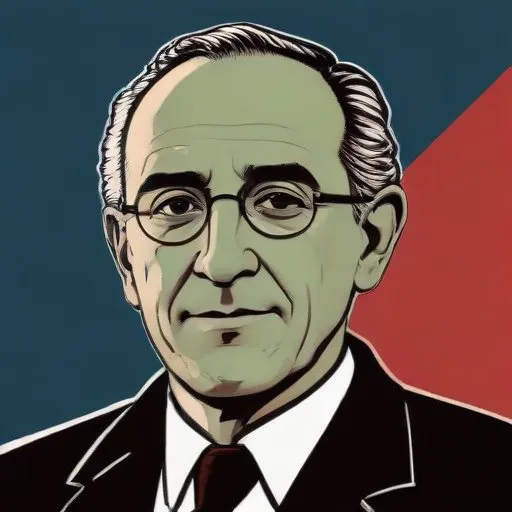
A renowned biochemist and academic, he made significant contributions to the understanding of carbohydrate chemistry and its applications in medicine and industry. His work has far-reaching implications for the development of new treatments and products.
David Sidney Feingold, a renowned American biochemist, made groundbreaking contributions to the field of biochemistry, earning him the prestigious Israel Prize in 1957. His pioneering work on the synthesis of sucrose and other polysaccharides has had a lasting impact on our understanding of biological processes.
Born on November 15, 1922, in Chelsea, Massachusetts, Feingold graduated from the Massachusetts Institute of Technology (MIT) in 1944 with a bachelor's degree in chemistry. Following his graduation, he enlisted in the United States Navy, serving on a Landing Ship, Tank in the Pacific for nine months.
Feingold's thirst for knowledge led him to pursue advanced studies in chemistry at the Chemical Institute at the University of Zurich, Switzerland, from 1947 to 1949. He then moved to Israel, where he served in the scientific division of the Israeli Army as a second lieutenant until 1950. During this period, he worked at the Hadassah Hospital in Jerusalem.
In 1951, Feingold began his Ph.D. studies in biochemistry at the Hebrew University of Jerusalem, which he completed in 1956. His research focused on the synthesis of sucrose and other polysaccharides, laying the foundation for his future work.
Feingold's academic career spanned over three decades, during which he held various positions, including research assistant at the University of California, assistant professor at the University of Pittsburgh, and professor of microbiology at the University of Pittsburgh School of Medicine. He also served as an invited professor in Switzerland, Brazil, and Argentina, as well as at the University of Colorado.
Feingold's research centered around the synthesis of sucrose and other polysaccharides, exploring their structures, functions, and biological implications. Some of his notable published works include:
In recognition of his outstanding contributions to the field of biochemistry, Feingold was awarded the Israel Prize in 1957, along with his research partner Shlomo Hestrin and their student Gad Avigad.
David Sidney Feingold's work has had a profound impact on our understanding of biological processes, shedding light on the intricate mechanisms of polysaccharide synthesis. His research has paved the way for future generations of biochemists, inspiring new areas of investigation and application.
Feingold's legacy extends beyond his scientific contributions, as he has inspired countless students and researchers throughout his illustrious career. His dedication to advancing our understanding of biochemistry has left an indelible mark on the scientific community.
Born in 1918
Pioneering biochemist who discovered the mechanism of DNA replication and was awarded the Nobel Prize in Physiology or Medicine in 1959 for his groundbreaking work on nucleic acid synthesis.
Born in 1905
A pioneering biochemist who discovered the mechanism of RNA synthesis, earning a Nobel Prize in Physiology or Medicine in 1959. His work laid the foundation for our understanding of genetic code and protein synthesis.
Born in 1898
A high-ranking officer in the German Wehrmacht during World War II, known for his involvement in the July 20 plot to assassinate Adolf Hitler.
Born in 1896
A pioneering scientist who discovered how the body breaks down and uses carbohydrates, earning a Nobel Prize in Physiology or Medicine in 1947. Her groundbreaking work has led to a deeper understanding of diabetes and other metabolic disorders.
Born in 1900
German physician and biochemist who discovered the citric acid cycle, a crucial process by which cells generate energy from food, revolutionizing our understanding of cellular metabolism.
