


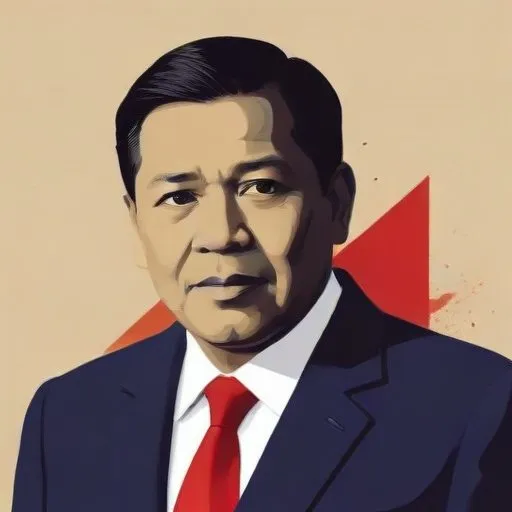
A Filipino lawyer and politician who served as the 9th President of the Philippines, known for his efforts to reform the country's economy and introduce the Filipino language as the national language.
Diosdado Macapagal, the ninth President of the Philippines, is renowned for his unwavering commitment to reform and his role in shaping the country's economic and political landscape during the tumultuous 1960s. As a champion of land reform, anti-corruption, and economic liberalization, Macapagal's presidency left an indelible mark on the nation's history.
Born on September 28, 1910, in Lubao, Pampanga, Macapagal rose from humble beginnings to become one of the most influential figures in Philippine politics. His parents, Urbano Macapagal and Romana Pangan, instilled in him the values of hard work and education, which would serve as the foundation for his future success.
Macapagal's entry into politics began in 1949, when he was elected to the House of Representatives, representing the 1st district of Pampanga. His dedication to public service and his ability to connect with the common Filipino earned him a reputation as a champion of the people. In 1957, he became Vice President under President Carlos P. Garcia, and later, in 1961, he succeeded Garcia as President.
Macapagal's presidency was marked by a series of groundbreaking reforms, including the introduction of the country's first land reform law, the Land Reform Code of 1963. This legislation aimed to redistribute land from wealthy landowners to tenant farmers, promoting social justice and economic equality.
Despite his many achievements, Macapagal's presidency was not without its challenges. He faced strong opposition from the rival Nacionalista Party, which dominated Congress and often hindered his reforms. His decision to shift Independence Day to June 12 was met with criticism from some sectors, who saw it as an attempt to erase the country's American colonial legacy.
Macapagal's commitment to public service was matched only by his dedication to his family. He was the proud father of Gloria Macapagal Arroyo, who would later follow in his footsteps to become President of the Philippines. His family remained a source of strength and inspiration throughout his life.
After losing the 1965 presidential election to Ferdinand Marcos, Macapagal continued to serve his country, leading the 1970 Constitutional Convention and later questioning the legitimacy of the 1973 Constitution. He passed away on April 21, 1997, leaving behind a legacy of service, reform, and dedication to the Filipino people.
Today, Diosdado Macapagal is remembered as a champion of social justice, economic reform, and Philippine independence. His presidency may have been marked by challenges and controversies, but his commitment to the welfare of the Filipino people remains an enduring testament to his character and vision.
Born in 1917
A Filipino leader who ruled with an iron fist, implementing martial law and amassing wealth, leaving a legacy of controversy and economic turmoil.
93 Years Old
First female president of the Philippines, led the People Power Revolution, and restored democracy after decades of authoritarian rule.
93 Years Old
A Filipino journalist and politician who led the opposition against Ferdinand Marcos' regime, known for his courageous fight for democracy and human rights. Assassinated in 1983, his death sparked the People Power Revolution.
89 Years Old
The 13th President of the Philippines, a former actor turned politician, is known for his populist appeal and controversial presidency marked by corruption allegations and an eventual impeachment trial. He's also remembered for his efforts to address poverty and inequality.
79 Years Old
The 14th President of the Philippines, a prominent figure in Southeast Asian politics, known for her economic reforms and controversial tenure marked by allegations of corruption and human rights abuses.
98 Years Old
The 12th President of the Philippines, a decorated war hero and leader who implemented economic reforms and brought stability to the country after a tumultuous era. He's known for his efforts to modernize the Philippines and promote national unity.
Born in 1896
The 8th President of the Philippines, a lawyer and politician, led the country towards economic growth and independence, implementing the Filipino First Policy to promote national development.
Born in 1869
Led the Philippine Revolution against Spanish colonial rule and later established the First Philippine Republic, becoming its first president. He's revered as a national hero for his fight for independence.
