


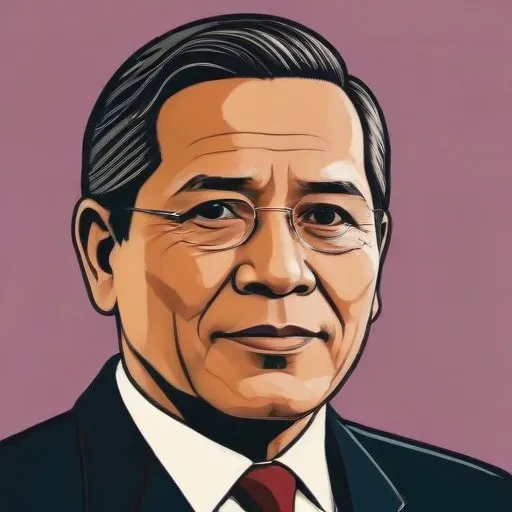
The 8th President of the Philippines, a lawyer and politician, led the country towards economic growth and independence, implementing the Filipino First Policy to promote national development.
Carlos P. Garcia, the eighth President of the Philippines, is known for his unwavering dedication to his country and his people. As a politician, lawyer, poet, orator, and guerrilla leader, Garcia left an indelible mark on the nation's history.
Garcia was born on November 4, 1896, in Talibon, Bohol, Philippines, to Policronio Garcia and Ambrosia Polestico. His father, a municipal mayor for four terms, instilled in him the value of public service from a young age. Garcia's academic prowess earned him top honors in his primary education in Talibon and secondary education in Cebu Provincial High School.
He pursued his college education at Silliman University in Dumaguete, Negros Oriental, and later at the Philippine Law School, where he earned his law degree in 1923. Garcia's academic excellence did not go unnoticed, as he was among the top ten law students in the 1923 bar examination. He was awarded an honorary doctorate degree from Tokyo University in Japan and an honorary degree Doctor of Humanities, Honoris Causa from the National University in 1961.
Garcia's political career began when he became the representative of Bohol's 3rd district in the House of Representatives. He later served as a senator from 1945 to 1953, showcasing his leadership skills and unwavering commitment to public service.
In 1953, Garcia ran as the running mate of Ramon Magsaysay in the presidential election and served as vice president from 1953 to 1957. After Magsaysay's untimely death in 1957, Garcia succeeded to the presidency, becoming the first and only Cebuano to hold the position.
During his presidency, Garcia focused on improving the country's economy, implementing the "Filipino First" policy, which aimed to promote local industries and reduce the country's reliance on foreign goods. He also sought to strengthen the country's relationships with neighboring nations, fostering a sense of regional unity and cooperation.
Carlos P. Garcia's legacy extends beyond his presidency, as he left an indelible mark on the Philippines' political and social landscape. His commitment to public service, education, and regional cooperation continues to inspire future generations of leaders and citizens alike.
Garcia's presidency was marked by his unwavering dedication to his people, his country, and his vision for a more prosperous and independent Philippines. As a true statesman, he will always be remembered for his courage, wisdom, and unshakeable commitment to the nation he served.
Born in 1907
A Filipino leader who served as president from 1953 to 1957, known for his anti-corruption and social reform efforts, as well as his tragic death in a plane crash.
Born in 1890
The 6th President of the Philippines was a leader who played a crucial role in rebuilding the country after World War II, and is known for his efforts to restore the economy and promote national unity.
Born in 1892
This Filipino leader served as the 5th President of the Philippines, playing a key role in rebuilding the country after World War II and shaping its post-war economy. He's remembered for his efforts to restore national sovereignty and promote economic growth.
Born in 1878
The 4th President of the Philippines, a lawyer and politician who played a key role in the country's transition from American colonial rule to independence. He's most known for his efforts in rebuilding the war-torn nation after World War II.
Born in 1869
Led the Philippine Revolution against Spanish colonial rule and later established the First Philippine Republic, becoming its first president. He's revered as a national hero for his fight for independence.
93 Years Old
First female president of the Philippines, led the People Power Revolution, and restored democracy after decades of authoritarian rule.
Born in 1917
A Filipino leader who ruled with an iron fist, implementing martial law and amassing wealth, leaving a legacy of controversy and economic turmoil.
93 Years Old
A Filipino journalist and politician who led the opposition against Ferdinand Marcos' regime, known for his courageous fight for democracy and human rights. Assassinated in 1983, his death sparked the People Power Revolution.
