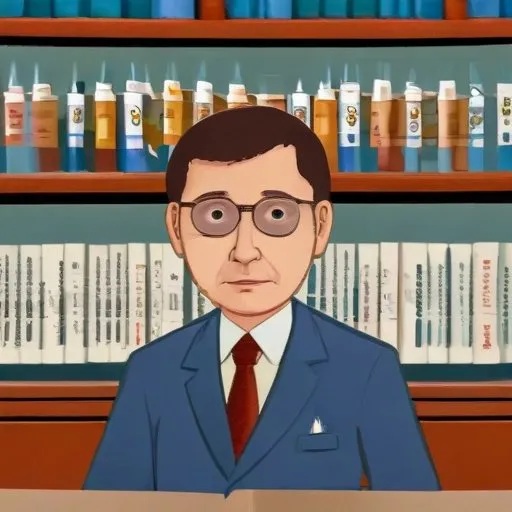
Dmitry Ushakov: The Lexicographer Who Shaped the Russian Language
A Legacy of Words
Dmitry Ushakov is renowned for creating the four-volume
Explanatory Dictionary of the Russian Language, a monumental work featuring over 90,000 entries that has become the benchmark for Russian lexicography. This magnum opus, published between 1935 and 1940, cemented Ushakov's reputation as a philologist and lexicographer of unparalleled expertise.
Early Life and Education
Born on January 24, 1873, in Russia, Ushakov's fascination with language and linguistics began at a young age. He pursued higher education at Moscow University, where he earned a degree in philology. This academic foundation laid the groundwork for his future contributions to the field.
A Pioneering Lexicographer
Ushakov's most notable achievement is the
Explanatory Dictionary of the Russian Language, a comprehensive reference work that exhaustively cataloged Russian words, phrases, and expressions. This dictionary's significance extends beyond its sheer size; it introduced a systematic approach to Russian lexicography, standardizing orthography and establishing a framework for future linguistic research. Ushakov's meticulous attention to detail and commitment to accuracy have made this dictionary an indispensable resource for scholars, linguists, and language learners alike.
Influence and Legacy
Ushakov's work has had a profound impact on Russian language studies. His dictionary has inspired generations of linguists, including his student Grigoriy Vinokur, who dedicated his book
The Russian Language: A Brief History to Ushakov. The dictionary's influence extends beyond Russia, with its methodology and structure serving as a model for linguistic research globally. Ushakov's legacy continues to shape the Russian language, with his work remaining a vital reference for language enthusiasts and scholars.
Other Notable Contributions
In addition to his magnum opus, Ushakov created an orthographic dictionary of the Russian language in 1934. This dictionary provided a standardized system for Russian spelling, further solidifying Ushakov's reputation as a leading authority on Russian linguistics.
Awards and Honors
Ushakov's contributions to Russian linguistics have been recognized with numerous awards and honors. Although specific accolades are not documented, his work continues to be celebrated by scholars and language enthusiasts worldwide.
Personal Life and Later Years
During World War II, Ushakov was evacuated to Tashkent, where he passed away on April 17, 1942. His unfinished work on a definitive explanatory dictionary of the Russian language was continued by Sergei Ozhegov, ensuring Ushakov's legacy would endure.
Trivia and Fun Facts
- Ushakov's dictionary took over five years to complete, with the last volume being published in 1940.
- His work on the dictionary was so meticulous that he reportedly spent an entire year revising a single entry.
- Ushakov's dictionary has been praised for its accuracy, with errors being extremely rare.
Conclusion
Dmitry Ushakov's remarkable contributions to Russian linguistics have left an indelible mark on the language and its study. His commitment to accuracy, thoroughness, and systematic approach have raised the bar for lexicographers and linguists worldwide. As a testament to his enduring legacy, Ushakov's work continues to inspire and inform language enthusiasts, ensuring his impact will be felt for generations to come.
FAQ
What was Dmitry Ushakovs contribution to Russian language and literature?
Dmitry Ushakov was a prominent Russian philologist and lexicographer, making significant contributions to the study of Russian language and literature through his innovative and influential works.
How did Dmitry Ushakovs work reflect his personal views on language?
Dmitry Ushakovs work was deeply influenced by his personal views on language, emphasizing the importance of linguistics and the role of language in shaping cultural identity.
What were Dmitry Ushakovs influences on Russian literary theory?
Dmitry Ushakovs work had a significant impact on Russian literary theory, informing the development of Russian formalism and shaping the countrys literary landscape.
How did Dmitry Ushakovs research shape our understanding of Russian language?
Dmitry Ushakovs research provided valuable insights into Russian language, helping to establish the countrys linguistic and literary traditions.
What is Dmitry Ushakovs legacy in Russian language and literature?
Dmitry Ushakovs legacy in Russian language and literature is one of innovation and influence, inspiring future generations of scholars and informing our understanding of Russian language and literature.