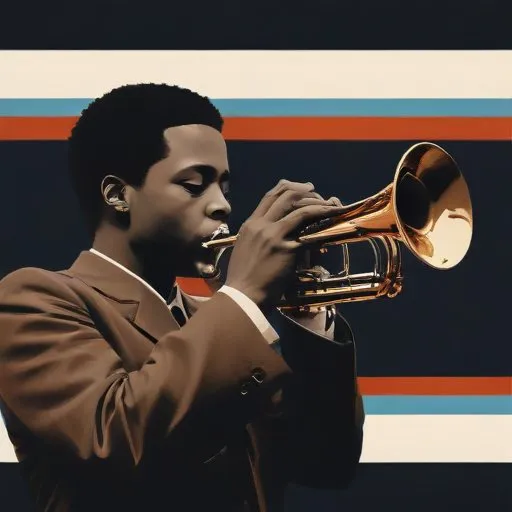
Donald Byrd: The Pioneer of Jazz-Funk Fusion
Donald Byrd, an American jazz and rhythm & blues trumpeter, vocalist, and bandleader, is renowned for his extraordinary contributions to the jazz scene, successfully merging jazz with funk and soul while maintaining his jazz roots. As a sideman for many prominent jazz musicians, Byrd greatly influenced the careers of
Herbie Hancock and numerous others.
Early Life and Career
Born on December 9, 1932, in Detroit, Michigan, Byrd hails from an African American middle-class family. His father, Elijah Thomas Byrd, a Methodist minister, emphasized education, overseeing his son's schooling. Byrd's mother, Cornelia Taylor, introduced him to jazz music, and her brother gifted him his first trumpet. He attended Cass Technical High School and began performing with
Lionel Hampton before finishing high school.
Rise to Prominence
Byrd's professional journey commenced with his first recording session in 1949 at Fortune Records in Detroit with the Robert Barnes Sextette. After serving in the United States Air Force, where he played in a military band, Byrd earned a bachelor's degree in music from Wayne State University and a master's degree from Manhattan School of Music. While still at Manhattan School, he joined
Art Blakey's Jazz Messengers as
Clifford Brown's successor.
The Quintessential Bandleader
In 1955, Byrd recorded with
Gigi Gryce, Jackie McLean, and
Mal Waldron. After leaving the Jazz Messengers in 1956, he performed with jazz luminaries such as
John Coltrane,
Sonny Rollins, and
Thelonious Monk, later collaborating with Herbie Hancock. Byrd's first regular group, co-led from 1958 to 1961 with baritone saxophonist
Pepper Adams, delivered hard-driving performances captured live on
At the Half Note Cafe.
Influence and Legacy
Byrd's 1961 LP
Royal Flush marked Herbie Hancock's Blue Note debut. Hancock credited Byrd as a key influence in his early career, acknowledging Byrd's significant role in shaping his artistry. Byrd's impact extends beyond his own music, as he inspired a generation of jazz musicians to experiment with funk and soul, paving the way for the development of jazz-funk fusion.
Notable Collaborations and Discography
- At the Half Note Cafe (1960)
- Royal Flush (1961)
- Free Forms (1962)
- New Perspective (1963)
- Up with Donald Byrd (1964)
Awards and Honors
Byrd received numerous awards and accolades, including a Grammy nomination for Best Jazz Instrumental Performance for his album
Black Byrd (1972).
Philosophical Contributions and Beliefs
Byrd was a strong advocate for jazz education, emphasizing the importance of understanding jazz history and acknowledging its roots in African American culture. He believed that jazz should be accessible to all, regardless of socioeconomic background or educational level.
Personal Milestones and Key Life Events
Byrd passed away on February 4, 2013, leaving behind a rich legacy in the world of jazz. Throughout his life, he remained committed to his art, constantly pushing boundaries and exploring new sounds.
Byrd's pioneering spirit, innovative approach, and dedication to jazz education have cemented his place as one of the most influential jazz musicians of all time. His contributions continue to inspire generations of musicians, ensuring his legacy as a true jazz icon.
FAQ
What was Donald Byrds musical style?
Donald Byrds musical style was a fusion of jazz, funk, and R&B. He was known for his versatility and ability to experiment with different genres.
How did Donald Byrd influence jazz music?
Donald Byrd was a pioneer of jazz fusion, influencing many musicians who followed in his footsteps. He also mentored several notable jazz musicians, including Herbie Hancock.
What are some notable albums by Donald Byrd?
Some notable albums by Donald Byrd include Free Forms, A New Perspective, and Ethiopian Knights. These albums showcase his unique blend of jazz, funk, and soul.
How did Donald Byrds music reflect his social activism?
Donald Byrds music often reflected his social activism, addressing issues like racism, inequality, and black empowerment. His music served as a form of protest and commentary on the times.
What was Donald Byrds legacy in the world of jazz?
Donald Byrds legacy in jazz is that of a true innovator and pioneer. He pushed the boundaries of the genre, experimenting with new sounds and styles that continue to influence musicians today.