


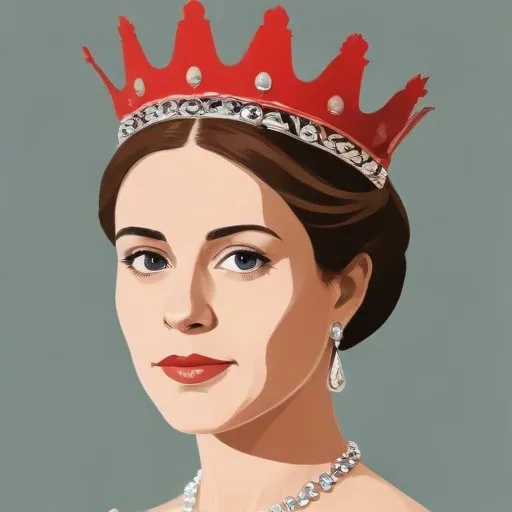
French crown princess who married into the French royal family and was a fashion icon of her time, known for her beauty and extravagant lifestyle.
Duchess Helene of Mecklenburg-Schwerin is renowned as the Crown Princess of France, marrying into the royal family in 1837, and more importantly, as the mother of the future Count of Paris and Duke of Chartres. Her descendants include current pretenders to the thrones of France, Romania, and Italy, as well as the kings of Spain and Belgium.
Born on January 24, 1814, at Schloss Ludwigslust, the retreat of the capital of Mecklenburg-Schwerin, Helene was the only daughter of the Hereditary Grand Duke of Mecklenburg-Schwerin and his second wife, Princess Karoline Luise of Saxe-Weimar-Eisenach. Her father's lineage boasted a rich history, with her grandfather being Frederick Francis I, Grand Duke of Mecklenburg-Schwerin.
On May 30, 1837, Helene Luise married Ferdinand Philippe d'Orléans at the Palace of Fontainebleau. The ceremony was officiated by the Archbishop of Paris, Hyacinthe-Louis de Quelen. This union solidified her position as the Crown Princess of France, cementing her role in European royal circles.
Duchess Helene's marriage and subsequent descendants have had a profound impact on European royalty. Her son, the Count of Paris, would go on to become the pretender to the French throne, while her other descendants would ascend to thrones in Spain, Belgium, and Italy.
The Duchess's legacy extends beyond her royal connections. Her marriage and family ties have shaped the course of European history, influencing the trajectory of royal families and dynasties to this day.
Helene's life was marked by both joy and tragedy. Her parents passed away when she was young, leaving her to be raised by her grandfather, the reigning Grand Duke. Despite this, she went on to fulfill her royal duties, marrying Ferdinand Philippe d'Orléans and giving birth to several children.
Duchess Helene's life and legacy are set against the backdrop of 19th-century European politics and royalty. Her marriage and descendants have played a significant role in shaping the course of royal history, making her an integral figure in the annals of European royal families.
Born in 1773
The last king of France before the fall of the monarchy, ruling from 1830 to 1848, known for his liberal policies and attempts to modernize the country.
Born in 1787
A 19th-century French historian and politician who served as Prime Minister, known for his role in shaping France's modern democracy and educational system.
Born in 1807
The 4th President of the French Republic, a lawyer and politician, is known for his strong stance against corruption and his role in establishing the Third French Republic. He's also famous for being the first president to serve a full term.
Born in 1838
A French lawyer and politician who served as Prime Minister of France, known for his key role in the Franco-Prussian War and his efforts to modernize and unify France. He's a significant figure in French history, shaping the country's politics and identity.
