


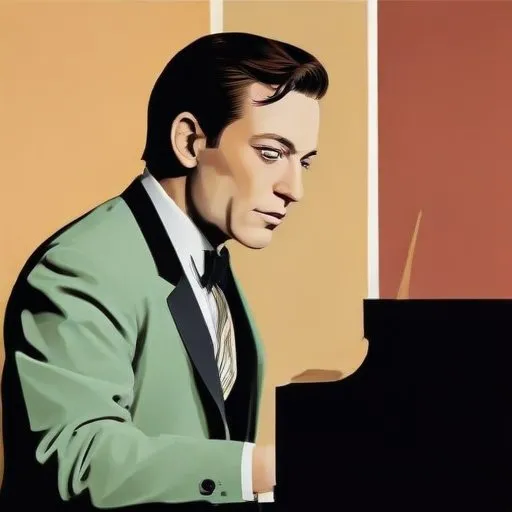
A renowned jazz pianist and composer, known for his distinctive playing style and contributions to the development of bebop, with a legacy that continues to inspire modern jazz musicians.
Duke Jordan was an American jazz pianist renowned for his imaginative and gifted playing style, which earned him a spot in Charlie Parker's quintet during the late 1940s. He is perhaps best known for his composition "Jordu," which became a jazz standard after being adopted by trumpeter Clifford Brown.
Irving Sidney "Duke" Jordan was born on April 1, 1922, in New York and raised in Brooklyn. He attended Boys High School, where his passion for music began to take shape. Jordan's early career saw him playing with various bands, including those led by Coleman Hawkins and Benny Carter.
Jordan's big break came in 1947 when he joined Charlie Parker's quintet, which featured Miles Davis on trumpet. During this period, he participated in Parker's Dial sessions, producing some of the most iconic recordings in jazz history, including "Dewey Square," "Bongo Bop," and "Bird of Paradise." These performances showcased Jordan's exceptional pianistic skills and his ability to complement Parker's lightning-fast solos.
After leaving Parker's quintet, Jordan embarked on a successful solo career, which spanned several decades. He recorded extensively for the SteepleChase label, starting in 1973, and eventually relocated to Copenhagen, Denmark in 1978. Jordan's music remained unchanged throughout his career, a testament to his commitment to his unique style.
Jordan's compositions, such as "Jordu" and "No Problem," have become staples of the jazz canon. "Jordu" has been recorded by numerous artists, including Clifford Brown, and remains one of the most beloved jazz standards. Jordan's music has also been praised for its timeless quality, with critics noting that his style remained fresh and innovative even in his later years.
Jordan was married to jazz singer Sheila Jordan from 1952 to 1962, and they had a daughter, Tracey J. Jordan, together. During the mid-1960s, Jordan took a break from music and drove a taxi in New York, a testament to his resourcefulness and adaptability.
Duke Jordan's legacy continues to inspire new generations of jazz musicians and enthusiasts alike. His unique style, marked by imagination and lyricism, has left an indelible mark on the jazz landscape.
Born in 1920
A pioneering jazz saxophonist and composer, known for his lightning-fast solos and innovative bebop style that revolutionized jazz music. 82
Born in 1917
A virtuosic trumpet player and composer who revolutionized jazz with his lightning-fast solos and iconic puffy cheeks, creating a new language for the instrument. He's synonymous with bebop and modern jazz.
Born in 1917
A jazz legend who revolutionized piano playing and composition with unorthodox techniques and harmonies, creating a unique, improvisational style that continues to inspire generations of musicians.
Born in 1926
A legendary jazz musician who revolutionized the genre with his improvisational style and iconic albums like "Kind of Blue". He's synonymous with cool, jazzy sophistication.
Born in 1926
A legendary jazz saxophonist and composer who revolutionized the genre with his innovative, spiritually-driven improvisations and iconic albums like "A Love Supreme".
97 Years Old
A highly influential and innovative jazz pianist and composer, known for his lyrical and introspective playing style, which expanded the possibilities of jazz harmony and improvisation.
94 Years Old
A renowned jazz pianist and composer, known for his distinctive style and iconic recordings with Miles Davis and John Coltrane. His playing blended elegance and intensity, influencing generations of jazz musicians.
91 Years Old
A renowned jazz bassist and composer, known for his melodic and harmonic innovations that transformed the role of the double bass in modern jazz.
