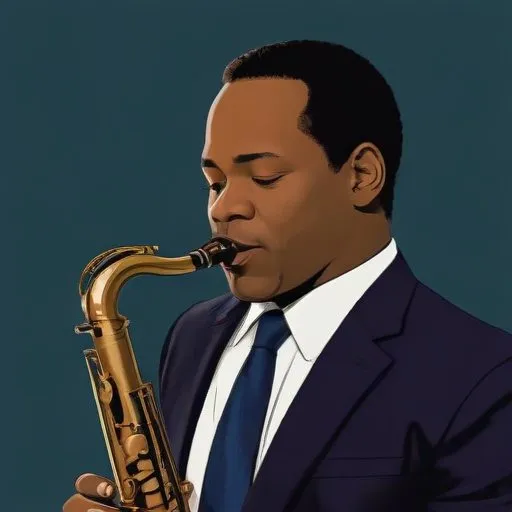
Eddie Harris: The Revolutionary Saxophonist
A Legend of Jazz and Electric Innovation
Eddie Harris, born on October 20, 1934, was an American jazz musician renowned for introducing the electrically amplified saxophone, revolutionizing the jazz scene with his innovative approach to sound. As a multi-instrumentalist, he was also fluent on the electric piano and organ, leaving an indelible mark on the music world.
Early Life and Education
Born in Chicago, Harris was the son of a Cuban father and a Mississippi-born mother. He grew up in a musically rich environment, studying music under the guidance of Walter Dyett at DuSable High School, where many notable Chicago musicians, including
Nat King Cole and Gene Ammons, honed their skills. Harris later attended Roosevelt University, mastering piano, vibraphone, and tenor saxophone.
Military Service and Early Career
After college, Harris was drafted into the United States Army, where he performed with the 7th Army Band, alongside future jazz greats
Don Ellis, Leo Wright, and Cedar Walton, during his service in Europe. Upon leaving the military, Harris worked in New York City before returning to Chicago, where he signed a contract with Vee Jay Records.
The Rise to Fame
Harris's breakthrough came with his 1961 album,
Exodus to Jazz, featuring his own jazz arrangement of
Ernest Gold's theme from the movie
Exodus. The album's title track, which showcased Harris's soaring tenor saxophone playing, became the first jazz record to be certified gold. The single "Exodus" peaked at No. 16 on the US R&B chart and climbed into the US Billboard Hot 100.
Expanding Horizons
In the following years, Harris continued to push boundaries, embracing electric piano and the electric Varitone saxophone. His 1965 album,
The In Sound, marked a return to his bop roots, winning back critics and fans alike. Harris's innovative fusion of jazz and funk yielded a string of commercially successful albums, solidifying his position as a trailblazer in the jazz world.
Legacy and Impact
Eddie Harris's contributions to jazz are immeasurable. He influenced generations of musicians, including saxophonists like
Michael Brecker and
David Sanborn. Harris's electric saxophone sound paved the way for future innovators, and his music continues to inspire and entertain audiences today.
Compositions and Collaborations
Two of Harris's most famous compositions are "Freedom Jazz Dance" and "Listen Here." The former, popularized by
Miles Davis in 1966, became a jazz standard. Harris collaborated with a range of artists, including
Les McCann, with whom he recorded the iconic album
Swiss Movement in 1969.
Awards and Honors
Eddie Harris received numerous accolades throughout his career, including multiple Grammy nominations and a 1962 Grammy nomination for Best New Artist.
Personal Milestones and Later Life
Harris continued to perform and record until his passing on November 5, 1996. Throughout his life, he remained dedicated to his craft, leaving behind a legacy of innovation and artistic excellence.
Inspirational Quotes
- "I'm not afraid to try new things, because that's what life is all about – experimenting and trying new things."
- "Music is the greatest gift God gave to humanity, and I'm grateful to be a part of it."
Eddie Harris's pioneering spirit, innovative approach, and boundless creativity have cemented his place as one of the most influential jazz musicians of all time. His music continues to inspire and delight audiences, ensuring his legacy will endure for generations to come.