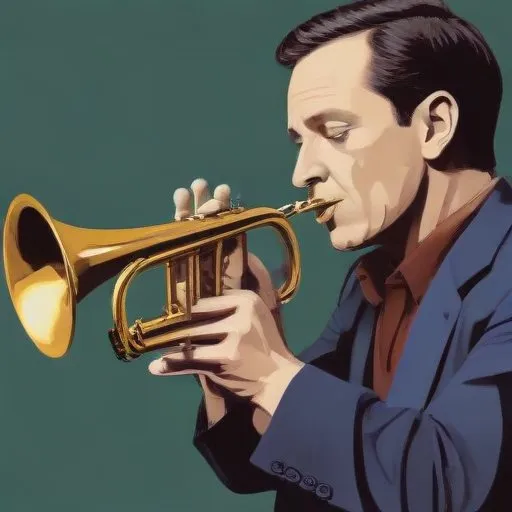
Don Ellis: The Maverick of Jazz and Film Composition
The Time Signature Rebel
Don Ellis, a jazz trumpeter, drummer, composer, and bandleader, is renowned for his trailblazing experimentation with time signatures. This fearless innovator pushed the boundaries of jazz, leaving an indelible mark on the genre. His unconventional approach to rhythm and meter earned him a reputation as a true original, influencing generations of musicians to come.
A Musical Upbringing
Born on July 25, 1934, in Los Angeles, California, Ellis grew up in a musically inclined family. His father, a Methodist minister, and his mother, a church organist, nurtured his early fascination with music. This fertile ground yielded a talented individual who would later excel in multiple aspects of music.
Early Inspirations and Education
Attending West High School in Minneapolis, Minnesota, Ellis' interest in jazz was sparked by a
Tommy Dorsey Big Band concert. He drew inspiration from jazz legends
Louis Armstrong and
Dizzy Gillespie, laying the foundation for his future endeavors. Ellis graduated from Boston University in 1956 with a degree in music composition, equipping him with the theoretical groundwork to explore uncharted territories.
Military Service and Early Career
Ellis' first professional gig was with the
Glenn Miller Orchestra, directed by
Ray McKinley. After a stint with the orchestra, he joined the U.S. Army's Seventh Army Symphony Orchestra and the Soldiers Show Company. Stationed in Frankfurt, Germany, Ellis met fellow musicians Cedar Walton,
Eddie Harris, and Don Menza, with whom he collaborated on compositional and arrangement projects. These experiences sharpened his skills, preparing him for the creative explosion that was to follow.
New York City and the Avant-Garde
Upon leaving the Army, Ellis settled in Greenwich Village, New York City, where he immersed himself in the vibrant avant-garde jazz scene. He collaborated with luminaries such as
Charles Mingus,
Eric Dolphy, and
George Russell, contributing to albums that redefined the boundaries of jazz. Ellis led his own small groups, recording sessions that featured
Jaki Byard,
Paul Bley, Gary Peacock, and
Ron Carter, among others.
Film Composition and Mainstream Success
In the early 1970s, Ellis shifted his focus to film composition, scoring the soundtracks for
The French Connection (1971) and
The Seven-Ups (1973). These projects brought him widespread recognition, introducing his innovative style to a broader audience.
Legacy and Impact
Don Ellis' courageous exploration of time signatures and rhythms expanded the possibilities of jazz, inspiring a new wave of musicians. His contributions to film composition further cemented his reputation as a visionary. Though his life was cut short on December 17, 1978, Ellis' influence continues to resonate through the jazz and film communities.
Quotable Ellis
- "I'm not interested in playing what's already been played. I want to do something new, something that's going to make people think."
- "Jazz is a process, not a product. It's the journey, not the destination."
Awards and Honors
Ellis received a Grammy nomination for his score for
The French Connection, solidifying his position as a master of film composition.
Personal Milestones and Key Life Events
- Graduated from Boston University with a degree in music composition (1956)
- Served in the U.S. Army's Seventh Army Symphony Orchestra and the Soldiers Show Company (1956-1958)
- Joined the Maynard Ferguson band (1959)
- Scored the soundtracks for The French Connection (1971) and The Seven-Ups (1973)
A Life of Innovation and Creative Exploration
Don Ellis' remarkable journey serves as a testament to the power of innovation and creative risk-taking. This jazz pioneer and film composer left an indelible mark on the music world, inspiring generations to come.