


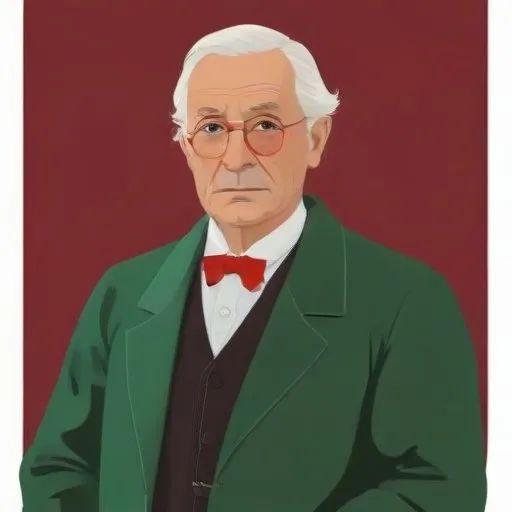
A historian and philosopher of science who contributed to the development of the Vienna Circle, a group of philosophers and scientists who sought to establish a scientific worldview, and is known for his work on the social origins of modern science. He explored the connections between science, technology, and society, and argued that scientific progress is driven by social and economic factors.
Edgar Zilsel, an Austrian-American historian and philosopher of science, is best known for his groundbreaking proposal, the Zilsel Thesis, which revolutionized our understanding of the origins of Western science. This pioneering idea, which merged practical experimentation with analytical thought, has had a lasting impact on the scientific community.
Born on August 11, 1891, in Vienna, Austria-Hungary, Zilsel was the youngest child of Jacob Zilsel, a lawyer, and Ina Kollmer. He attended high school at the Franz-Joseph-Gymnasium and later pursued his higher education at the University of Vienna, where he studied philosophy, physics, and mathematics.
After completing his PhD in 1915 under the supervision of Heinrich Gomperz, Zilsel worked as a mathematician at an insurance company for a brief period before taking up a teaching position in 1917. His dissertation, titled "A Philosophical Investigation of the Law of Large Numbers and Related Laws," showcased his early fascination with the intersection of philosophy and science.
Zilsel's magnum opus, the Zilsel Thesis, proposed that Western science originated from the interactions between scholars and skilled artisans. This innovative idea blurred the lines between theory and practice, demonstrating how empirical experimentation and analytical thinking could converge to produce scientific breakthroughs.
As a member of the left wing of the Vienna Circle, Zilsel subscribed to historical materialism and sought to establish empirical laws in history and society. His work had significant implications for our understanding of the Scientific Revolution and the development of modern science.
As a Jewish philosopher with Marxist leanings, Zilsel faced significant persecution in Austria. In 1941, he fled to the United States, where he received a Rockefeller Fellowship Membership. During this period, he published several papers, including "The Sociological Roots of Modern Science," which further cemented his reputation as a pioneering thinker.
In 1943, Zilsel was invited to teach physics at Mills College in California, USA. Despite his success, he tragically took his own life on March 11, 1944.
Edgar Zilsel's work has had a lasting impact on the philosophy of science and our understanding of the scientific process. His Zilsel Thesis remains a seminal contribution to the field, influencing generations of scholars and thinkers. Despite facing significant challenges and persecution, Zilsel's commitment to his ideas continues to inspire and inform our understanding of the natural world.
Edgar Zilsel's life and work serve as a testament to the power of human curiosity and the importance of pursuing one's ideas, even in the face of adversity. As we reflect on his legacy, we are reminded of the significance of his contributions to the philosophy of science and the enduring impact of his groundbreaking ideas.
Born in 1882
Developed a visual approach to presenting complex social and economic data, creating a system of pictograms to convey information in a clear and concise manner.
Born in 1891
Developed logical positivism, a philosophical movement that emphasized scientific evidence and rejected metaphysics, and made significant contributions to the fields of philosophy of language, philosophy of science, and epistemology.
Born in 1879
Austrian mathematician and philosopher who made significant contributions to topology, set theory, and philosophy of mathematics, and is known for his work on the Hahn-Banach theorem.
Born in 1882
Developed the Vienna Circle's logical positivism, a philosophical movement that emphasized empirical evidence and rejected metaphysics. They also made significant contributions to the philosophy of science and ethics.
Born in 1902
A key figure in the Vienna Circle, a philosopher who bridged the gap between philosophy and science, developing logical positivism and emphasizing the importance of empirical evidence.
Born in 1905
A key figure in the development of logical positivism, they sought to establish a scientific philosophy that emphasized empirical evidence and logical reasoning. Their work significantly influenced the philosophy of science and epistemology.
Born in 1838
A pioneer in modern physics, he challenged traditional notions of space and time, and his critique of Newton's laws paved the way for Einstein's relativity. He also made significant contributions to psychology and philosophy.
Born in 1899
Austrian economist and philosopher who championed free market capitalism and limited government intervention, warning of the dangers of socialism and totalitarianism. His work influenced economic policy and shaped modern libertarian thought.
