


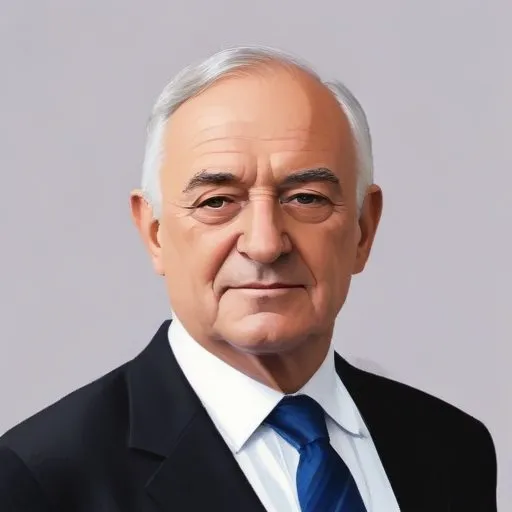
The 29th Premier of Tasmania, a politician who served from 1939 to 1948, known for his leadership during World War II and post-war reconstruction efforts. He played a crucial role in shaping Tasmania's economy and infrastructure.
Edmund Dwyer Gray is remembered as the 29th Premier of Tasmania, serving from 11 June to 18 December 1939, and a devoted member of the Australian Labor Party (ALP). His remarkable career in politics was punctuated by his commitment to social welfare and his unwavering dedication to the people of Tasmania.
Born on 2 April 1870 in Dublin, Ireland, Gray was the son of Edmund Dwyer Gray, a member of the British House of Commons, and Caroline Agnes Gray. He was the maternal grandson of Caroline Chisholm, the renowned English humanitarian who worked tirelessly to improve the lives of female immigrants to Australia. His paternal grandfather, Sir John Gray, was an associate of the Irish nationalist Daniel O'Connell and a member of Parliament for Kilkenny City in the House of Commons.
Gray's early career in journalism took him to Australia in 1887, where he hoped to alleviate his rheumatism in the country's more favorable climate. Upon his return to Ireland, he joined the editorial committee of the Freeman's Journal, a nationalist newspaper previously owned by his father and grandfather. However, his alignment with the anti-Parnell faction during the Irish political scandal and leadership crisis of the time led to controversy, ultimately prompting his decision to migrate to Australia permanently.
After traveling through Australia, New Zealand, and Fiji, where he engaged in various mining ventures, Gray settled in New Norfolk, Tasmania, where he spent ten years working as a farmer. In 1912, he returned to Hobart to edit the Daily Post, an ALP newspaper. This experience laid the groundwork for his future political career, which would take him to the forefront of Tasmanian politics.
Throughout his career, Gray demonstrated a profound commitment to social justice and the welfare of the Tasmanian people. His leadership was characterized by a strong sense of responsibility to the community, reflecting his family's legacy of public service and humanitarianism. As Premier, he worked tirelessly to address the pressing issues of his time, including economic development, education, and healthcare.
Edmund Dwyer Gray's remarkable life and career serve as a testament to the power of public service and dedication to the community. His leadership and vision continue to inspire generations of Tasmanians, and his contributions to the state's development remain an integral part of its history. As a champion of social justice and a devoted member of the ALP, Gray's legacy endures as a beacon of hope and progress.
| 1870 | Born on 2 April in Dublin, Ireland |
| 1887 | Visited Australia for the first time |
| 1912 | Became editor of the Daily Post in Hobart |
| 1939 | Elected as the 29th Premier of Tasmania |
| 1945 | Passed away on 6 December |
Born in 1879
The 10th Prime Minister of Australia, a Labor Party leader who implemented significant economic reforms during the Great Depression, and also a former teacher and union leader.
Born in 1890
The 28th Premier of Tasmania, serving from 1934 to 1939, known for his efforts to revitalize the state's economy during the Great Depression. He implemented various infrastructure projects and reforms to stimulate growth.
Born in 1594
First Governor of the Colony of Connecticut, instrumental in establishing the colony's government and laws, and played a key role in the colony's early development.
Born in 1909
The 32nd Premier of Tasmania, serving from 1996 to 1998, known for his Labor government's environmental and social reforms. He's also recognized for his efforts in protecting Tasmania's wilderness areas.
Born in 1908
A Tasmanian politician who served as the 33rd Premier of Tasmania, known for his contributions to the state's development and governance.
