


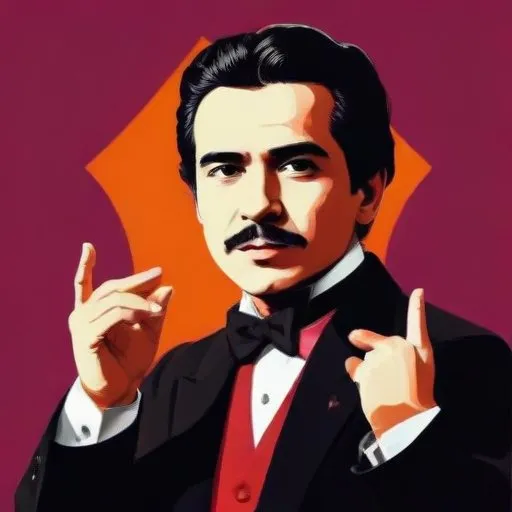
A renowned Mexican conductor and composer, he led the Dallas Symphony Orchestra and composed works that blended traditional Mexican music with modern classical styles.
Eduardo Mata was a renowned Mexican conductor and composer, celebrated for his monumental contributions to the country's rich cultural heritage. With a career spanning over three decades, Mata left an indelible mark on the world of music, earning him a place among the most distinguished figures in Mexican classical music.
Born on September 5, 1942, in Mexico City, Mata's fascination with music began at a tender age. He received private guitar lessons for three years before enrolling in the National Conservatory of Music. Under the guidance of prominent musicians such as Carlos Chávez, Héctor Quintanar, and Julián Orbón, Mata honed his skills in composition from 1960 to 1963.
In 1964, Mata received the prestigious Koussevitzky Memorial Fellowship, which enabled him to study at Tanglewood. During his time at Tanglewood, he refined his conducting skills under the tutelage of Max Rudolf and Erich Leinsdorf, while also studying composition with Gunther Schuller. This exposure laid the foundation for his future success as a conductor and composer.
Mata's compositional repertoire includes three symphonies, chamber works, sonatas for piano and cello, and piano. His Third Symphony, in particular, is considered a masterpiece, showcasing his unique blend of Mexican folk influences and classical techniques.
In 1965, Mata was appointed head of the Music Department of the National Autonomous University of Mexico (UNAM) and conductor of the Guadalajara Orchestra. He went on to become the music director of the Dallas Symphony Orchestra, a position he held from 1977 to 1993. During this tenure, he recorded over 50 albums with various orchestras, including the UNAM Symphony Orchestra, the Dallas Symphony Orchestra, and the London Symphony Orchestra.
In 1972, Mata became the principal conductor of the Phoenix Symphony, a position he held until 1978. During this period, he was instrumental in promoting the music of Gustav Mahler, even becoming the honorary president of the Mahler Mexico Society. In 1975, he conducted the first full cycle of Mahler's symphonies in Mexico, a feat that cemented his reputation as a master conductor.
Eduardo Mata's legacy extends far beyond his impressive career. He was a champion of Mexican music, tirelessly promoting the works of his compatriots and advocating for the preservation of the country's rich cultural heritage. His influence can be seen in the numerous musicians he mentored, and his compositions continue to inspire new generations of artists.
Mata's contributions to music were recognized with numerous awards and honors, including the prestigious National Prize for Arts and Sciences in Mexico.
In 1995, tragedy struck when Mata was killed in a car accident, just days before he was set to take up the position of principal conductor of the New Zealand Symphony Orchestra. His untimely passing sent shockwaves throughout the music world, leaving behind a void that would be difficult to fill.
Eduardo Mata's life and legacy serve as a testament to the power of music to transcend borders and touch hearts. His unwavering dedication to his craft and his country has left an indelible mark on the world of classical music, ensuring that his legacy will continue to inspire generations to come.
Born in 1918
A pioneer of lounge music and space age pop, blending traditional Mexican music with futuristic electronic elements, creating a unique and quirky sound.
Born in 1899
A Mexican virtuoso who blended folk and classical music, creating vibrant, energetic compositions that evoke the spirit of his native land. His works are a testament to the country's rich cultural heritage.
Born in 1899
Founded the Mexican Symphonic Orchestra, a pioneering figure in Mexican classical music, blending folk and modernist styles. Known for his innovative compositions and national pride.
