


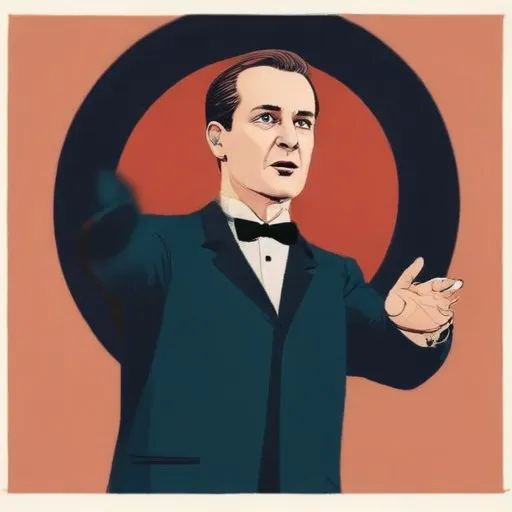
A renowned conductor who led prestigious orchestras, including the New York Philharmonic and Boston Symphony Orchestra, and was known for his precise and nuanced interpretations of classical music.
Erich Leinsdorf, an Austrian-born American conductor, is renowned for his exacting standards and acerbic personality, which earned him a reputation as one of the most respected and feared conductors of his time. With a career spanning over five decades, Leinsdorf performed and recorded with leading orchestras and opera companies throughout the United States and Europe, leaving an indelible mark on the world of classical music.
Born Erich Landauer on February 4, 1912, in Vienna, Austria, Leinsdorf began studying music at the tender age of 5. He went on to study composition and played the cello, later becoming a piano accompanist for singers in his teens. Leinsdorf's early education in music was further honed at the Mozarteum in Salzburg, the University of Vienna, and the Vienna Academy of Music, where he studied conducting.
In 1934, Leinsdorf worked as an assistant to conductors Bruno Walter and Arturo Toscanini at the Salzburg Festival. This experience laid the foundation for his future success. In 1937, he traveled to the United States, where he became the assistant conductor at the Metropolitan Opera in New York City. Leinsdorf's timely departure from Austria proved fortunate, as it preceded the Anschluss of March 1938, when Nazi Germany took over the country.
With the help of freshman Representative from Texas, Lyndon B. Johnson, Leinsdorf was able to stay in the United States and became a naturalized American citizen in 1942. During his time at the Met, Leinsdorf made a name for himself with his outstanding Wagner performances, particularly after the sudden death of Artur Bodanzky in 1939. He eventually became the head of German repertoire at the Met.
Erich Leinsdorf's impact on classical music is multifaceted and far-reaching. He was a master of his craft, and his high standards raised the bar for generations of musicians to come. Through his performances, recordings, and writings, Leinsdorf left an indelible mark on the world of classical music. His legacy continues to inspire and challenge musicians, ensuring his place as one of the greatest conductors of the 20th century.
Born in 1918
A renowned musician who blended jazz, classical, and Broadway styles, creating iconic works like West Side Story, and inspiring generations with his charismatic performances and innovative compositions.
Born in 1897
A renowned conductor and composer, known for his precise and expressive performances, leading the Cleveland Orchestra to international acclaim. His interpretations of classical music remain highly influential.
Born in 1875
A renowned viola player and conductor, he was a leading figure in the development of modern orchestral performance, particularly in the interpretation of French and Russian music.
Born in 1891
A renowned violinist and conductor, leading the Boston Symphony Orchestra to new heights, and premiering works by famous composers like Debussy and Ravel.
Born in 1899
A renowned violinist and conductor, leading the Philadelphia Orchestra for over 40 years, known for his technical precision and interpretations of Romantic-era composers.
Born in 1888
A renowned maestro who led the Chicago Symphony Orchestra to new heights, earning a reputation for his precise and powerful interpretations of classical music.
91 Years Old
A renowned music director and conductor, leading world-class orchestras, including the Boston Symphony Orchestra, and known for his innovative and energetic performances.
