


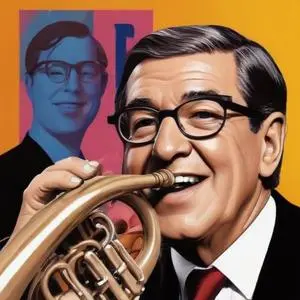
A renowned musician who mastered multiple roles, exceling as a horn player, composer, and conductor, leaving a lasting impact on the classical music scene.
Gunther Schuller, an American composer, conductor, horn player, author, historian, educator, publisher, and jazz musician, is best known for coining the term "Third Stream" to describe the fusion of classical and jazz music. This visionary approach to music led to the creation of some truly unique and innovative works that continue to inspire and influence musicians to this day.
Born on November 22, 1925, in Queens, New York City, to German parents Elsie Bernartz and Arthur E. Schuller, Gunther was exposed to music from a young age. His father, a violinist with the New York Philharmonic, encouraged his love for music, and he began studying at the Saint Thomas Choir School.
Schuller's professional music career began at the tender age of 15, when he started playing horn professionally with the American Ballet Theatre. He went on to become the principal hornist with the Cincinnati Symphony Orchestra and later with the Metropolitan Opera Orchestra in New York, where he played until 1959.
One of the most significant collaborations of his early career was with Miles Davis, with whom he recorded as a horn player from 1949 to 1950. This experience had a profound impact on his musical style and paved the way for his future work in jazz.
In 1955, Schuller, along with jazz pianist John Lewis, founded the Modern Jazz Society, which later became known as the Jazz and Classical Music Society. It was during this time that he coined the term "Third Stream" to describe the fusion of classical and jazz techniques.
This concept led to the creation of some incredible works, including "Transformation" (1957), "Concertino" (1959), "Abstraction" (1959), and "Variants on a Theme of Thelonious Monk" (1960). These compositions showcased Schuller's unique ability to blend the complexity of classical music with the spontaneity of jazz.
Schuller's contributions to music went beyond composition. He was a prolific author, writing several books on music, including "Early Jazz: Its Roots and Musical Development" and "The Compleat Conductor."
As an educator, he taught at several institutions, including the Manhattan School of Music, and conducted various orchestras around the world. He was also a passionate advocate for jazz and classical music, and his efforts helped to popularize these genres.
Throughout his life, Gunther Schuller received numerous awards and honors for his contributions to music. His legacy continues to inspire new generations of musicians, and his innovative approach to music remains a testament to his genius.
Gunther Schuller's life was a testament to his passion for music and his unwavering dedication to innovation. His legacy continues to inspire and influence musicians around the world, and his contributions to the world of music remain unparalleled.
Born in 1918
A renowned musician who blended jazz, classical, and Broadway styles, creating iconic works like West Side Story, and inspiring generations with his charismatic performances and innovative compositions.
Born in 1900
A renowned composer, conductor, and educator who blended folk and modernist elements to create iconic American classical music, including "Appalachian Spring" and "Fanfare for the Common Man".
Born in 1906
A renowned Russian pianist and composer, known for blending classical music with dark humor and satire, creating iconic symphonies and film scores that still resonate today.
Born in 1882
A Russian master of music, renowned for revolutionizing classical music with bold, avant-garde compositions that blended traditional and modern elements. His iconic works, such as "The Rite of Spring," continue to inspire and influence artists across genres.
Born in 1909
A virtuosic clarinetist and bandleader, known as the "King of Swing," who revolutionized jazz music with his energetic and sophisticated style, leading a racially integrated orchestra in the 1930s.
Born in 1910
A virtuosic clarinetist and innovative bandleader, he revolutionized the swing era with his unique sound and iconic hits like "Begin the Beguine" and "Stardust".
Born in 1913
A legendary jazz musician and bandleader, known for his virtuosic saxophone and clarinet playing, and leading his iconic orchestra through the swing and bebop eras.
Born in 1917
A virtuosic trumpet player and composer who revolutionized jazz with his lightning-fast solos and iconic puffy cheeks, creating a new language for the instrument. He's synonymous with bebop and modern jazz.
