


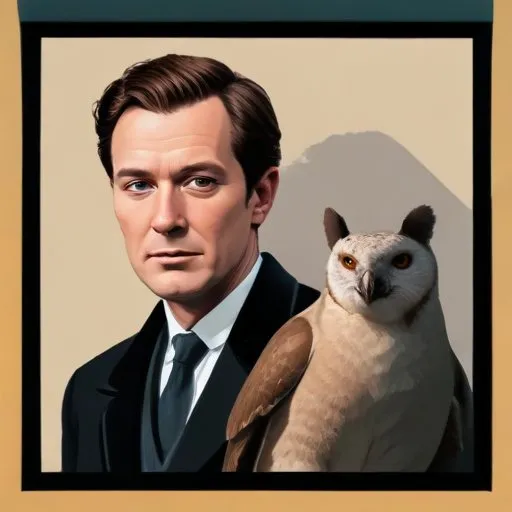
A pioneering zoologist who cataloged and described numerous species, laying the groundwork for Charles Darwin's theory of evolution. His work on animal variation and hybridization remains influential in modern biology.
Edward Blyth, a prominent English zoologist, left an indelible mark on the scientific community with his extensive work on ornithology, taxonomy, and museum curation. His meticulous efforts in updating the catalogues of the Royal Asiatic Society of Bengal in Calcutta earned him recognition as a leading figure in the field.
Born on December 23, 1810, in London, Blyth's fascination with the natural world began early. Following his father's demise, he was sent to Dr. Fennell's school in Wimbledon, where he developed a passion for reading and exploring the nearby woods. After leaving school in 1825, he pursued chemistry studies under Dr. Keating in London, but soon shifted his focus to pharmacy in Tooting.
In 1836, Blyth edited an annotated edition of Gilbert White's Natural History of Selborne, which was reprinted in 1858. This literary foray paved the way for his appointment as curator of the Asiatic Society of Bengal's museum in 1841. Despite his meager salary of 300 pounds per year, Blyth embarked on a journey to Calcutta, where he would spend the next three decades.
Blyth's most notable achievement was the publication of his Catalogue of the Birds of the Asiatic Society in 1849. This comprehensive work showcased his expertise in taxonomy and classification, earning praise from contemporaries. Despite limited opportunities for fieldwork, Blyth received and described specimens from notable collectors, including A.O. Hume, Samuel Tickell, and Robert Swinhoe.
His posthumously published Natural History of the Cranes (1881) further solidified his reputation as a zoological authority. Blyth's meticulous descriptions and classification of species continue to influence ornithological research to this day.
In 1854, Blyth married and attempted to supplement his income by writing under the pseudonym "Zoophilus" for the Indian Sporting Review. He also traded live animals between India and Britain, seeking collaborations with prominent figures like Charles Darwin and John Gould, although these endeavors were met with rejection.
Edward Blyth's contributions to zoology, taxonomy, and museum curation have left a lasting legacy in the scientific community. His dedication to the Asiatic Society of Bengal's museum helped shape the institution into a hub of scientific inquiry. Today, Blyth is remembered as a pioneer in ornithology, and his work continues to inspire generations of scientists and naturalists.
Born in 1809
Developed the theory of evolution through natural selection, revolutionizing our understanding of life on Earth. This groundbreaking idea transformed the fields of biology, ecology, and beyond.
Born in 1823
A pioneering naturalist who discovered evolution through natural selection, independently of Charles Darwin, and contributed significantly to the field of biogeography.
Born in 1804
A pioneering figure in the fields of biology, anatomy, and paleontology, known for coining the term "Dinosauria" and making significant contributions to our understanding of vertebrate evolution.
Born in 1825
A prominent figure in the scientific community, known for advocating Charles Darwin's theory of evolution and coining the term "agnostic" to describe his own religious views.
Born in 1785
A pioneering ornithologist and artist, famous for meticulously illustrating and documenting North American bird species in his iconic book "The Birds of America". His work remains a cornerstone of ornithology and wildlife art.
Born in 1744
A French soldier, biologist, and academic who developed a theory of inheritance of acquired characteristics, proposing that organisms adapt to their environment and pass on those traits to their offspring.
Born in 1769
Founded the field of comparative anatomy, establishing extinction as a fact and creating a framework for understanding the natural world through fossil records.
