


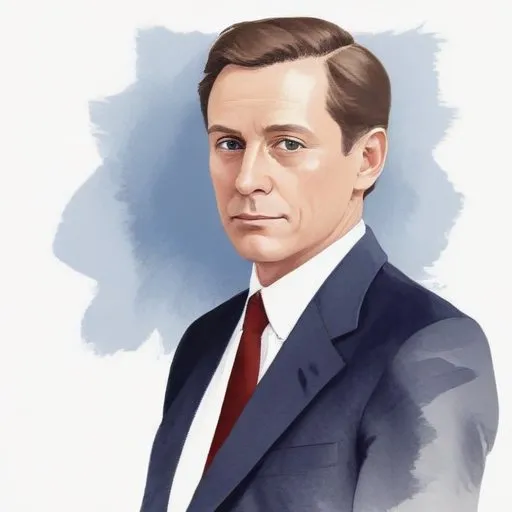
A pioneering figure in American art, he merged law and painting to create a unique artistic style, blending realism with abstraction. His works showcased a deep understanding of light and color.
Edward Bruce, a multifaceted individual with a passion for art, law, and entrepreneurship, is best known for his integral role in shaping the United States' art scene during the Great Depression. As the administrator of the New Deal art projects, he spearheaded initiatives like the Public Works of Art Project, the Section of Painting and Sculpture, and the Treasury Relief Art Project, providing a lifeline to struggling artists and forever changing the nation's cultural landscape.
Before donning the hat of an art administrator, Bruce had already established himself as a successful lawyer and entrepreneur. Born on April 13, 1879, in Dover Plains, New York, he graduated from Columbia Law School in 1904 with high honors and went on to practice law in New York City and Manila, Philippines. His entrepreneurial spirit led him to venture into banking and trade in China and the Far East, founding the Pacific Development Corporation in 1915.
While Bruce's business career flourished, he continued to nurture his passion for art, which began when he was just 14 years old. He was particularly drawn to Chinese art, and his extensive collection inspired his own landscape paintings. In 1922, he bid adieu to his business career and moved to Italy to study art under the tutelage of American painter and sculptor Maurice Sterne. His artistic talents were soon recognized, with solo exhibitions in Paris, New York, and San Francisco receiving rave reviews.
In 1932, Bruce joined the Treasury Department, bringing his unique blend of artistic and business expertise to the table. As the administrator of the New Deal art projects, he played a crucial role in providing employment opportunities to visual artists during the Great Depression. Under his guidance, programs like the Public Works of Art Project, the Section of Painting and Sculpture, and the Treasury Relief Art Project came into being, commissioning thousands of artworks that not only supported artists but also enriched public spaces.
Edward Bruce's unwavering commitment to the arts has left an indelible mark on American cultural history. His initiatives not only sustained artists during a time of economic turmoil but also helped shape the nation's artistic identity. Today, his legacy serves as a testament to the transformative power of art, highlighting its ability to inspire, uplift, and bring people together.
Edward Bruce's pioneering work in promoting the arts has had a lasting impact on modern society. His initiatives have inspired generations of artists, art administrators, and policymakers, demonstrating the importance of investing in the creative sector. As a result, his legacy continues to influence cultural policy, advocacy, and community development initiatives across the United States.
Born in 1844
A pioneering American artist who explored the human form through realistic and psychologically complex works, capturing the spirit of his subjects with unflinching honesty.
Born in 1844
An American Impressionist painter and educator, she created intimate, tender portraits of women and children, capturing the quiet beauty of everyday life. Her artwork often explored the complexities of motherhood and femininity.
Born in 1836
A renowned artist capturing American life and landscapes through his evocative paintings and illustrations, particularly focusing on the Civil War and coastal scenes.
Born in 1856
A renowned portrait painter, capturing the essence of high society with his stunning watercolors and oils, leaving an indelible mark on the art world.
Born in 1865
A pioneering figure in American art, known for advocating for a more spontaneous and expressive approach to painting, and for teaching and mentoring many notable artists.
Born in 1867
A pioneering figure in the Ashcan School, known for vivid, gritty depictions of urban life and its struggles. His bold, expressive brushstrokes captured the essence of early 20th-century America.
Born in 1870
American painter and illustrator known for capturing the vibrant spirit of urban life in the early 20th century through his bold, colorful depictions of city streets and everyday people.
